Best Tankless Water Heaters for an RV or Camper (2026)
Our picks for the best RV tankless water heaters, from premium Truma and Girard units that replace your tank heater to budget and portable options.

We may earn a commission if you buy through links on this page. It never changes what we recommend. As an Amazon Associate we earn from qualifying purchases. Learn more.
Our top picks at a glance
1 Best overall
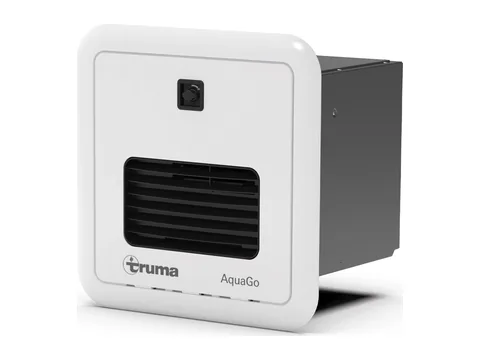
Truma AquaGo Comfort Plus
Modulates from 20,000 to 60,000 BTU for steady temperature, even at low flow. Read more
Pros
- Works at very low flow
- Optional freeze protection to -4°F
- Guided descaling
Cons
- Premium price
- Dealer install recommended
2 Best replacement for a tank heater
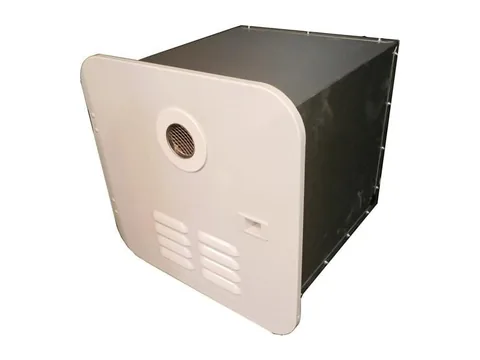
Girard GSWH-2
About $750
Designed to fit standard tank water heater openings, with a wall control panel. Read more
Pros
- Fits existing cutouts
- Built for winter use
- Adjustable 95 to 124°F
Cons
- Needs about 0.9 GPM to fire
- Access door sold separately
3 Best budget
Ranein 65,000 BTU
About $450
Strong output for the price, with thermostatic control and high-altitude capability. Read more
Pros
- Lower price
- High output
- Works at altitude
Cons
- More complex install
- Needs good water pressure
4 Best portable
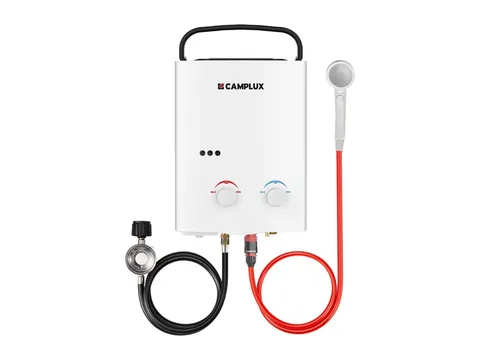
Camplux 5L Portable
About $160
A portable propane heater for outdoor showers and camping, not a permanent install. Read more
Pros
- Very cheap
- No electricity needed
- Light and portable
Cons
- Low 1.32 GPM flow
- No freeze protection
- Outdoor use only
The small tank water heater in most RVs holds 6 or 10 gallons, which is enough for one quick shower before you’re waiting again. A tankless heater fires up a propane burner when you turn on the tap and keeps going as long as you need hot water.
The best ones also fit the same opening as your old tank heater, so the swap is simpler than it sounds.
Side by side
| Heater | Fuel | Output | Fits tank cutout? | Freeze protection | Approx. price |
|---|---|---|---|---|---|
| Truma AquaGo Comfort Plus | Propane, 12V controls | 20,000 to 60,000 BTU | Check dimensions | Optional kit | Varies by dealer |
| Girard GSWH-2 | Propane, 12V controls | 42,000 BTU | Yes | Yes | $750 |
| Ranein 65,000 BTU | Propane | 65,000 BTU | No, custom install | Check model | $450 |
| Camplux 5L Portable | Propane | 41,000 BTU | No (portable) | No | $160 |
Specs are from manufacturer and retailer listings. Prices are typical October 2026 prices.
1. Truma AquaGo Comfort Plus: Best overall
Best for: Full-timers and anyone who wants the most home-like hot water in an RV.
Truma’s AquaGo adjusts its burner smoothly from 20,000 to 60,000 BTU, which helps keep the temperature steady instead of swinging between hot and cold. It starts heating at very low flow, around 0.4 gallons per minute, so low-flow RV showerheads work fine. An optional electric antifreeze kit protects it down to -4°F without draining, and the control panel guides you through descaling.
What bugs us: It’s a premium unit with a premium price, and it’s usually installed by a dealer. Check its dimensions against your existing opening before buying.
Skip it if: you camp a few weekends a year. It’s more than you need.
2. Girard GSWH-2: Best replacement for a tank heater
Best for: RV owners who want to swap out a tank heater with minimal changes.
The GSWH-2 is designed to fit the cutout of a standard RV tank water heater. It puts out 42,000 BTU, is designed for winter use, and comes with a wall-mounted control panel to set the temperature from 95 to 124°F. It has a 2-year limited warranty.
What bugs us: It needs about 0.9 GPM of flow to fire, so very low-flow showerheads may not trigger it. The access door is sold separately.
Skip it if: you use an ultra-low-flow showerhead and don’t want to change it.
3. Ranein 65,000 BTU: Best budget
Best for: DIYers who want a lot of hot water without paying premium prices.
This propane unit offers strong output, thermostatic temperature control and is rated to work at high altitude, up to about 9,800 feet. It costs much less than the big-brand units.
What bugs us: Installation is more involved than a drop-in replacement, and it needs adequate water pressure and flow to run well. Hard water means regular descaling.
Skip it if: you want a simple swap into your existing tank opening.
4. Camplux 5L Portable: Best portable
Best for: Tent campers, boondockers and anyone who wants an outdoor shower.
This small propane heater hangs outside and connects to a water source and a propane tank. It needs no electricity and costs a fraction of the permanent units.
What bugs us: Flow is low at about 1.3 GPM, there’s no freeze protection or thermostat, and it struggles in the cold or at altitude. It’s not designed to be installed inside an RV.
Skip it if: you want hot water inside your rig.
How we researched these picks
We compared RV water heaters using manufacturer specifications, retailer listings and RV owner reviews, focusing on:
- Fit, especially whether a unit replaces a standard tank heater
- Output and minimum flow
- Cold-weather protection
- Install effort and price
We haven’t tested these ourselves. Propane appliances should be installed carefully and to code; a qualified RV technician is the safe choice if you’re not sure. Read more about how we pick products.
Things to know before you switch
- Water pressure matters. Tankless units need enough pressure and flow to fire. Weak campground pressure or a tired water pump can cause cold bursts.
- Showerhead flow matters. Some units need around 1 GPM to stay lit. Check your showerhead’s rating.
- Winterizing is different. Most tankless units drain quickly, but follow the maker’s instructions. Some offer an electric antifreeze kit.
- Descaling. Hard water builds scale in the heat exchanger. Descale periodically, especially if you fill from hard-water sources.
Looking for a home tankless heater instead? See the best electric tankless water heaters.
Common questions
Is a tankless water heater worth it in an RV? If you shower in your RV often or travel with family, yes. Endless hot water is a big upgrade over a 6-gallon tank.
Do RV tankless water heaters use a lot of propane? They burn propane only while hot water is running, so use depends on how much hot water you use, not how long the heater is on.
Can I install one myself? Some drop-in units are DIY-friendly for experienced owners, but propane connections should be done carefully and leak-tested. When in doubt, use a qualified technician.