EcoFlow DELTA Pro 3 Review: It Lost 9 to 6. Still Worth It?
The EcoFlow DELTA Pro 3 lost a 9 to 6 head-to-head against the Anker SOLIX F3800 Plus. Here's what it does well, where it falls short, who should buy something else, and the one setting to change the day it arrives.

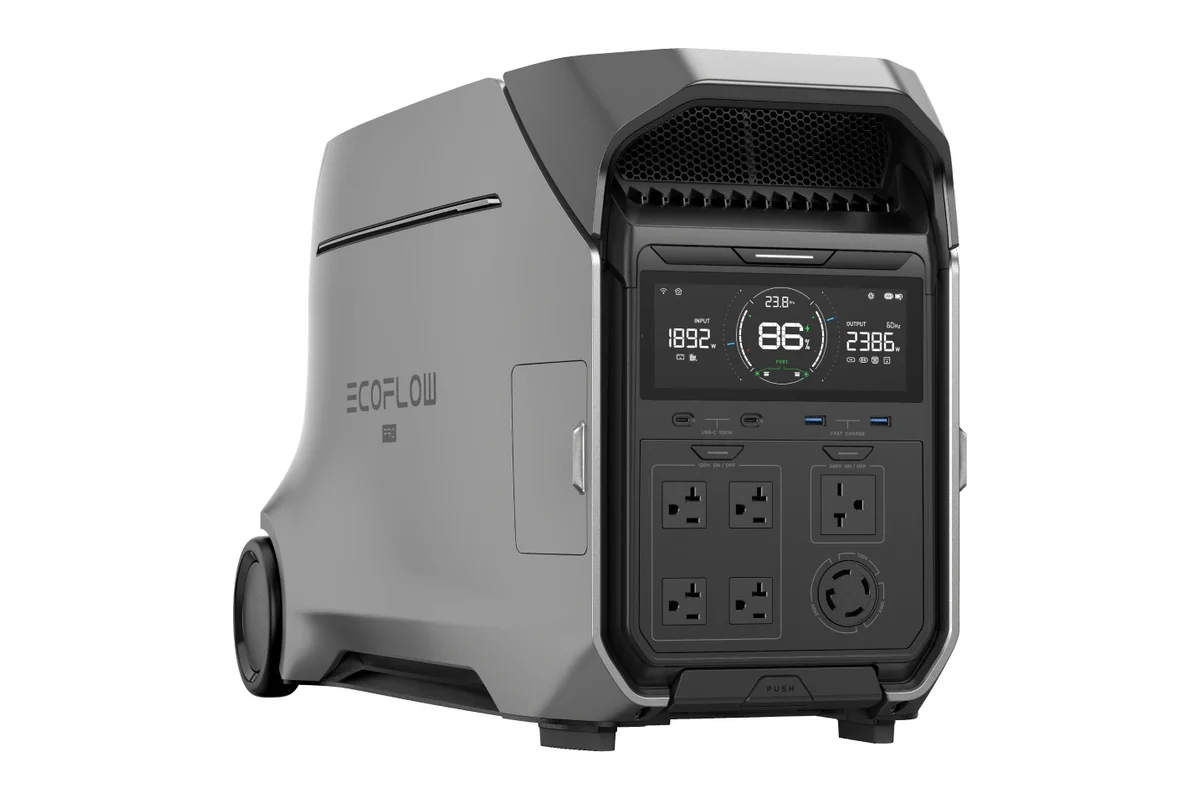
Our top picks at a glance
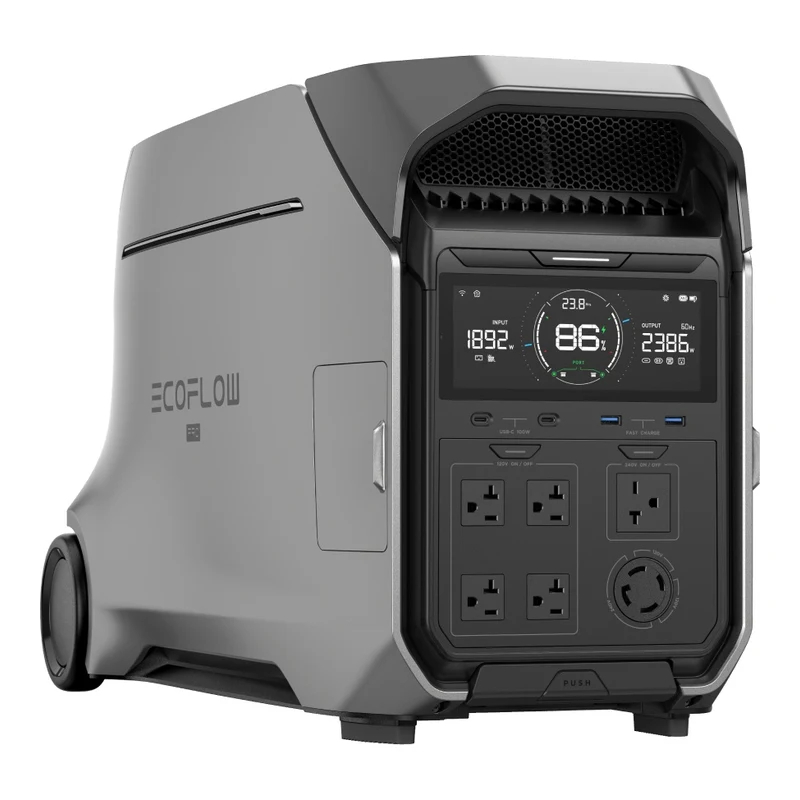
About 4 kWh and 4,000 W at 120V or 240V from one unit, expandable into a whole-home system. Sold out at EcoFlow until late January. Read more
Pros
- Nearly silent under heavy load in testing
- 10 ms switchover
- Grows to 48 kWh with EcoFlow's add-ons
Cons
- Only four regular household outlets
- About 113 lb
- Lost to the Anker on surges and solar
- Check Amazon Price
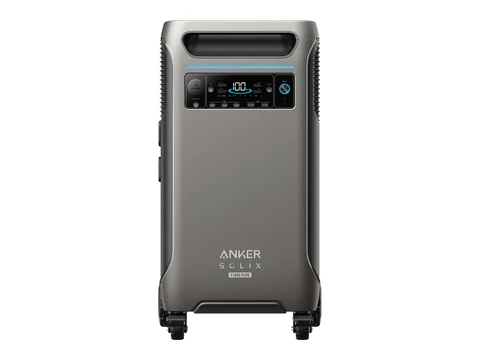
3,840 Wh and 6,000 W, with 120V and 240V at the same time. It beat the DELTA Pro 3 nine rounds to six. Read more
Pros
- More output
- Handled startup surges better
- More outlets and more solar input
Cons
- About 137 lb
- Louder under load
- Check Amazon Price
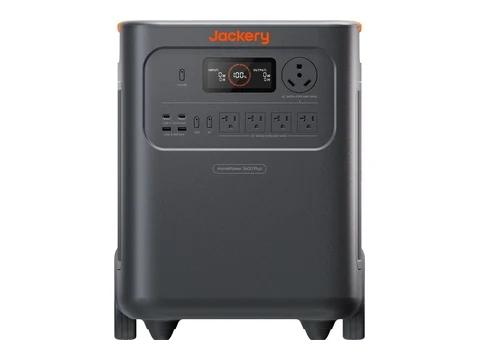
About 3,600 Wh and 3,600 W on built-in wheels, for homes where everything runs on a normal outlet. Read more
Pros
- Easier on your wallet
- Built-in wheels and handle
- Very quiet (Jackery rating)
Cons
- 120V only from one unit
Prefer to watch?
EcoFlow DELTA Pro 3 Review: It Lost 9 to 6. Still Worth It? Watch on YouTube
The EcoFlow DELTA Pro 3 is one of the few power stations that can run what a normal one can’t, like a well pump or central air on 240 volts. But in the head-to-head test I trust most, it lost to the Anker SOLIX F3800 Plus, nine rounds to six. So is it still worth buying?
I haven’t had one on my bench. For this review I went through The Solar Lab’s head-to-head against the Anker, TechRadar’s hands-on review and EcoFlow’s own spec sheet. The short version: if you want a quiet unit and a system you can grow into real whole-home backup, it’s still one of the best you can buy. If big startup surges are your worry, get the Anker.
One heads-up before you get attached: EcoFlow’s US store lists every DELTA Pro 3 bundle as sold out right now, with more units expected in late January. That’s why there’s no buy button for it on this page.
Key specs
| Spec | EcoFlow DELTA Pro 3 |
|---|---|
| Battery | 4,096 Wh, LFP (lithium iron phosphate), 4,000 cycles to 80% |
| Continuous output | 4,000 W pure sine wave (6,000 W with X-Boost for resistive loads) |
| Surge | 8,000 W (EcoFlow’s rating) |
| Voltage | 120V and 240V from one unit |
| Outlets | Four regular 120V household outlets (20A), a TT-30 30A RV outlet, a 240V NEMA 6-20 outlet and a L14-30 120/240V outlet, plus USB-C and USB-A |
| Solar input | Up to 2,600 W over two ports (1,600 W high-voltage + 1,000 W low-voltage) |
| Fast charging | 0 to 80% in about 50 minutes on its quickest setup (EcoFlow’s figure) |
| UPS switchover | 10 ms |
| Expansion | Up to 12 kWh per unit with two extra batteries; up to 48 kWh as a full EcoFlow system |
| Noise | As low as 30 dB (EcoFlow’s rating) |
| Weight | About 113.5 lb, on wheels |
| Warranty | 5 years (3 years, plus 2 when you register it in the EcoFlow app) |
Source: EcoFlow’s US product page, checked November 16, 2026.
What you get
About 4,000 watt-hours of LFP battery and 4,000 watts of steady output, at 120 or 240 volts from one unit. That’s enough for a fridge, a freezer, the furnace fan and the lights, with room left over. EcoFlow rates the battery for 4,000 cycles before it drops to 80%, which works out to years of daily use.
It charges fast, too. EcoFlow says it can hit 80% in about 50 minutes on its quickest charging setup, and it takes up to 2,600 watts of solar across its two solar ports.
Living with it
It keeps your electronics on. It switches over in about 10 milliseconds when the grid drops, so a router or computer plugged into it stays on.
It’s quiet. The Solar Lab found it nearly silent, even pushed to its limits. That matters if it’s going to sit in your house running all night.
It’s built to grow. This is the one to get if you want to expand. You can add extra batteries, and EcoFlow says a full system goes up to 48 kWh. Pair it with EcoFlow’s Smart Home Panel 2 and it can power circuits in your house right from your electrical panel. Anything wired into your panel should be installed by an electrician.
The catch
In The Solar Lab’s head-to-head, the Anker SOLIX F3800 Plus won nine rounds to six. The Anker puts out more power, handled big startup surges better, has more regular outlets and takes more solar.
A few more things to know:
- Only four regular household outlets. The rest are RV and 240V-style outlets, so you may need adapters or a power strip for everyday plugs.
- Support. The Solar Lab found EcoFlow’s customer support slow to reach.
- Weight. At about 113 pounds, it rolls on wheels, but it’s not something you carry up the stairs.
Who should buy something else
If your big worry is surges, like an old well pump or a big air conditioner kicking on, get the Anker SOLIX F3800 Plus (here’s our full Anker review). It puts out 6,000 watts and runs 120 and 240 volts at the same time.
If everything you need plugs into a normal outlet, the Jackery HomePower 3600 Plus is easier on your wallet, with about 3,600 watt-hours and built-in wheels.
But if you want quiet, a big battery and a system you can grow into real whole-home backup, the DELTA Pro 3 is still one of the best you can buy, once it’s back in stock.
The one setting to change on day one
The day it shows up, open the EcoFlow app and check the charge limit. Bump it up to 100%. That way it’s full when the power goes out, not stuck at a lower limit. Then plug it in and leave it.
The bottom line
The DELTA Pro 3 lost on paper to the Anker, mostly on surge handling, outlets and solar input. It wins back ground on noise and on how far you can grow it. If you’re building toward whole-home backup over time and want something quiet in the house, it’s worth waiting for. If you need to handle big motor startups now, the Anker is the safer pick.
To compare it with the other big options, see our guide to the best power stations for whole-home backup, which covers five picks for winter outages.
We may earn a commission if you buy through links on this page. It never changes what we recommend. As an Amazon Associate we earn from qualifying purchases. Learn more.