How to Clean a Dishwasher Filter (Takes 10 Minutes)
A dirty filter is the most common reason a dishwasher smells or leaves dishes gritty. Here's where to find it, how to clean it, and how often to do it.

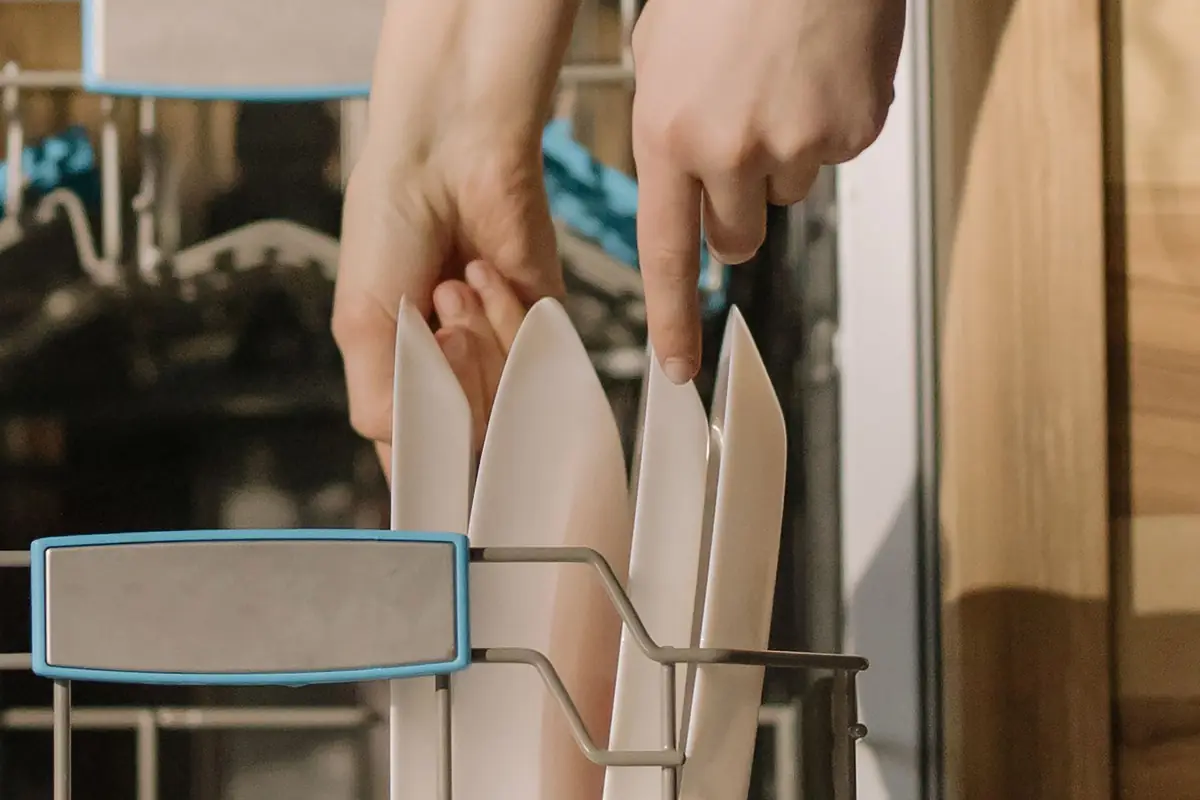
If your dishwasher smells, leaves grit on glasses or drains slowly, check the filter before anything else. Most dishwashers made in the last decade or so use a manual filter that you’re meant to clean yourself, and many people don’t know it’s there.
It’s a quick job: about 10 minutes, no tools, and it often makes an immediate difference.
How often to clean it
- About once a month for most households
- Every 2 weeks if you run it daily or don’t scrape plates first
- Right away if you notice a smell, standing water or dirty dishes
Your manual may give a different schedule for your model.
Where to find the filter
Pull out the bottom rack. The filter sits on the floor of the tub, usually in the back corner or center, under or beside the lower spray arm. Most have two parts:
- A cylindrical filter with a handle that twists out
- A flat mesh screen underneath or around it
Some older dishwashers have a self-cleaning filter with a built-in grinder instead. If you can’t find a removable filter, check your manual.
Step by step
1. Remove the bottom rack
Slide it all the way out and set it aside.
2. Twist out the filter
Grab the handle of the cylindrical filter and turn it counterclockwise about a quarter turn, then lift it out. Lift out the flat mesh screen if it comes out separately. Note how they fit together so you can put them back.
3. Rinse off loose debris
Hold the filters under warm running water to wash away food bits.
4. Scrub gently
Use warm, soapy water and a soft brush, like an old toothbrush, to clean the mesh. Get into the folds and corners. Avoid wire brushes and scouring pads; they can tear the mesh.
For greasy or cloudy buildup, soak the filter in warm, soapy water for 10 to 15 minutes first. A little white vinegar in the water helps with hard-water film.
5. Clean the filter housing
While the filter is out, wipe around the opening at the bottom of the tub with a damp cloth to remove any trapped food. Don’t push debris down into the drain.
6. Put it back
Set the flat screen back in place, then insert the cylindrical filter and turn it clockwise until it locks. Make sure it’s fully seated; running the dishwasher without the filter locked in can let debris reach the pump.
7. Run a cycle
Slide the rack back in and run a normal or rinse cycle to flush everything through.
Other quick fixes while you’re in there
- Spray arms: if any holes are clogged, pop the arm off (most unclip or unscrew) and clear the holes with a toothpick, then rinse.
- Door gasket: wipe the rubber seal around the door, where grime and mold like to collect.
- Smell: run an empty hot cycle with a cup of white vinegar upright on the top rack, or use a dishwasher cleaner.
Signs your filter needs cleaning
- A sour or musty smell
- Gritty film or food bits on “clean” dishes
- Water left standing in the bottom after a cycle
- Cloudy glasses that didn’t used to be
If you’ve just bought a compact or portable dishwasher, here’s how to hook it up to your faucet. Shopping for one? See the best compact dishwashers.
Common questions
Can I put the dishwasher filter in the dishwasher? Not recommended. It won’t get properly clean, and food trapped in it can spread. Wash it by hand.
What happens if I never clean the filter? Food and grease build up, which leads to smells, poor cleaning and slow draining. Over time it can strain the pump.
Do I need to scrape plates if I clean the filter? Scrape off big food scraps, but there’s no need to rinse dishes completely. Modern detergents work best with a little food left on.