Best Clothes Steamers: 4 Handheld and Standing Picks Worth the Counter Space
The best clothes steamers for home, from a 2-in-1 Conair that also presses like an iron to a made-in-USA Jiffy that steams for an hour and a half on one fill. Plus when a steamer beats an iron and when it doesn't.

We may earn a commission if you buy through links on this page. It never changes what we recommend. As an Amazon Associate we earn from qualifying purchases. Learn more.
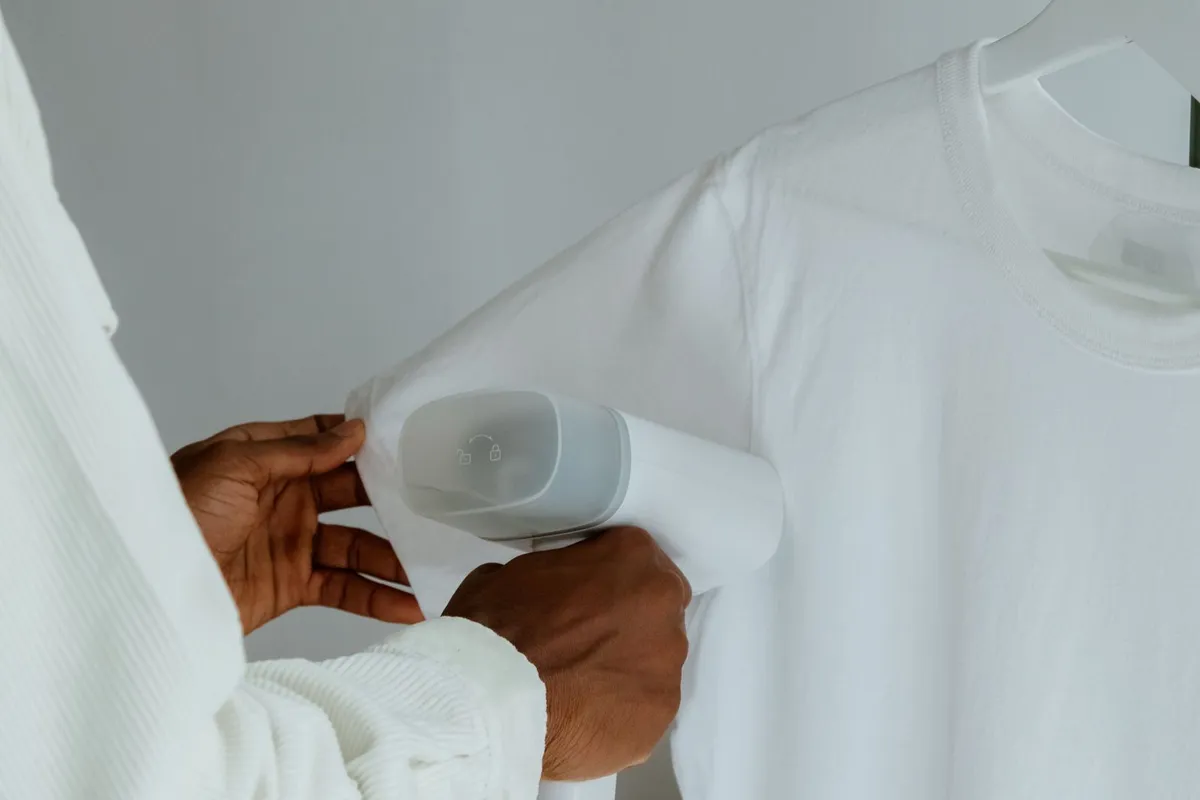
Our top picks at a glance
- Check Amazon Price
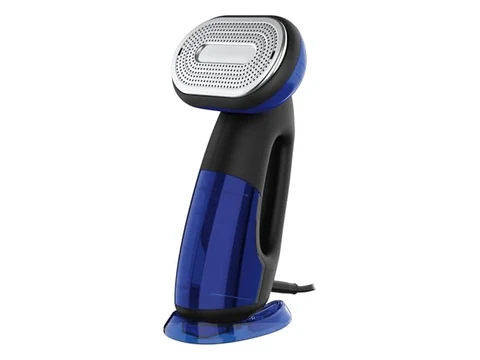
A powerful 1875-watt handheld that steams upright and, turned on its side, presses like a small iron for collars, cuffs and creases. Read more
Pros
- Heats in about 10 seconds
- Presses as well as steams
- Turbo setting for heavy fabrics
- Pauses steam when set down
Cons
- Tank lasts about 10 minutes
- Not dual voltage for travel
- Check Amazon Price
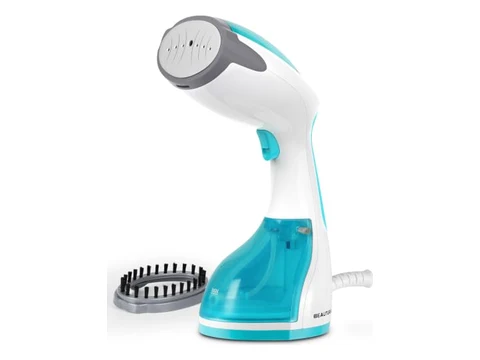
A small, inexpensive handheld with a removable tank, a fabric brush and enough steam for shirts, dresses and the morning rush. Read more
Pros
- Low price
- Heats in about 30 seconds
- Removable tank is easy to fill
- Light and compact
Cons
- Weaker on heavy cotton and linen
- Can spit if tilted too far
- 120V only
- Check Amazon Price
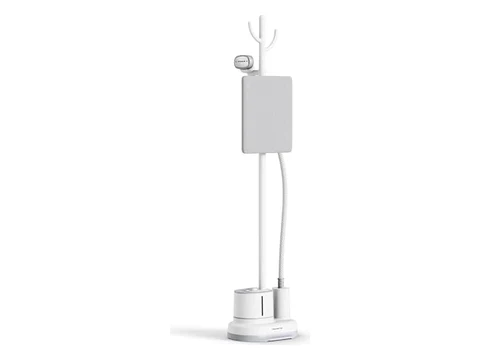
A full-size standing steamer with a big 47-ounce tank, a built-in vertical board to press against and a hanger rack. Read more
Pros
- About 35 minutes of steam per fill
- Built-in vertical board
- Refill while it runs
- Three steam levels
Cons
- Takes up floor space
- Slower to heat than a handheld
- Check Amazon Price
A simple, nearly indestructible standing steamer built on the same design Jiffy sells to clothing stores, with about 1.5 hours of steam per fill. Read more
Pros
- About 1.5 hours of steam per fill
- Brass heating element
- Made in the USA
- Three-year warranty
Cons
- Takes about 2 minutes to heat
- One steam setting
- Expensive for a home steamer
An iron still has its place for crisp collars and sharp pleats. But for most of what hangs in a closet now, a steamer is faster and kinder to the fabric. Knits, rayon, silk blouses, dresses with beading, suit jackets and the curtains you never want to take down all come out better with steam than with a hot plate pressed on top of them.
The trick is knowing which kind you need. A handheld is for a shirt or two before work. A standing steamer is for a family’s worth of laundry or for anyone who’d rather never set up an ironing board again. The four below cover both.
Compare at a glance
| Steamer | Type | Power | Tank / steam time | Heat-up |
|---|---|---|---|---|
| Conair Turbo ExtremeSteam GS108 | Handheld 2-in-1 | 1875W | 8.5 oz, about 10 min | About 10 sec |
| Beautural 1200W | Handheld | 1200W | About 8.8 oz, about 15 min | About 30 sec |
| Rowenta Home Steam IS3250 | Standing, with board | 1800W | 47 oz, about 35 min | About 45 sec |
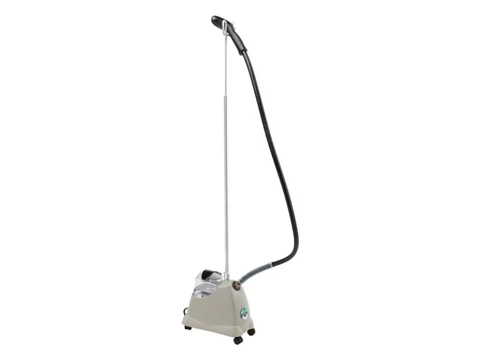
| Jiffy J-2000 | Standing | 1300W | About 3/4 gallon, about 1.5 hr | About 2 min |
Specs come from Conair, Beautural, Rowenta and Jiffy product listings. Steam times are the makers' estimates at normal settings. Higher settings empty the tank faster.
How we chose these
We didn’t test these steamers ourselves. We started with Consumer Reports’ October 2026 test of 10 handheld steamers, where the Conair Turbo ExtremeSteam 2-in-1 was a Top Pick, and Wirecutter’s clothing steamer guide, which also picks a Conair Turbo ExtremeSteam model. For standing models, we compared tank size, steam time and build against owner reviews, and we leaned toward brands with long track records and real parts support. Every Amazon link goes to the exact model named here.
We left out cheap no-name standing steamers. Many look identical to the Rowenta at half the price, but owner reviews are full of leaking hoses and units that quit after a few months.
1. Conair Turbo ExtremeSteam 2-in-1 Steamer and Iron GS108: Best overall
Who it’s for: Most people. If you only buy one steamer, make it this one.
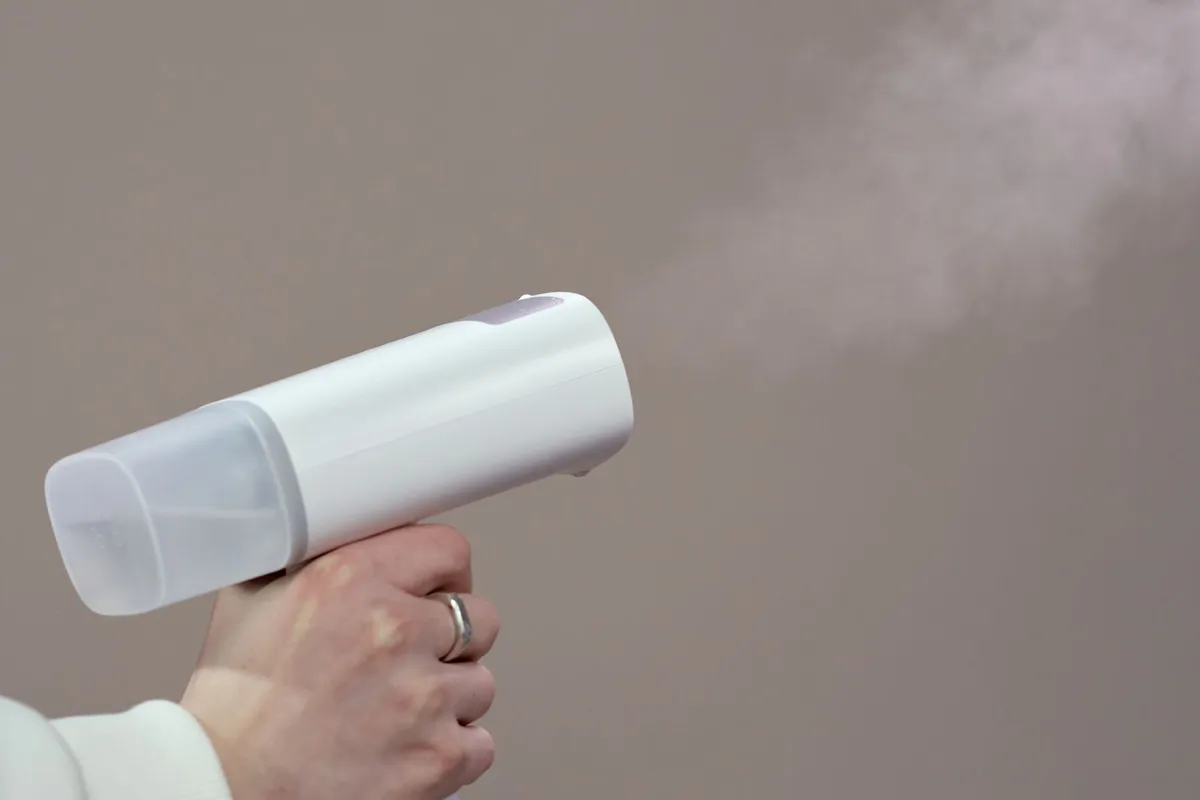
The GS108 is a handheld that does two jobs. Held upright, it’s a strong 1875-watt steamer with four steam settings, including a Turbo burst for heavy cotton and denim. Turn it on its side and the heated front plate works like a small iron, so you can press a collar, a placket or a pant crease without pulling out the ironing board. That combination is why it does better than most handhelds on the fabrics steamers usually struggle with. In Consumer Reports’ test, it was one of the few models that could handle creased linen.
It heats in about 10 seconds, which is quicker than it takes to find a hanger. A sensor stops the steam when you set it down flat and starts it again when you pick it up, so it doesn’t fog up your counter. It comes with a creaser attachment and a fabric brush.
What bugs us: The 8.5-ounce tank lasts about 10 minutes, enough for a few shirts but not a whole basket. It’s also heavier in the hand than small travel steamers, and it isn’t dual voltage, so it’s not one to pack for a trip abroad.
Skip it if: you steam a lot at once. A standing model saves you the constant refilling.
2. Beautural 1200-Watt Handheld Clothes Steamer: Best budget
Who it’s for: Anyone who wants a quick touch-up tool for little money, or a second steamer for the guest room or a dorm.
This little Beautural is one of the bestselling steamers on Amazon, and it’s a good one to start with. It heats in about 30 seconds, the tank pops off to fill at the sink, and a full tank gives you about 15 minutes of steam. It comes with a fabric brush that helps steam reach into thicker fabrics. It’s light and small enough to tuck in a drawer.
At 1200 watts, it does well with T-shirts, blouses, dresses and knits. Those are exactly the things most people use a steamer for.
What bugs us: It doesn’t have the push to flatten heavy cotton shirts, linen or deep creases. Like many small handhelds, it can spit water if you tilt it too far or start before it’s fully heated. It’s 120 volts only.
Skip it if: your closet is mostly button-downs and linen. Spend a little more on the Conair.
3. Rowenta Home Steam IS3250 Standing Steamer with Ironing Board: Best standing
Who it’s for: Households that steam a lot of clothes and want a setup that’s always ready, without a full ironing board.
The IS3250 is a standing steamer with a 47-ounce tank, enough for about 35 minutes of continuous steam. Rowenta rates it at 1800 watts and up to 38 grams of steam per minute, with three steam levels. It heats in about 45 seconds, and you can refill the tank while it’s running, so you don’t have to stop and wait.
What sets it apart from most standing steamers is the built-in vertical board. You hang the shirt in front of it and press the steamer head against a firm surface, which gets you much closer to ironed results on collars and cotton than steaming a shirt that’s flapping on a hanger. A hanger rack on top keeps the garment in place while you work. The whole thing weighs about 11 pounds.
What bugs us: It takes up a corner of the floor, and it’s not something you tuck into a drawer. It also takes a little longer to get going than a handheld, so for one shirt in the morning, a handheld is quicker.
Skip it if: you’re short on space or only steam a garment now and then.
4. Jiffy J-2000 Garment Steamer: Best for heavy use
Who it’s for: Sewists, costume makers, people who steam drapes and upholstery, and anyone who’s tired of replacing cheap steamers.
Jiffy has made garment steamers for clothing stores and boutiques for decades, and the J-2000 is its home version of that design. It’s refreshingly simple. There’s a water bottle, a 1300-watt heating element cast in solid brass, a hose and a steam head. There are no settings and no screens. It takes about 2 minutes to heat, then produces a steady stream for about an hour and a half on a single fill, which no other steamer here comes close to.
It’s made in Union City, Tennessee, and comes with a three-year limited warranty. Jiffy steamers are known for lasting a long time, and parts are still easy to find.
What bugs us: It’s expensive for a home steamer and slow to heat. There’s only one steam level, and it doesn’t come with a board, so you’re steaming against a hanging garment.
Skip it if: you only steam a shirt or two a week. The Conair does that faster for much less.
Steamer or iron?
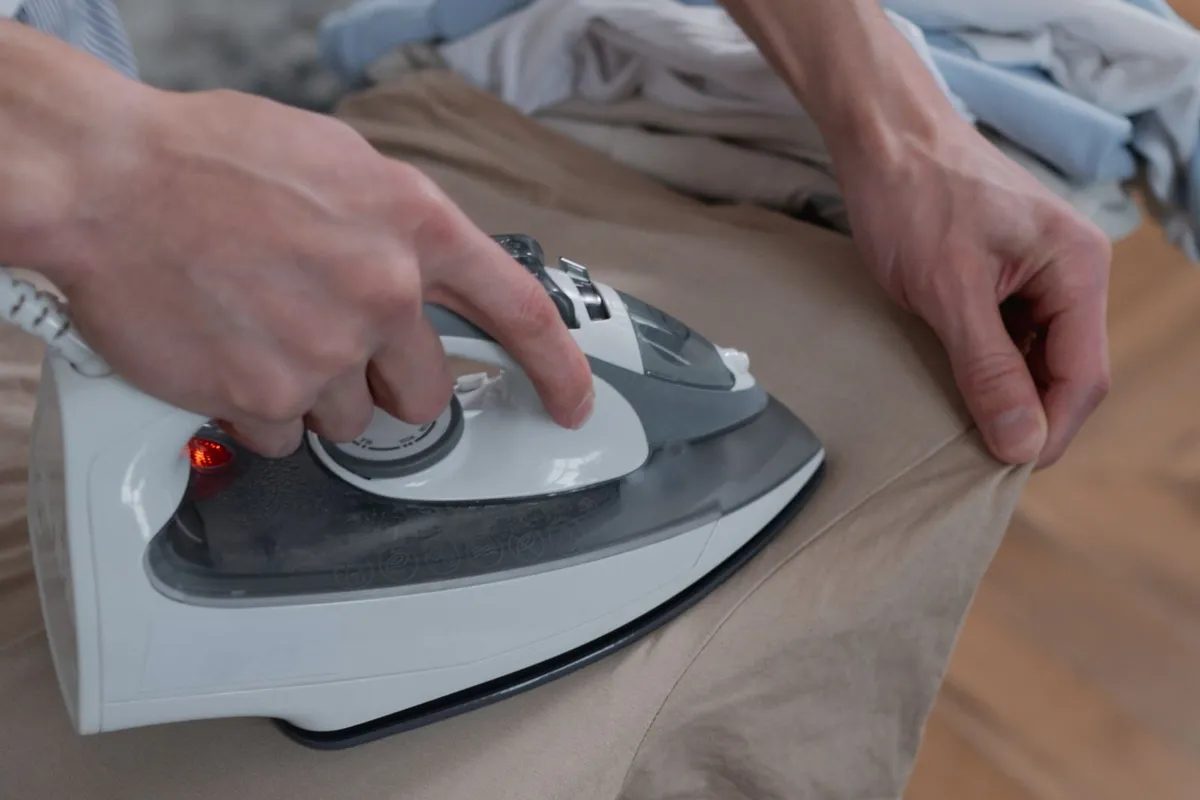
A steamer relaxes wrinkles. An iron flattens them. That one difference tells you which to reach for.
- Use a steamer for: knits, silk, rayon and polyester, dresses with embellishments, pleated skirts you don’t want to crush, suit jackets, sweaters, curtains, and freshening up clothes between wears.
- Use an iron for: crisp collars and cuffs, sharp creases in trousers, heavy cotton and linen, and anything that needs to look pressed rather than just wrinkle-free.
- Use distilled water if your water is hard. Minerals build up inside steamers and cause spitting and clogs. If you use tap water, descale every month or so with the maker’s recommended method.
- Pull the fabric taut. Hold the hem with your free hand (use a glove or keep your fingers clear of the steam) and work from top to bottom.
- Let clothes dry before wearing. Give steamed garments a few minutes on the hanger so they don’t wrinkle again right away.
If your laundry room is small, our guide to portable washing machines covers compact washers that fit in an apartment.
Quick answers
Is a clothes steamer better than an iron? For delicate fabrics and quick touch-ups, yes. For crisp cotton shirts and sharp creases, an iron still does a better job. A 2-in-1 like the Conair covers both reasonably well.
Handheld or standing steamer? Handheld for a few pieces at a time and small spaces. Standing if you steam a lot at once, since the big tank means you’re not refilling every 10 minutes.
Can you steam every fabric? Most fabrics handle steam well. Be careful with leather, suede, vinyl and anything labeled dry clean only with water-sensitive finishes. When in doubt, test an inside seam first.
Does steaming kill germs and odors? Steam helps freshen fabric and can loosen odors, but a home steamer isn’t a substitute for washing. Use it to refresh clothes between washes, not instead of them.