How to Clean a Fabric Couch Without Leaving Water Rings
Start with the cleaning code on the tag, then vacuum, spot test and clean with the right liquid for your fabric. A step-by-step guide for W, S, W/S and X couches, plus odors, removable covers and drying.


The most common way people ruin a fabric couch is by cleaning it. They grab a wet rag and a spray from under the sink, scrub a spot, and an hour later it has dried into a ring bigger and darker than the original stain. Most of that is avoidable. Upholstery fabric tells you what it can handle, and the whole job goes better once you know where to look.
Step 1: Find the cleaning code
Look for a tag under the seat cushions, on the deck of the couch beneath them, or along the bottom of the frame. Most upholstered furniture sold in the US carries a one- or two-letter cleaning code. It’s the single most useful thing to know before you start.
- W: Water-based cleaners are fine. This is the easiest kind to clean.
- S: Solvent only. Water can leave rings, shrink the fabric or make the color bleed. Use a water-free cleaner such as rubbing alcohol or a dry-cleaning solvent.
- W/S (sometimes SW): Either works. Start with the gentler water-based method.
- X: Vacuum only. No water and no solvents. Anything more than a vacuum and a soft brush is a job for a professional upholstery cleaner.
If the tag is gone, treat the couch as an S and test carefully. Microfiber couches are very often S-coded, which is why so many of them end up with water marks.
Step 2: Vacuum the whole couch
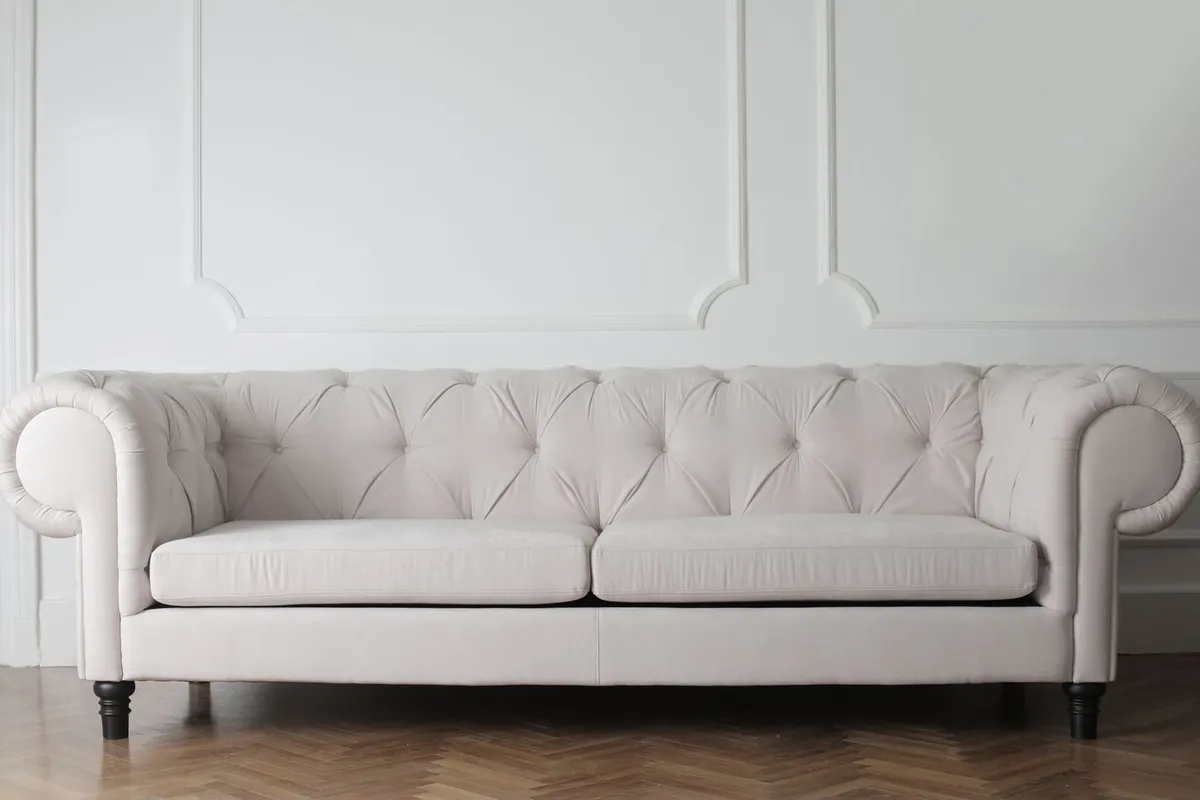
Do this even if you only came to clean one spot. Grit and crumbs turn to mud the moment you add liquid, and that mud is what spreads into a ring.
- Pull off all the cushions and set them aside.
- Vacuum the deck and crevices with the crevice tool. Run it along the seams where the back meets the seat and down the sides of the arms.
- Vacuum every surface with the upholstery tool, including the back and the sides that face the wall. Work in short, overlapping strokes.
- Do both sides of each cushion.
If you have pets, a rubber glove or a damp (not wet) rubber squeegee dragged across the fabric pulls up hair that the vacuum leaves behind.
Step 3: Test your cleaner in a hidden spot
Pick a place nobody sees, like the back of the couch near the floor or under a cushion. Apply a little of the cleaner you plan to use, blot it, and let it dry completely. Then check for color change, fading, stiffness or a ring. If it looks the same, you’re safe to go on. If it doesn’t, stop and call a pro.
Also dab the spot with a white cloth while it’s wet. Any dye on the cloth means the color isn’t fast, and you should not clean that fabric yourself.
Step 4: Clean based on the code
For W and W/S couches
Mix about a teaspoon of clear dish soap in two cups of lukewarm water. Distilled water is worth using if your tap water is hard, because the minerals in hard water are often what leaves the ring behind.
- Dip a white microfiber cloth in the suds, not the water, and wring it out until it’s barely damp.
- Blot the stain, working from the outside edge toward the center so you don’t spread it. Don’t scrub. Scrubbing pushes the stain deeper and roughs up the fibers.
- Rinse with a second cloth dampened in plain water to lift out the soap. Soap residue attracts dirt and makes the spot go gray again.
- Blot dry with a dry towel, pressing firmly.
To clean a whole cushion or panel and not just a spot, do the entire section from seam to seam. Cleaning just a patch in the middle of a cushion is what leaves a visible “clean spot.”
For S couches
Fill a small spray bottle with rubbing alcohol (70% isopropyl works). Alcohol cleans and then evaporates fast, before it can leave a water mark.
- Mist the area lightly. Don’t soak it.
- Rub gently with a white sponge or white cloth in one direction. You’ll see the dirt lift onto the sponge. Turn it to a clean side often.
- Let it dry, which takes only a few minutes.
- Brush the fabric with a soft brush, moving in circles. Microfiber dries stiff and flat, and brushing brings back the soft nap.
For stubborn spots on S fabric, use a water-free dry-cleaning solvent made for upholstery, and follow its label. Open a window when you use solvents.
For X couches
Vacuum and brush only. If a stain won’t come up with a soft brush, call a professional upholstery cleaner.
Getting rid of smells
Sprinkle baking soda over the dry fabric, a light even layer, and leave it for at least 20 minutes. A few hours is better, and overnight works best for pet and food smells. Then vacuum it up thoroughly with the upholstery tool. Baking soda is dry, so it’s safe on every code except X, and it soaks up odors rather than covering them.
For a urine accident, deal with it quickly. Blot up as much as you can with paper towels, pressing hard. Then use an enzyme cleaner made for pet urine on W-coded fabric, after a spot test. Enzymes break down the parts of urine that keep smelling, which soap and water won’t do.
Washing removable cushion covers
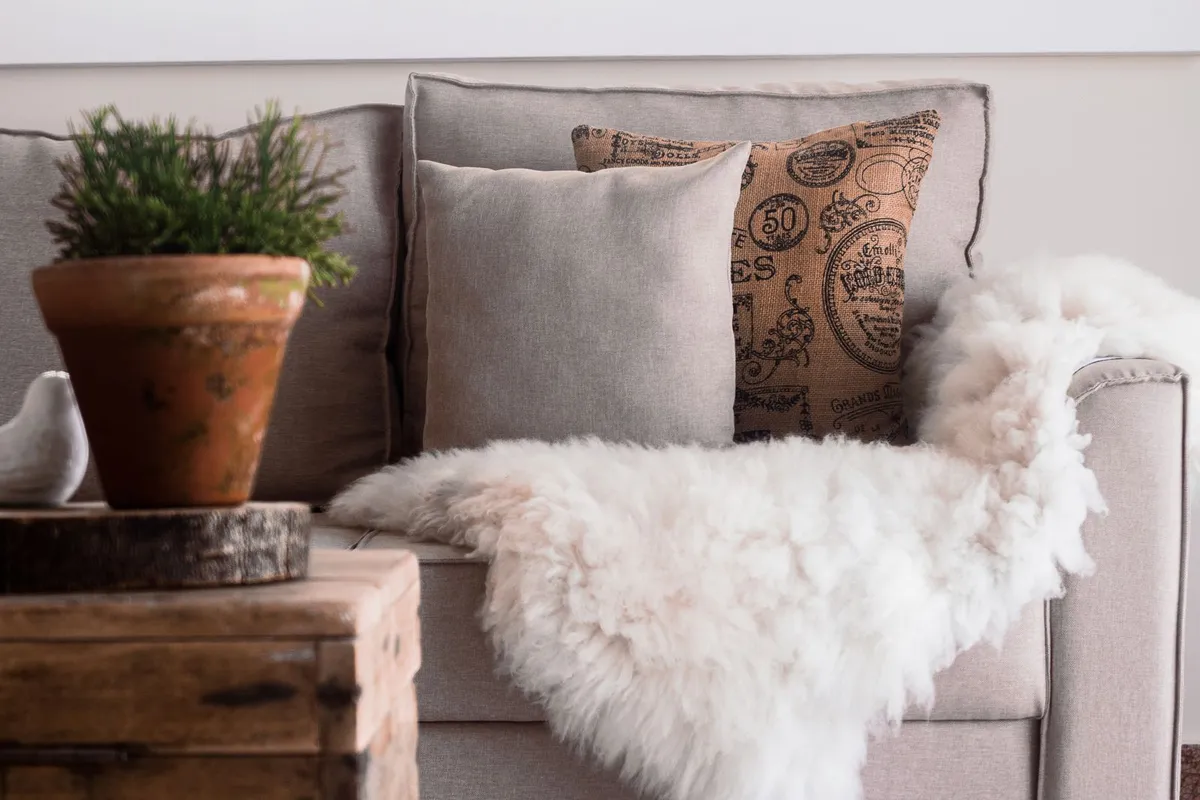
A zipper on a cushion doesn’t always mean the cover is washable. Many zippers are there to make the cushion easier to build at the factory. Check the care tag on the cover itself first.
If it says the cover is machine washable:
- Wash all the covers together, even the clean ones. Washing just one can leave it a slightly different shade from the rest.
- Use cold water and a gentle cycle, and zip the covers closed first so the zippers don’t snag.
- Air dry or tumble on no heat. High heat shrinks covers, and a cover that shrinks even a little is very hard to get back on.
- Put them back on while slightly damp. They stretch more easily that way and then dry to a snug fit.
Drying it properly
Moisture left deep in the cushions can smell musty and, in the worst case, grow mildew. Speed up drying by opening windows, running a fan pointed at the couch, or running the AC or a dehumidifier. Stand cushions on their edges so air reaches both sides. Don’t sit on the couch until it’s completely dry, usually a few hours for spot cleaning.
Quick answers
What if my couch has no cleaning tag? Treat it as S-coded. Use rubbing alcohol, test it first in a hidden spot, and avoid water.
Can I use a steam cleaner on a fabric couch? Only on W-coded fabric, and only after a spot test. Steam is water, so it can ruin S and X fabrics.
Why did my couch get a water ring after I cleaned it? Usually from too much water, hard water minerals, leftover soap, or cleaning only a small spot instead of the whole panel. Re-clean the full panel seam to seam with distilled water and blot it well, and the ring usually blends away.
How often should I clean a fabric couch? Vacuum it every week or two. Do a deeper clean once or twice a year, and handle spills right away.