How to Remove Hard Water Stains From a Faucet
White crust and spots on your faucet come off with plain white vinegar and a little patience. Here's how to clean the faucet, spray head and aerator without damaging the finish.

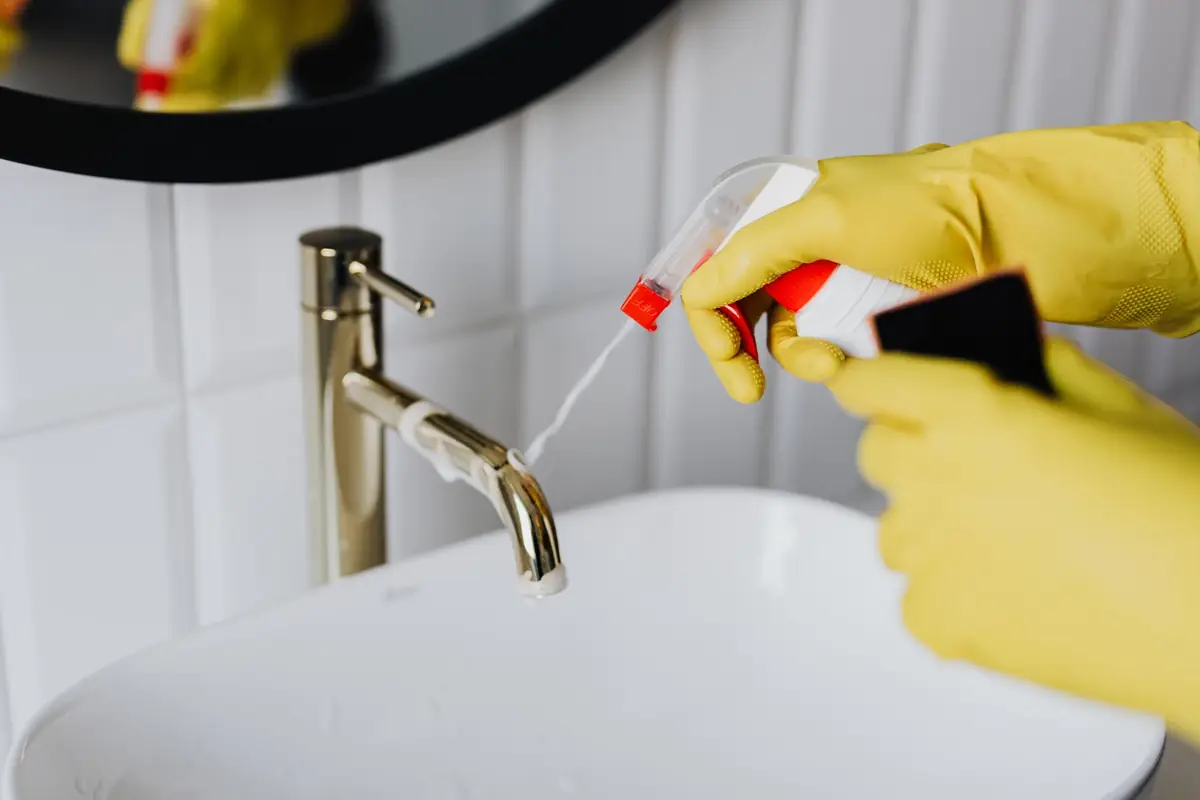
Those chalky white spots and crusty rings around your faucet are minerals left behind when hard water dries. They don’t come off with soap because they aren’t dirt. They dissolve in a mild acid, and the one you already have is white vinegar.
What you need
- White vinegar
- Paper towels or a soft cloth
- A rubber band or a zip-top bag
- An old soft toothbrush
- Baking soda, for stubborn spots
- A microfiber cloth for drying
Skip abrasive scouring pads, steel wool and harsh cleaners. They can scratch or strip the faucet’s finish, and most warranties don’t cover damage from them. Check your faucet maker’s care guide; some finishes, like matte black or bronze, are more delicate.
Step 1: Wrap the faucet in vinegar
- Soak a paper towel in white vinegar.
- Wrap it around the crusty areas: the base, the handle and where the spout meets the sink.
- Let it sit 15 to 30 minutes. The vinegar softens the mineral layer.
For light spotting, you can skip the soak and just wipe with a vinegar-dampened cloth.
Step 2: Soak the spray head or aerator
The holes in the spray head and the aerator screen at the tip clog first.
- Fill a zip-top bag with enough vinegar to cover the end of the spout or spray head.
- Slip it over the head and hold it in place with a rubber band.
- Leave it for an hour, or a few hours for heavy buildup.
- Remove the bag and run the water to flush loosened scale.
If your spray head has rubber nozzles, rub each one with your fingertip to pop out the scale. Many Delta and Moen heads are designed for this.
Step 3: Scrub and rinse
Use a soft toothbrush to scrub around the base, the handle and any seams. For stubborn spots, make a paste of baking soda and a few drops of vinegar, spread it on, let it fizz for a few minutes, then scrub gently.
Rinse well with water. Don’t leave vinegar sitting on the finish longer than needed.
Step 4: Dry it
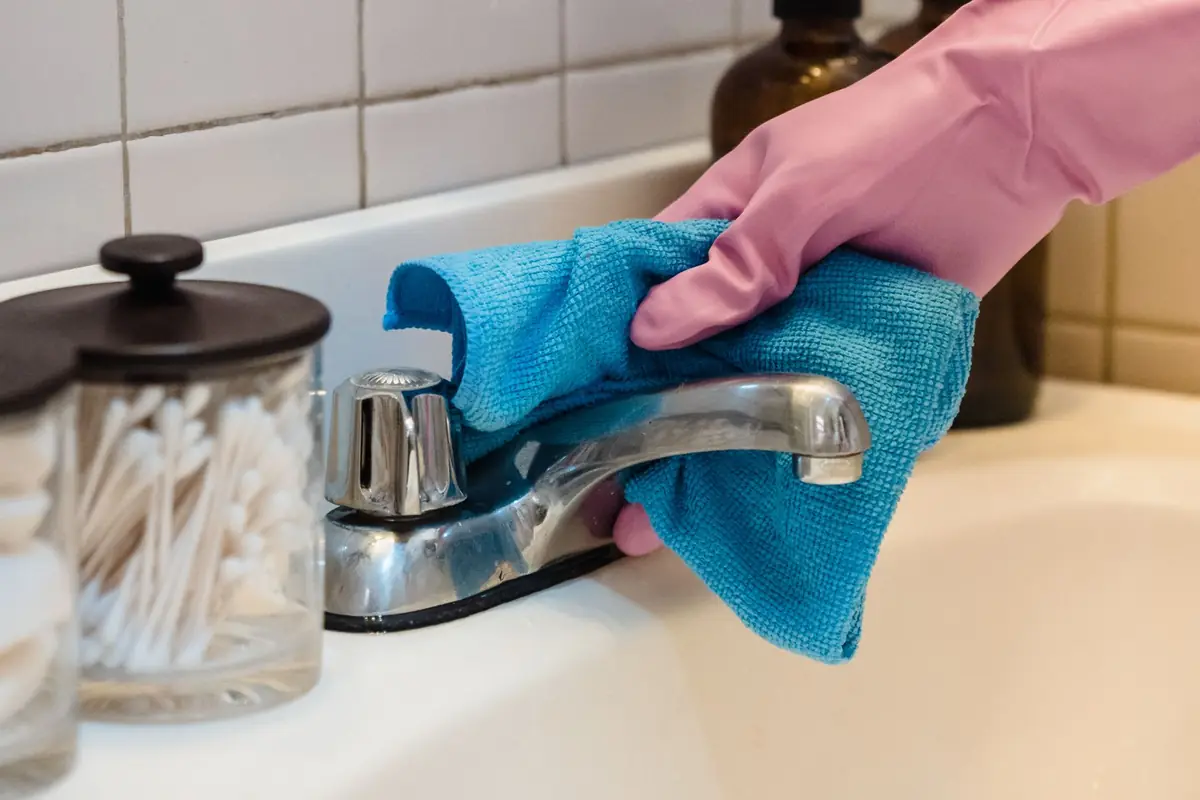
Buff the faucet dry with a microfiber cloth. Leaving water to evaporate is what causes spots in the first place.
Cleaning the aerator
If the stream is weak or spraying sideways, the aerator is probably clogged.
- Unscrew the aerator from the tip of the spout. Wrap it in a cloth if you need pliers so you don’t scratch it.
- Soak it in vinegar for an hour or more.
- Scrub the screen with a toothbrush and rinse.
- Screw it back on hand-tight.
Some newer faucets use a hidden aerator that needs a small key from the manufacturer.
How to keep spots away
- Wipe the faucet dry after you do dishes. A dish towel nearby makes it a habit.
- Clean weekly with a quick vinegar wipe if your water is very hard.
- Choose a spot-resistant finish when you replace the faucet. See the best kitchen faucets for hard water.
- Consider a water softener if scale is everywhere. Here’s reverse osmosis vs a water softener.
Quick answers
Is vinegar safe on all faucets? It’s safe on most chrome and stainless finishes when rinsed off. Check the maker’s care guide for specialty finishes like brass, bronze or matte black, and test a hidden spot first.
Can I use CLR or lime remover? Some faucet makers warn against strong chemical cleaners. If you use one, follow the label, rinse well and check your faucet’s warranty first.
What about lemon juice? It works the same way as vinegar, since it’s also a mild acid, and smells better.