Best Electric Patio Heaters for Walls and Ceilings: Plug-In and Hardwired Picks
Wall and ceiling mounted electric patio heaters, from a plug-in 1500-watt infrared bar to a hardwired 6000-watt heater with an app. What each one needs from your outlet or electrician, and the mounting heights from their manuals.

We may earn a commission if you buy through links on this page. It never changes what we recommend. As an Amazon Associate we earn from qualifying purchases. Learn more.
Our top picks at a glance
- Check Amazon Price
A slim carbon infrared heater that mounts on a wall or ceiling, plugs into a regular outdoor outlet and has three heat levels on a remote. Read more
Pros
- Plugs into a standard 120V outlet
- Three heat levels: 900, 1200 and 1500 watts
- Wall or ceiling mount
- Remote included
Cons
- Needs about 94.5 inches of height to the bottom of the heater
- Warms one seating area
- Check Amazon Price
A tough, no-frills 1500-watt plug-in infrared heater with wall and ceiling mounting included, a remote and a tip-over shutoff. Read more
Pros
- Plugs into a standard 110 to 120V outlet
- IPX4 weather rating
- Wall and ceiling mounts included
- Tip-over safety shutoff
Cons
- Single heat setting
- Looks more workshop than patio
- Check Amazon Price
A 6000-watt hardwired infrared heater with three heat levels, a phone app, a remote and a motion sensor that can switch it on when people sit down. Read more
Pros
- 6000 watts, four times a plug-in heater
- Wi-Fi app plus remote
- Motion sensor
- Three heat levels
Cons
- Must be hardwired to a 240V circuit
- Plan on paying an electrician
- Check Amazon Price
A slim, glare-reduced commercial-grade heater that restaurants use, with a stainless body and a heating area of up to 120 square feet when mounted at 8 feet. Read more
Pros
- Low-glare dual elements
- Up to 120 sq ft heating area
- Wall or ceiling mount
- Works with Bromic dimmer controls
Cons
- Hardwired 240V
- about 16.6 amps
- Expensive
- and dimmers cost extra
An electric heater mounted on a wall or ceiling is the tidiest way to heat a patio. There’s no tank to refill, no fumes, nothing on the floor to trip over, and you turn it on with a remote. Infrared heaters warm you the way sunshine does. They heat the people and furniture in front of them rather than the air, which is why they still work on an open patio where warm air just drifts away.
The big decision is power. A 1500-watt heater plugs into a normal outdoor outlet and warms one seating area. Anything bigger runs on 240 volts and needs an electrician. This list has two of each.
Compare at a glance
| Heater | Power | Electrical | Mounting | Height rule |
|---|---|---|---|---|
| Dr Infrared DR-238 | 1500W | 120V plug-in | Wall or ceiling | Bottom of heater at least 94.5” up |
| Heat Storm Tradesman 1500 | 1500W | 120V plug-in | Wall or ceiling | Follow the manual in the box |
| Heat Storm 6000W Wi-Fi | 6000W | 240V hardwired | Wall or ceiling | Follow the manual in the box |
| Bromic Tungsten 4000W | 4000W | 240V hardwired | Wall or ceiling | 71” up on a wall, 96” on a ceiling |
Power and mounting heights come from each heater's own manual or listing. Always follow the manual for your unit and your local electrical code.
How we chose these
We haven’t tested these heaters on our own patio. We read the manuals and spec sheets first, since mounting heights, clearances and wiring decide whether a heater will work for you before comfort even comes into it. Then we checked each heater’s specs against the maker’s site and confirmed the exact model is sold on Amazon. We dropped a popular Westinghouse wall heater because its Amazon listing had no seller this week.
What we looked for:
- Electrical needs you can meet. We split the list between plug-in heaters and hardwired ones so you know up front if you need an electrician.
- A weather rating. Every pick here is rated for outdoor use. IPX4 handles splashing rain. IP55 also keeps out dust and handles water jets.
- Clear mounting rules. Most electric patio heaters have a minimum height. If your patio cover is too low, the heater won’t work there.
- Infrared heat. Radiant heat is the only kind that does much outdoors.
Read more about how we pick products.
1. Dr Infrared Heater DR-238 1500W Carbon Infrared Patio Heater: Best overall
Who it’s for: Covered patios and decks with an outdoor outlet nearby and a reasonably high ceiling.
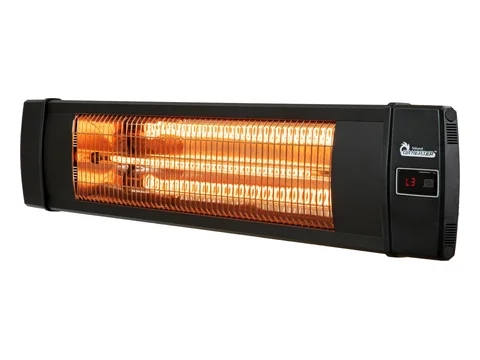
The DR-238 is a slim aluminum bar, about 35 inches long, with a carbon infrared element that heats up in seconds and gives off a soft orange glow. It plugs into a standard 120-volt outlet and has three heat levels, 900, 1200 and 1500 watts, which you change with the included remote. Wall and ceiling brackets come in the box. It’s the heater we’d point most people to first, because it needs nothing more than an outlet.
What bugs us: Height. Dr. Infrared’s manual says the lowest part of the heater has to sit at least 94.5 inches (about 7 feet 10 inches) off the ground, and a wall mount needs about 16 inches of space above it. The manual also says to plug it straight into the outlet with no extension cord. And like every 1500-watt heater, it warms a seating area, not a whole patio.
Skip it if: your patio cover is 8 feet or lower. See our covered porch heater guide for a tripod version.
2. Heat Storm Tradesman 1500W Infrared Heater with Remote: Best budget
Who it’s for: Patios, garages and workshops where you want simple plug-in heat for less money.
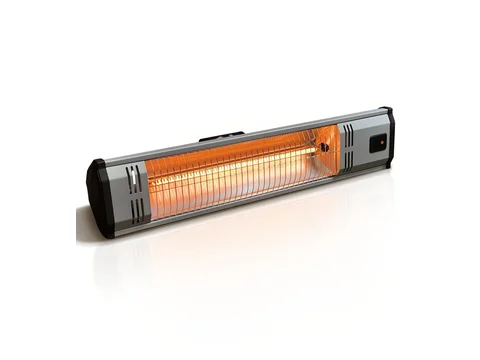
The Tradesman 1500 is a 1500-watt infrared heater with a carbon fiber element, built for both patios and work spaces. It plugs into a standard 110 to 120-volt outlet with an 8-foot cord, and Heat Storm includes both wall and ceiling mounting hardware. It’s IPX4 rated for rain and snow, it runs silently, and it has a remote plus a tip-over shutoff.
What bugs us: It’s one heat setting, on or off. The housing looks like what it is, a garage-tough heater, so it won’t blend into a nicely styled patio. Heat Storm doesn’t list a mounting height on its product page, so read the manual before you drill.
Skip it if: you want to dial the heat down on milder evenings. The DR-238’s three levels are handier.
3. Heat Storm 6000W Wi-Fi Infrared Heater: Most heat
Who it’s for: Big patios, outdoor kitchens and covered decks where a 1500-watt heater barely makes a dent.
At 6000 watts, this heater puts out four times as much as a plug-in model. It has three heat levels, and you can run it from Heat Storm’s phone app, the included remote or a built-in motion sensor that turns it on when people are nearby. Heat Storm says the low-glare element gives a gentler light than many infrared heaters, which matters when the heater is aimed at your dinner table. It mounts on a wall or ceiling and weighs about 15 pounds.
What bugs us: It has to be hardwired to a 240-volt circuit, and Heat Storm recommends a licensed electrician. Budget for that work on top of the heater, especially if there’s no 240-volt circuit near your patio yet.
Skip it if: you only need to warm two or three chairs. It’s more heater than a small patio needs.
4. Bromic Tungsten Smart-Heat Electric 4000W: Best premium
Who it’s for: Outdoor rooms and patios where looks matter as much as heat, and you’re already bringing in an electrician.
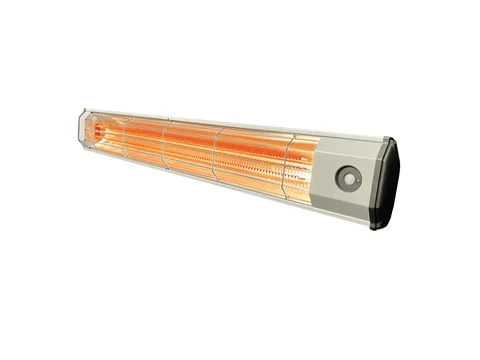
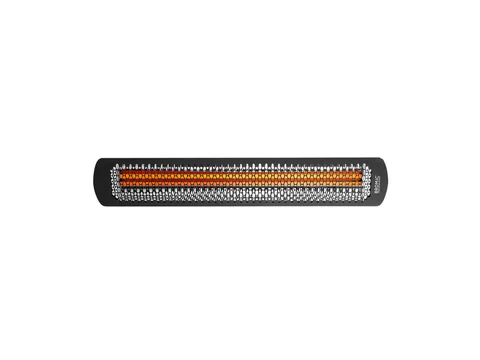
Bromic makes heaters for restaurants and hotels as well as homes, and the Tungsten Smart-Heat Electric is its slim electric line. The 4000-watt model is a black, 44-inch bar with two elements behind a reflector that cuts glare. Bromic’s manual rates it for a heating area of up to 120 square feet when it’s mounted at 8 feet, less in wind and extreme cold. It’s IPX4 rated, weighs 19.8 pounds and mounts on a wall or ceiling. With Bromic’s dimmer controls, sold separately, you can set the heat anywhere in its range instead of just on and off.
What bugs us: It’s expensive, and it’s hardwired to 240 volts at about 16.6 amps, so it needs a dedicated circuit. The mounting rules are strict too. The manual says at least 71 inches off the floor on a wall and 96 inches on a ceiling, with the front of the heater at least 13 inches from the ceiling and 3 feet of open space in front of it.
Skip it if: you want plug-in convenience. Nothing here beats the DR-238 for that.
Plug-in or hardwired?
- 1500 watts (plug-in): draws about 12.5 amps on a 120-volt outlet. It warms one seating area, roughly the space for two to four chairs. Use a GFCI-protected outdoor outlet and skip extension cords.
- 3000 to 6000 watts (hardwired or 240V): warms a dining table, an outdoor kitchen or a long sectional. Expect an electrician to add a dedicated 240-volt circuit, which can cost more than the heater.
If you’re not sure, start with one 1500-watt heater over your favorite seat. You can always add a second on another circuit.
Getting the most out of an electric patio heater
- Measure first. Check the manual’s minimum height and measure from the floor to where the heater will hang, not to the highest point of the ceiling.
- Aim it at people. Tilt the heater down toward the seats.
- Cut the wind. A privacy screen or outdoor curtain on the windward side does more than extra watts.
- Keep 3 feet clear in front. Cushions, curtains and umbrellas shouldn’t sit in the heater’s path.
Quick answers
How much area does an electric patio heater warm? A 1500-watt heater covers one seating area. Bromic rates its 4000-watt Tungsten at up to 120 square feet when mounted at 8 feet, in a sheltered spot.
Can I plug a patio heater into an extension cord? Most manuals say not to. Dr. Infrared’s says to plug straight into the wall outlet. Use a weatherproof, GFCI-protected outdoor outlet within reach of the cord.
Are electric patio heaters expensive to run? A 1500-watt heater uses 1.5 kWh an hour on high. At an electricity rate of about 17 cents per kWh, that’s roughly 25 cents an hour. Check your own bill for your rate.
Can an electric patio heater go under a covered patio? Yes. That’s where they work best, as long as you meet the manual’s minimum heights and clearances.