Best Outdoor Storage Sheds for a Lawn Mower
Resin sheds that actually fit a mower: a Keter 8x6 for push mowers and tools, a Lifetime 8x10 with a door wide enough for many lawn tractors, a compact Rubbermaid and a low Suncast Glidetop. Plus how to measure your mower before you buy.

We may earn a commission if you buy through links on this page. It never changes what we recommend. As an Amazon Associate we earn from qualifying purchases. Learn more.
Our top picks at a glance
- Check Amazon Price
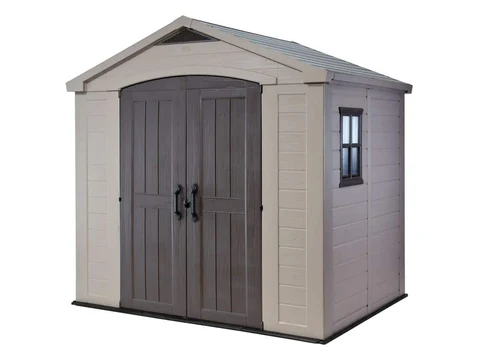
An 8x6 resin shed with a floor, double doors about 54 inches wide and room for a push mower plus the rest of your yard tools. Read more
Pros
- Floor included
- Double doors about 54.5 inches wide
- Skylight window and vents
- Two shelves included
Cons
- Only 64 inches deep inside
- Too small for most riding mowers
- Check Amazon Price
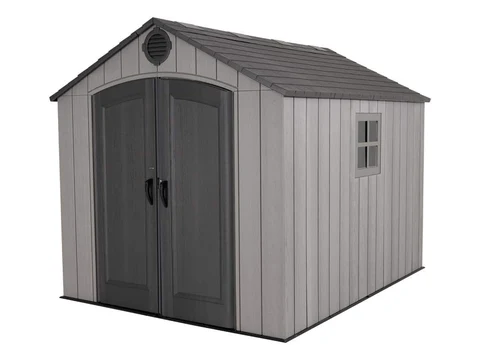
A 10-foot-deep resin shed with a 56-inch door opening, big enough for many small lawn tractors with room left for tools. Read more
Pros
- Door opening 56.4 in. wide by 75.7 in. tall
- About 10 feet deep
- Floor shelf and wall hooks included
- 10-year limited warranty
Cons
- Heavy and a full-day build
- Needs a level foundation
- Floor can be slick when wet
- Check Amazon Price
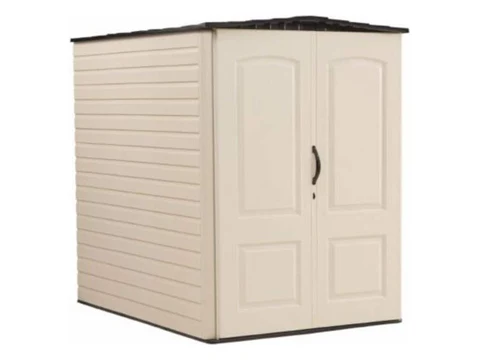
A walk-up resin shed that Rubbermaid says takes a push mower or an adult bike straight in without turning it. Read more
Pros
- Push mower rolls straight in
- Small footprint
- Floor included
- Lockable double doors
Cons
- No room for a riding mower
- Sold by a third-party seller on Amazon when we checked
- Check Amazon Price
A waist-high shed with a sliding lid and front doors, about 6 feet deep inside, for a push mower where a tall shed won't fit. Read more
Pros
- Lid slides open for top access
- Under 4.5 feet tall
- Reinforced floor
- Made in the USA
Cons
- Door opening only about 46 inches tall
- No room to walk in
A shed is the easiest way to get a mower out of the garage, but plenty of “large” sheds still won’t take one. The door is too narrow, the inside is too shallow, or the floor isn’t built for the weight. So before you look at brands, measure your mower.
For a push mower, measure its length with the handle up or folded, its width at the wheels and its height. Most push mowers roll into any shed with a door around 4 feet wide and 5 feet of depth inside. For a riding mower or lawn tractor, measure the widest point, which is usually the deck or the discharge chute, and the length from bumper to bumper. You need the door opening wider than that number, with an inch or two to spare on each side, and the shed deeper than the mower is long.
At a glance
| Shed | Best for | Door opening | Inside depth | Footprint | Floor |
|---|---|---|---|---|---|
| Keter Factor 8x6 | Push mower plus tools | 54.5” wide | 64” | 101” x 71.5” | Included |
| Lifetime 8x10 (60356) | Small lawn tractors | 56.4” W x 75.7” H | About 10 ft | 96” x 119.7” | Included |
| Rubbermaid Large Vertical | Push mower in a small yard | 48” W x 72” H | Fits a push mower straight in | About 77” x 57” | Included |
| Suncast Glidetop | Push mower, low profile | 46.5” W x 46.25” H | 71.75” | 57.5” x 79.75” | Included |
Specs come from Keter's and Suncast's own product pages, Home Depot's spec sheets for the Lifetime and Rubbermaid sheds, and the Amazon listings. Check the listing for the exact model before you buy, since sizes vary between versions.
1. Keter Factor 8x6 Resin Storage Shed: Best overall
Good fit for: A push mower, a string trimmer, a leaf blower and the rest of a typical yard’s tools.
The Factor 8x6 is the shed we’d start with for most yards with a push mower. Keter lists the inside at 93 inches wide, 64 inches deep and 94 inches tall at the peak, or 285 cubic feet. The double doors open about 54.5 inches wide, so a push mower rolls in without tipping it or folding the handle first. That leaves room along the walls for a trimmer, a spreader, bags of soil and a couple of bikes.
The walls are double-wall resin with steel reinforcement, so there’s nothing to paint or stain and nothing to rot. It has a floor, a skylight, a small window, vents and two shelves, and the door handles take your own padlock. Keter backs it with a 10-year limited warranty.
What bugs us: At 64 inches deep inside, it’s too short for nearly every riding mower. It also needs a level base. Keter lists a minimum foundation of about 97.6 by 70.1 inches, so plan for pavers, a gravel pad or a wood platform.
Skip it if: you have a riding mower. Go with the Lifetime 8x10 instead.
2. Lifetime 8x10 Outdoor Storage Shed (60356): Best for riding mowers
Good fit for: Small lawn tractors and riding mowers, plus a push mower or tools alongside.
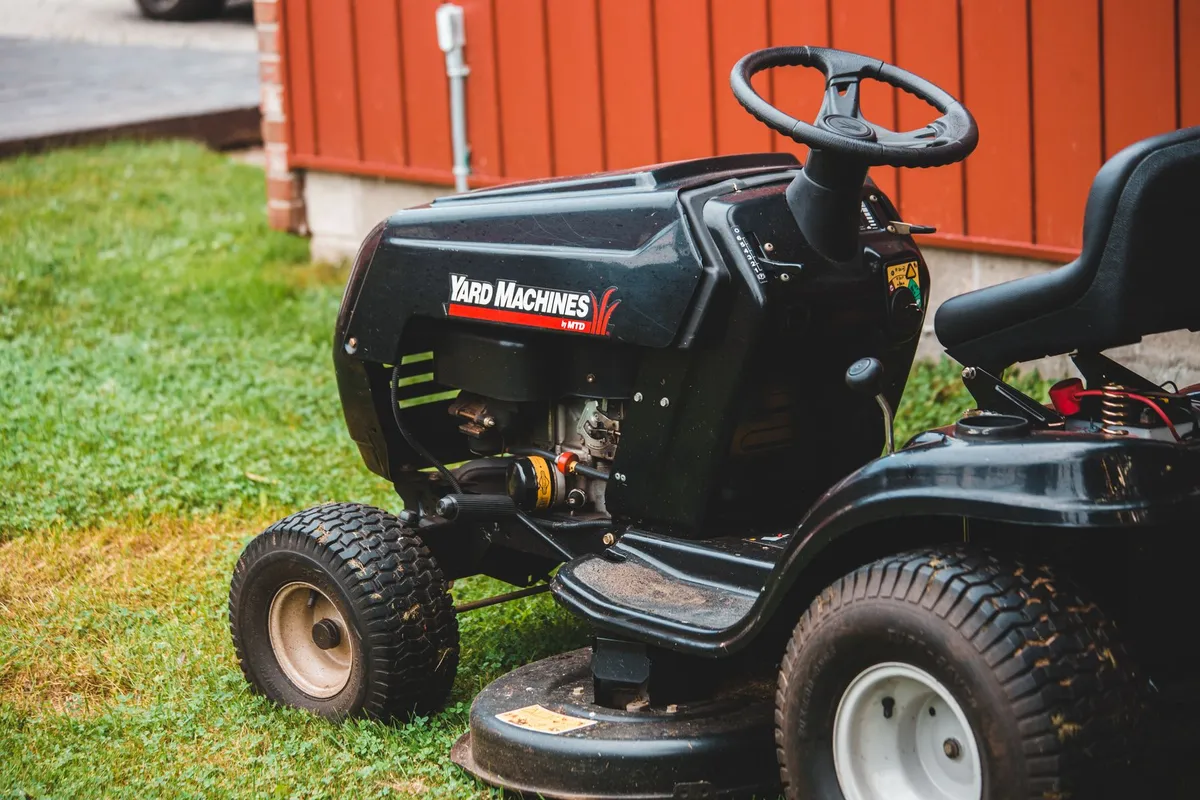
This is the one to look at if a riding mower has to fit. Home Depot’s spec sheet puts the door opening at 56.4 inches wide and 75.7 inches tall, and the shed runs about 10 feet deep with roughly 71 square feet of floor. Many small lawn tractors with a 42-inch deck come in under that door width, but some don’t, so measure the widest point of yours before you order. A tractor parked lengthwise still leaves floor space for a push mower or a trimmer.
It’s double-wall polyethylene with steel reinforcement and a textured, wood-look finish. Lifetime includes the floor, skylights, a window, screened vents, a height-adjustable shelf and removable wall hooks, and covers it with a 10-year limited warranty. The steep roof is rated for 23 pounds per square foot of snow load.
What bugs us: It’s a big kit, close to 470 pounds, and a two-person, full-day build. It needs a flat, level foundation that you supply, and the doors take a padlock you also supply. The listing warns that the plastic floor gets slippery when it’s wet, which matters when you’re driving a mower in. The floor also sits up off the ground, so you’ll likely want a small ramp at the door.
Skip it if: you only have a push mower. The Keter costs less and is plenty.
3. Rubbermaid Large Vertical Storage Shed: Best compact shed
Good fit for: Small yards and townhouse patios where a push mower is the biggest thing you own.
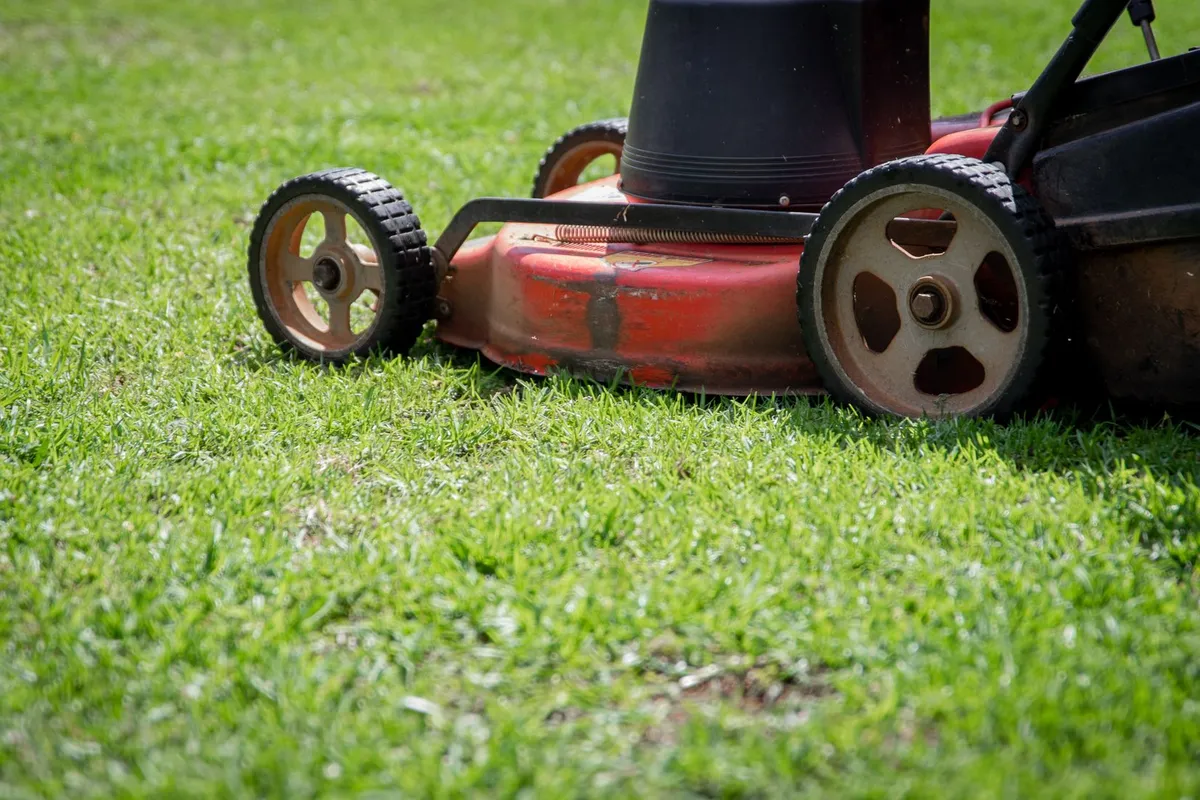
Rubbermaid made this shed extra deep for its footprint, and says a push mower or an adult bike goes straight in without turning it. The Amazon listing puts the outside at about 77 by 57 inches and just under 77 inches tall, so it fits along a fence or the side of a house where an 8x6 shed won’t. Home Depot lists the door opening at 48 by 72 inches and about 159 cubic feet inside.
The double-wall resin walls and peaked roof need no painting, a floor is included, and the double doors latch and take a padlock.
What bugs us: There’s room for a mower and a few long-handled tools, not much more. When we checked, the Amazon listing was sold and shipped by a third-party seller rather than Amazon itself, so read the seller’s return terms before you order.
Skip it if: you also need space for a wheelbarrow, bikes and bags of mulch. The Keter holds a lot more.
4. Suncast Glidetop Horizontal Shed: Best low-profile shed
Good fit for: A push mower under a window, beside a deck or anywhere a tall shed would block the view.
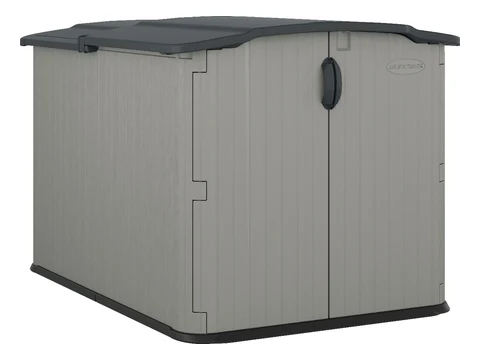
The Glidetop is a low, waist-high shed, about 4 feet 4 inches tall. Suncast lists the inside at 4 feet 2.25 inches wide, 5 feet 11.75 inches deep and 3 feet 11 inches tall, or 98 cubic feet. The front doors open 46.5 inches wide by 46.25 inches tall, so a push mower rolls in on the reinforced floor. The lid slides back, so you can reach in from above for a trimmer or a gas can without pulling the mower out first.
It’s multi-wall resin made in the USA, with a pad-lockable three-door locking system (padlock not included). It’s also far easier to place than a walk-in shed, since it needs a level spot only about 5 by 7 feet.
What bugs us: You can’t walk in, so it’s a mower box with some extra room, not a workshop. A mower with a tall bagger or a handle that doesn’t fold may not clear the 46-inch door, so measure the height first.
Skip it if: you want shelves and a place to stand. Go with the Keter.
How we picked
We looked for sheds a mower can actually get into: a door opening wide enough, enough depth inside and a floor included or built for the weight. We stuck to resin sheds from Keter, Lifetime, Rubbermaid and Suncast, since resin doesn’t rust or rot and needs no painting. We checked door openings, inside sizes and what comes in the box against each maker’s product pages and Home Depot’s spec sheets, and we only picked sheds we found listed on Amazon. We looked for:
- Door opening: wide enough for the mower it’s meant for
- Inside depth: deeper than the mower is long
- Floor: included, so the mower isn’t sitting on dirt
- Light and air: skylights, windows or vents
- Security: doors that take a padlock
We haven’t tested these sheds ourselves. Read more about how we pick products.
Before you buy

- Plan the foundation first. None of these sheds should sit straight on grass. A level pad of pavers, compacted gravel inside a wood frame or a concrete slab keeps the floor flat and the doors lined up. A shed on uneven ground is the most common reason doors stop closing.
- Think about the threshold. Most resin sheds sit a few inches off the ground on their floor. That’s easy to roll a push mower over, but a riding mower usually needs a short ramp.
- Check local rules. Many towns don’t require a permit for a small shed, but some limit size, height or how close a shed can sit to the property line. HOAs often have their own rules too.
- Leave room around the doors. You’ll need open space in front to swing the doors and turn the mower.
- Store fuel carefully. Keep gas in an approved can, let the engine cool before you park the mower, and keep both away from anything that makes a spark or flame. If the mower will sit all winter, add fuel stabilizer or run the tank dry first.
Not sure which mower you need first? Our guide to what size riding mower you need covers deck widths by yard size.
Still wondering?
Will a zero-turn mower fit in an 8x10 shed? Usually not through the door. Most residential zero-turns have decks of 42 inches or more and are wider overall than the deck. Measure the widest point and compare it with the door opening, not the shed’s outside size.
Is resin or metal better for a mower shed? Resin doesn’t rust or dent and needs no painting, and most resin sheds come with a floor. Metal sheds often cost less for the size, but many don’t include a floor and can sweat inside in humid weather.
Can I put a shed on gravel? Yes, if the gravel is compacted, level and held in by a frame. It drains better than bare dirt and costs less than concrete.
How hard are these to put together? Plan on two people. The small Suncast and Rubbermaid sheds are an afternoon’s work. The Keter and Lifetime walk-in sheds take most of a day, and they go together far easier on a foundation that’s already level.