Best Log Splitters for Home Use
Our picks for a home log splitter from DR, Sun Joe, Champion and Kindling Cracker: a plug-in electric splitter, a budget electric, a 27-ton gas splitter for big rounds, a hand-pumped hydraulic model and a no-swing kindling splitter. Plus how many tons you really need.

We may earn a commission if you buy through links on this page. It never changes what we recommend. As an Amazon Associate we earn from qualifying purchases. Learn more.
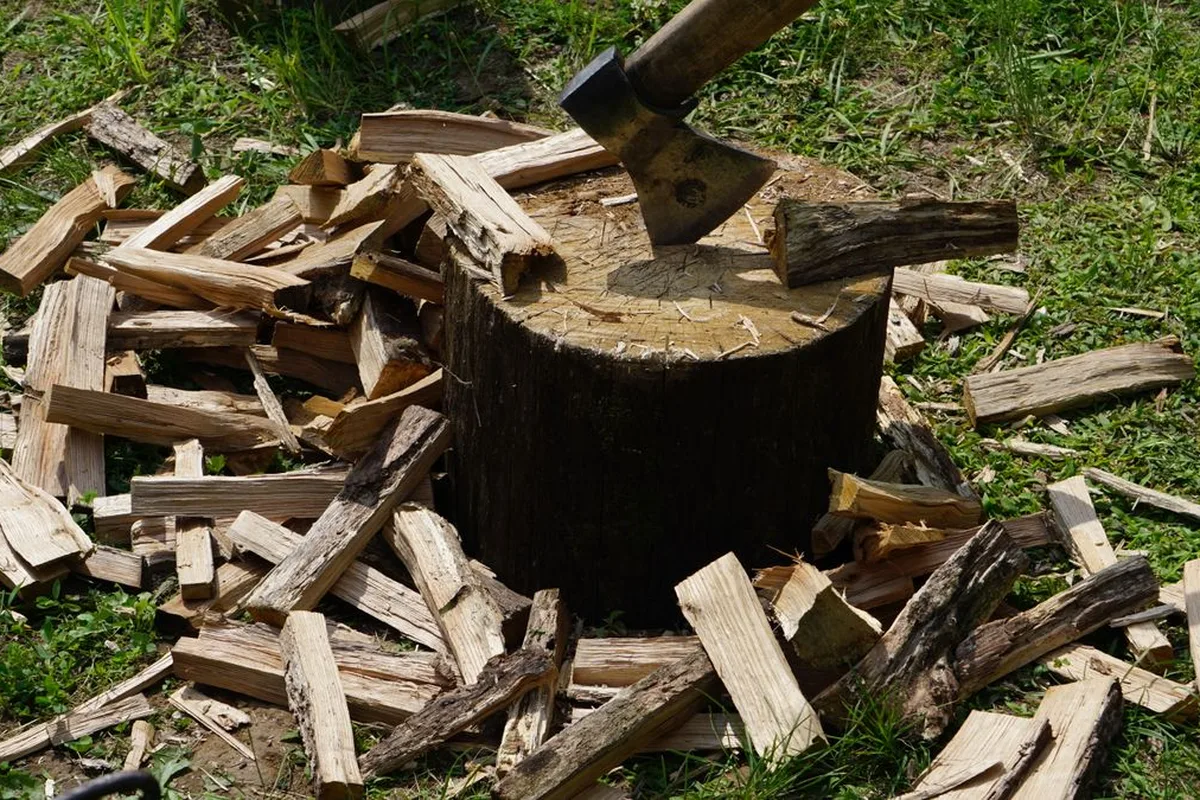
Our top picks at a glance
- Check Amazon Price
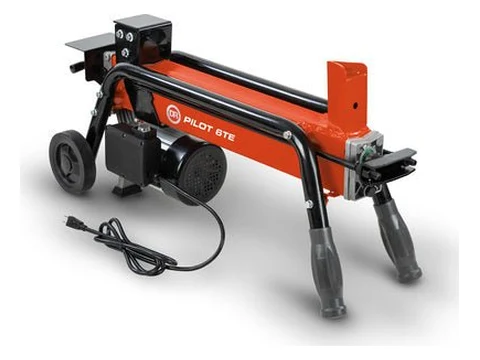
A 6-ton plug-in splitter from DR that handles logs up to 20 inches long and 10 inches thick, quietly enough to use in a garage. Read more
Pros
- Plugs into a regular household outlet
- Ships with hydraulic fluid and no assembly
- Quiet with no fumes
Cons
- 26-second cycle is slow
- Tops out at 10-inch-thick logs
- Check Amazon Price
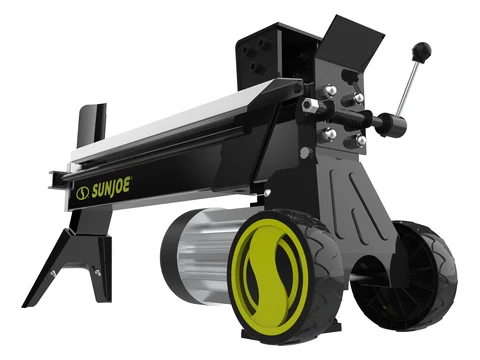
A 5-ton, 15-amp electric splitter on wheels for occasional firewood, with a two-handed safety control. Read more
Pros
- Two-handed safety switch
- Six-inch wheels
- Two-year warranty
Cons
- 5 tons struggles with knotty hardwood
- Made for occasional use
- Check Amazon Price
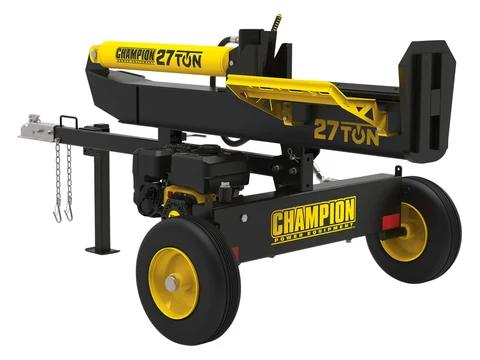
A towable 27-ton gas splitter with auto return that tips up to vertical for rounds too heavy to lift. Read more
Pros
- 27 tons for big hardwood rounds
- Works horizontal or vertical
- Auto-return valve
Cons
- About 465 lb
- Hydraulic oil sold separately
- Gas engine to maintain
- Check Amazon Price
A hand-pumped 10-ton hydraulic splitter with no cord or engine, for logs up to 18 inches long and 8 inches thick. Read more
Pros
- No gas or cord needed
- 10 tons of force
- Quiet
Cons
- Slow
- Smaller logs only
- Check Amazon Price
A cast iron ring with a fixed wedge inside. Set a piece of wood on the blade and tap it through with a mallet. Read more
Pros
- No axe swing
- Hands stay outside the ring
- Nothing to plug in or maintain
Cons
- Only for small pieces
- You need a mallet
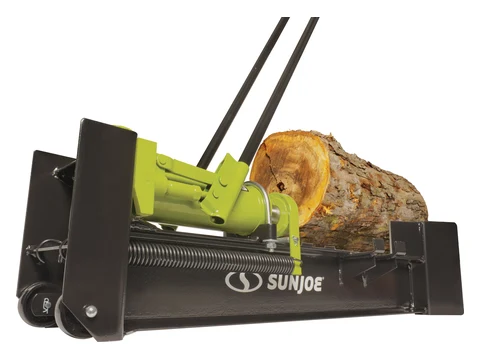
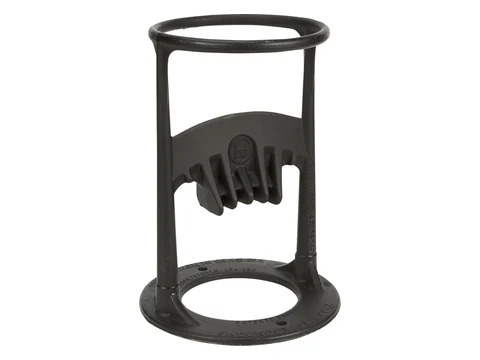
A log splitter pushes a wood round into a steel wedge with a hydraulic ram, so you don’t have to swing a maul. For most homes, the question isn’t “which brand?” It’s how big and how hard your wood is, and whether you want to run an engine.
Two questions narrow it down fast. How thick are your logs, and what kind of wood? Most store-bought or seasoned firewood that fits a wood stove (under 10 inches thick) splits fine on a 5- to 6-ton electric splitter. Big, green or knotty hardwood rounds like oak, elm and hickory need a 20-ton-plus gas splitter. Where will you use it? An electric splitter can run in a garage or shed with no fumes. A gas splitter belongs outside and usually gets towed to the woodpile.
At a glance
| Splitter | Power | Force | Biggest log | Weight | Cycle time |
|---|---|---|---|---|---|
| DR Pilot 6TE | Electric, 120V | 6 tons | 20” long, 10” thick | 90 lb | 26 sec |
| Sun Joe LJ602E | Electric, 15 amp | 5 tons | 20.5” long, 10” thick | 92.6 lb | Not listed |
| Champion 27-Ton (201312) | Gas, 224cc | 27 tons | 24” long, 100 lb | About 465 lb | 16 sec |
| Sun Joe LJ10M | Hand pump | 10 tons | 18” long, 8” thick | 87 lb | Depends on you |
| Kindling Cracker Original | Mallet | n/a | About 6.5” across | Small | n/a |
Specs come from DR's dealer spec sheet, Sun Joe's own product pages, Champion's listing and retailer spec sheet for model 201312, and Kindling Cracker's own store. A cycle time is how long the ram takes to go out and come back.
1. DR Pilot 6TE Electric Log Splitter: Best overall
Good fit for: Most homes that burn a cord or two a year in a wood stove, fireplace or fire pit.
DR has sold yard and woodlot machines for decades, and the Pilot 6TE is its small plug-in splitter. It puts out 6 tons of force from a 1,090-watt, 120-volt motor that runs off a normal household outlet. It splits logs up to 20 inches long and 10 inches thick, which covers most firewood cut to stove length.
It arrives with hydraulic fluid already in it and needs no assembly, so you can roll it out of the box and start. There’s no engine, so there’s no gas to go stale, no pull cord and no exhaust. That means you can split in the garage on a cold day.
What bugs us: DR lists a 26-second cycle, which is slow next to a gas splitter. That’s fine for a weekend pile, but you’ll feel it on a full cord. It also stops at 10-inch-thick logs, so it’s not for big rounds straight off a fresh-cut tree.
Skip it if: your wood comes as big green rounds from a tree service. Look at the Champion 27-ton instead.
2. Sun Joe LJ602E Electric Log Splitter: Best budget electric
Good fit for: Someone who splits a few wheelbarrows of wood a season and wants the cheapest powered option from a known brand.
The LJ602E is a 5-ton electric splitter with a 15-amp motor. It takes logs up to 10 inches thick and 20.5 inches long, about the same size range as the DR. Six-inch rear wheels let you tip it back and roll it to the woodpile. It weighs 92.6 pounds.
It uses a two-handed control. One hand holds the ram lever and the other holds a button, so neither hand can be near the wedge while it’s moving. There’s also an overload reset button for the motor, and Sun Joe backs it with a two-year warranty.
What bugs us: Sun Joe is clear that it’s built for occasional use. Its own support page says not to run it at a full 15-amp load for more than 5 minutes at a time, and the manual says not to keep pushing on hardwood that won’t split in about 5 seconds. Five tons is fine for straight-grained, seasoned wood. It isn’t enough for knotty or green hardwood.
Skip it if: you burn wood as your main heat. You’ll outgrow it.
3. Champion 27-Ton Horizontal/Vertical Gas Log Splitter: Best for big rounds
Good fit for: People who heat with wood, cut their own trees, or get big rounds of oak and other hardwood.
This is a full-size gas splitter. A 224cc Champion engine drives a two-stage pump for 27 tons of force, which is enough for most hardwood rounds a homeowner will see. It handles logs up to 24 inches long and up to 100 pounds. An auto-return valve pulls the ram back on its own once a split is done, so you can reach for the next piece. Champion’s listing gives a 16-second cycle.
The beam tips up to vertical. That matters more than it sounds: instead of lifting a heavy round onto the beam, you roll it onto the foot plate and split it standing up. It has log cradles to catch the split halves, 16-inch pneumatic tires and a 2-inch ball hitch, and Champion rates it for towing at up to 45 mph. It carries a two-year limited warranty.
What bugs us: It weighs about 465 pounds, so you need a hitch on a truck, ATV or lawn tractor to move it any real distance. The hydraulic oil (about 5.8 gallons for the system) isn’t included, and you’ll have a small engine to keep up with: oil changes, fresh gas and stabilizer for winter storage.
Skip it if: your logs are mostly stove-size and seasoned. A 6-ton electric splitter does that job quieter and with far less upkeep.
4. Sun Joe LJ10M Manual Hydraulic Log Splitter: Best without power
Good fit for: Cabins, campsites and people who don’t want an engine or extension cord at the woodpile.
The LJ10M is a hydraulic splitter you work by hand. You pump two long handles, and a two-speed pump drives the ram with up to 10 tons of force. That’s more push than either electric pick, but it takes your arms to get there. It takes logs up to 18 inches long and 8 inches thick. A log cradle holds the wood steady, and a hand wheel resets the ram between splits.
It’s all steel, weighs 87 pounds, has wheels and runs silently. There’s nothing to plug in, fuel or start. Sun Joe gives it a two-year warranty.
What bugs us: It’s slow. Each split takes a series of pumps, so it’s a tool for a modest pile, not a cord in an afternoon. The 8-inch limit also rules out a lot of firewood.
Skip it if: you have power at your woodpile and more than a little wood to split. The DR is much faster.
5. Kindling Cracker Original Firewood Kindling Splitter: Best for kindling
Good fit for: Anyone who makes kindling with a hatchet and their fingers too close to the blade.
The Kindling Cracker is a cast iron frame with a fixed wedge set inside a safety ring. You stand a piece of wood on the blade inside the ring and tap the top with a 3- to 4-pound mallet, or another piece of wood. The blade stays inside the ring, so your hands are never next to it. The maker lists the ring at about 170 mm (6.7 inches) inside. Amazon lists it at 6.5 inches. Either way, it’s for small pieces.
It was invented by a teenager in New Zealand who wanted a safer way to make kindling, and it’s made of solid cast iron. There’s nothing to wear out or maintain. Bolt it to a stump or block so it doesn’t hop around.
What bugs us: It doesn’t replace a log splitter. It splits pieces that fit the ring, and you need to supply the mallet.
Skip it if: you need to split full-size rounds. Pair it with one of the splitters above instead.
How we picked
We started from the splitters people actually buy for home use, then checked each brand’s own specs: force, motor or engine, largest log, weight and cycle time. Then we kept only models that were in stock on Amazon this week. Several common picks, including the WEN 56207 and 56208, Boss Industrial ES7T20, Champion 7-ton and 25-ton, Southland SELS60 and Yardmax YS0552, showed as out of stock or unavailable, so they’re not here. We haven’t run these splitters ourselves. We’re going by the makers’ specs, the manuals and what owners report.
How many tons do you need?
Tonnage is how hard the ram pushes. More tons let a splitter get through thicker, harder, knottier wood. A rough guide:
- 5 to 7 tons (electric): Seasoned softwood and straight-grained hardwood up to about 10 inches thick. Most stove-length firewood you buy or cut yourself.
- 10 to 20 tons: Thicker seasoned hardwood and the odd knot.
- 20 tons and up (gas): Big, green or knotty hardwood rounds like oak, elm and hickory, and logs over a foot thick.
Wood that has dried for a season splits much more easily than freshly cut wood, and straight grain splits more easily than knots or forks. If most of your wood is seasoned and stove-length, you don’t need to pay for tonnage you won’t use.
Electric or gas?
Electric splitters are lighter, quieter and nearly maintenance-free, and they can run indoors. They’re limited by tonnage and log size, and they need an outlet nearby. Use a heavy-gauge outdoor extension cord that’s as short as you can manage. A long, thin cord can starve the motor.
Gas splitters are faster and stronger, and they go where the wood is. They’re also heavy, loud and need engine upkeep. They’re the right call if you heat with wood or cut your own trees.
What to know before you buy
- Measure your wood. Check the length and thickness of your typical piece against the splitter’s maximum log size. A splitter that takes 20-inch logs is fine for a stove that takes 16-inch splits.
- Think about lifting. A big round can weigh 50 to 100 pounds. Vertical splitting or a low beam saves your back.
- Plan for safety gear. Wear safety glasses, work gloves and boots. Keep kids and pets well back, and keep your hands off the log once the ram moves. Only one person should run the controls.
- Store it right. Keep an electric splitter dry. For a gas splitter, use fresh fuel with stabilizer, or run it dry before storing, and check the hydraulic oil level each season.
If you’re cutting your own wood to length first, our guide to the best electric chainsaws for firewood covers battery saws that can buck rounds.
Still wondering?
Can I use an electric log splitter indoors? Yes. The electric splitters here have no exhaust, so a garage or shed works. Keep the area dry and give yourself room to work around it.
Why won’t my splitter split a log? The log is usually too big, too knotty or too green for the splitter’s tonnage. Most manuals tell you to stop if a log won’t split within a few seconds, rather than keep forcing the ram. Try turning the log so the wedge hits a crack, or set it aside for a bigger machine.
Do I need to add hydraulic oil? It depends on the model. DR ships the Pilot 6TE with fluid in it. Champion’s gas splitter ships without hydraulic oil, so you’ll need to buy and add it before the first use. Check the manual for the right oil type.
How long should firewood dry after splitting? Most firewood needs about six months to a year of drying, stacked off the ground and covered on top, before it burns well. Splitting it first helps it dry faster.