How to Drain an Air Compressor Tank (and Why You Must)
Every time a compressor runs, water collects in the tank and starts to rust it from the inside. Here's how to drain it safely in a couple of minutes, and how often.

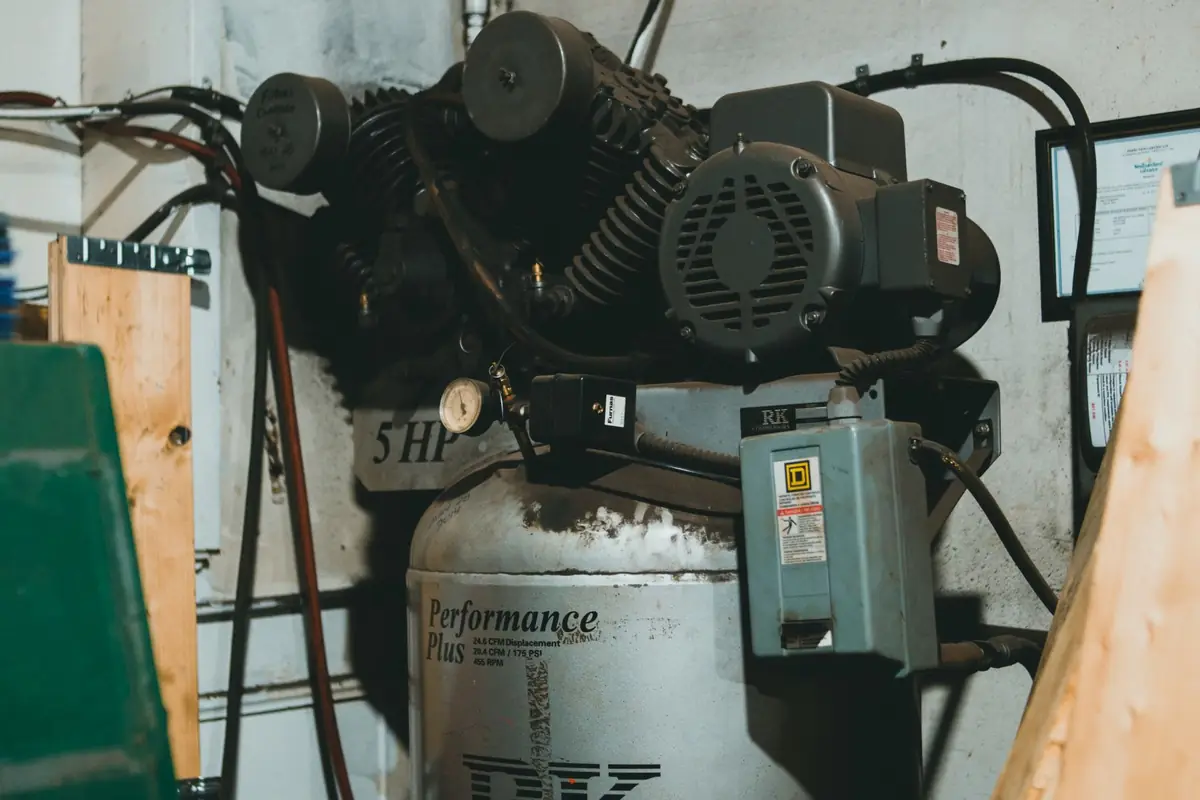
When an air compressor squeezes air into its tank, the moisture in that air condenses into water. It pools at the bottom of the tank, where it slowly rusts the steel from the inside. Over time, rust can weaken the tank, which is a real safety problem, and it can also send rusty water into your tools and paint lines.
Draining the tank takes two minutes. Do it every time you’re done using the compressor for the day.
What you need
- Safety glasses
- A rag or small container to catch water
- Pliers, if the drain valve is stiff
Step 1: Turn off and unplug the compressor
Switch it off and unplug it, or shut off a gas engine. You don’t want it kicking on while you’re draining.
Step 2: Release most of the pressure
Pull the safety relief valve ring or open the outlet with a blow gun attached, and let the tank pressure drop to about 10 to 20 PSI. A little pressure helps push the water out, but draining at full pressure sprays water and rust hard, and the valve can be tough to close.
Wear safety glasses. Air and water can blast out.
Step 3: Open the drain valve
The drain valve is at the lowest point of the tank. On a pancake compressor it’s on the bottom; on twin-stack and wheelbarrow models, there may be one on each tank.
- Petcock (twist) valve: turn the knob counterclockwise.
- Ball valve (lever): turn the lever a quarter turn.
Tip the compressor slightly toward the drain if needed, following your manual.
Step 4: Let it drain completely
You’ll hear air and see water, often rusty or milky. Let it run until only air comes out, then let the remaining pressure bleed off.
Step 5: Close the valve
Close the drain valve finger-tight so it’s ready for next time.
How often to drain
- After every use. This is what most manufacturers recommend.
- More often in humid weather, when more water collects.
- During long sessions, drain it every few hours.
Make it easier
- Swap in a ball valve or extended drain. Stock petcocks on the bottom of pancake compressors are hard to reach. An extended drain kit or quarter-turn ball valve makes draining quick.
- Add an automatic drain valve if you run the compressor a lot. It opens on a timer or each time the motor cycles.
- Add a water separator at the outlet if you paint or use tools sensitive to moisture.
Warning signs
- Rust-colored water every time: the tank is rusting inside. Drain more often and watch for leaks.
- Bubbling, pinhole leaks or bulges on the tank: stop using it and replace the tank or compressor. A rusted-through tank can fail.
- Drain valve won’t open: it may be clogged with rust. Release all pressure before removing it.
Still wondering?
Is it bad to leave air in a compressor tank? Leaving it under pressure isn’t immediately dangerous, but leaving water in it is. Release the pressure and drain after each use.
What’s the milky water? Moisture mixed with a bit of oil from the compressor. Dispose of it responsibly, not down a storm drain.
Do oil-free compressors need draining? Yes. Every compressor collects water.
Shopping for a compressor? See the best air compressors for a home garage.