Countertop vs Portable Dishwasher: Which Fits Your Kitchen?
No room or plumbing for a built-in dishwasher? Here's how countertop and portable dishwashers compare on size, capacity, hookup and price, and who should get which.

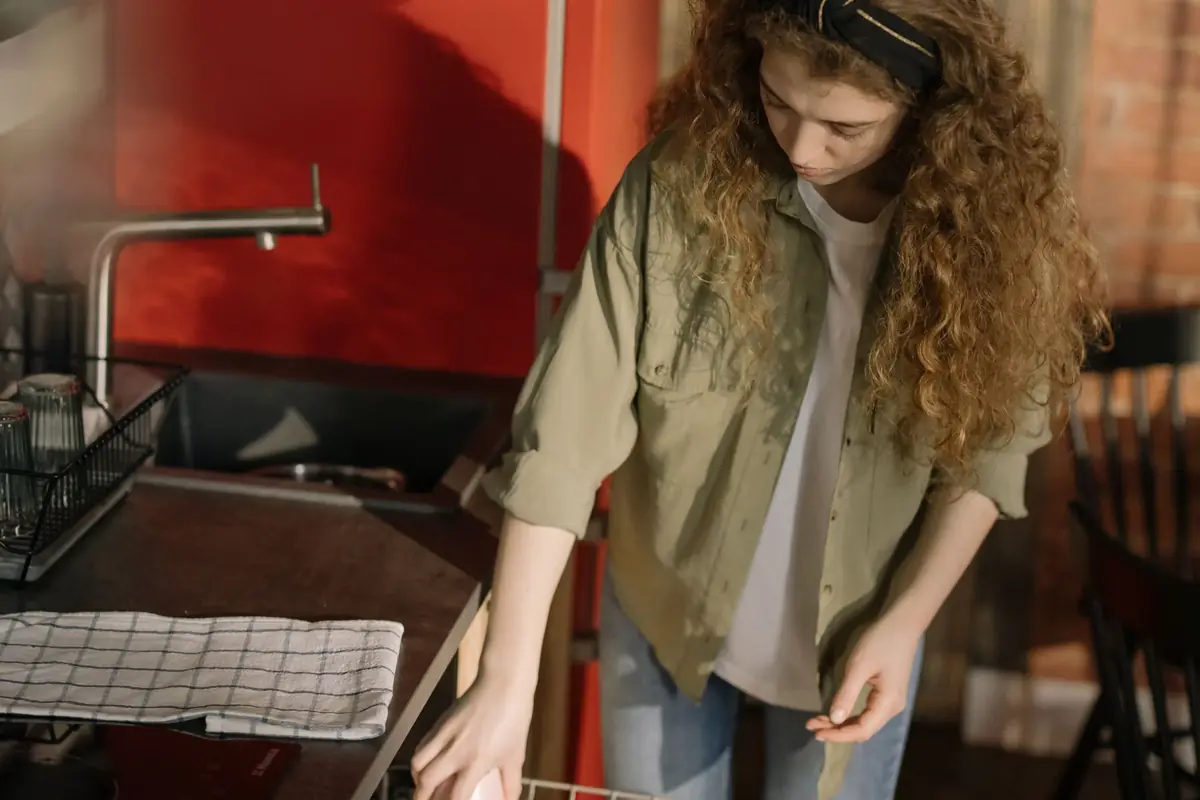
If you rent, have a small kitchen, or just don’t have a spot for a built-in dishwasher, you still have options. The two main ones are countertop dishwashers, which sit on the counter next to the sink, and portable dishwashers, which roll on wheels and hook up to the faucet when you need them.
The short version: countertop models suit one or two people with very little space. Portable models hold close to a full-size load and suit families, but you need floor space to park one.
At a glance
| Countertop dishwasher | Portable dishwasher | |
|---|---|---|
| Where it goes | On the counter beside the sink | Rolls on the floor; stored against a wall |
| Typical capacity | About 4 to 6 place settings | About 8 to 12 place settings |
| Width | Roughly 17 to 22 inches, about 17 to 20 inches tall | 18 inches (slim) or 24 inches (full size) |
| Water hookup | Faucet adapter, or a built-in tank you fill by hand on some models | Faucet adapter with a quick-connect hose |
| Drains to | The sink | The sink |
| Extra perk | Takes no floor space | The top often doubles as extra counter space |
| Typical price | About $250 to $450 | About $500 to $900 |
Dimensions, capacity and price vary by model. Figures are typical ranges.
Countertop dishwashers
These are small, self-contained units about the size of a large microwave. Most connect to your kitchen faucet with an adapter and drain into the sink. Some newer models have a built-in water tank, so you just pour in water and don’t need a hookup at all, which is handy in RVs or apartments with unusual faucets.
Pros
- Fits almost any kitchen with a bit of counter space
- No installation; just plug in and connect
- Cheaper than portable models
- Tank models need no faucet hookup at all
Cons
- Holds only about 4 to 6 place settings, so big pots and sheet pans won’t fit
- Takes up valuable counter space
- Tall plates and wine glasses may not fit
Best for: singles, couples, small apartments, RVs and dorms.
Portable dishwashers
A portable dishwasher is basically a full dishwasher on wheels. When it’s time to run it, you roll it to the sink, snap the hose onto a faucet adapter and drop the drain hose into the sink. When it’s done, you disconnect it and roll it back.
Pros
- Much larger capacity, close to a built-in in the 24-inch size
- Fits large plates, pots and pans
- Many have a solid wood or laminate top you can use as a prep surface
- Can move with you if you change apartments
Cons
- Needs a spot on the floor to park it
- More expensive
- You can’t use the faucet while it’s running unless your adapter has a pass-through
- Heavy, so moving it around takes some effort
Best for: families, people who cook a lot, and renters with room to spare.
Not sure how the faucet hookup works? Here’s how to hook up a portable dishwasher to a kitchen faucet step by step.
How to choose
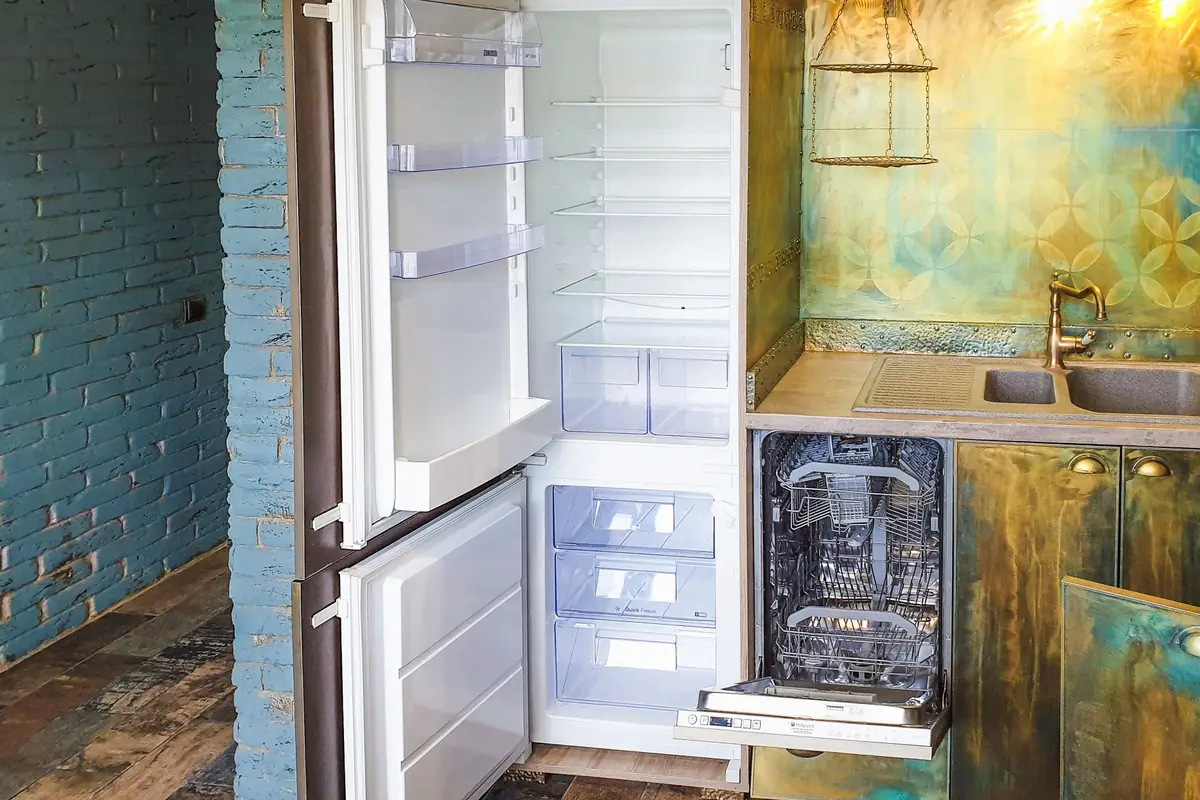
- Measure your space. For a countertop model, measure the height under your upper cabinets and the counter depth. For a portable, measure the floor spot and the path to the sink.
- Check your faucet. Most hookups need a faucet with a removable aerator. Pull-down and pull-out faucets often won’t work with a standard adapter, so a tank-fed countertop model may be your only option.
- Count your dishes. If you fill more than one small load a day, a portable is the better fit.
When you’re ready to buy, see our picks for the best compact dishwashers.
Questions people ask
Do countertop dishwashers clean as well as full-size ones? Good ones clean well, but the smaller space means you need to load carefully. Rinse off stuck-on food first.
Do these dishwashers need special plumbing? No. Both types connect to your faucet and drain into the sink. Neither needs installation.
Can I install a portable dishwasher permanently? Some models can be converted to a permanent installation with a kit. Check the manual for your model before you buy if that’s the plan.
How do I keep it running well? Clean the filter regularly. Here’s how to clean a dishwasher filter.