5 Best Solar Backup Kits for a Power Outage (and Why One Panel Isn't Enough)
Ready-to-use solar backup kits that pair a power station with a matching panel, ranked for keeping a fridge, lights and Wi-Fi running in an outage, plus how much solar you really need in winter.

We may earn a commission if you buy through links on this page. It never changes what we recommend. As an Amazon Associate we earn from qualifying purchases. Learn more.
Our top picks at a glance
- Check Amazon Price
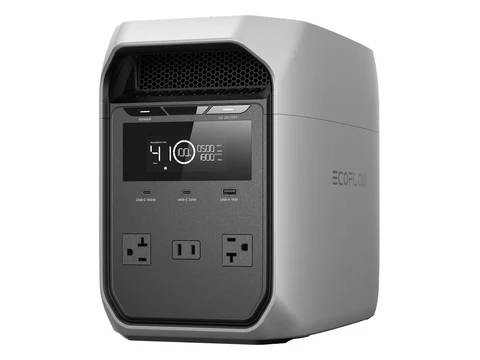
A 2 kWh station with 2,400 watts of output, room for 1,000 watts of solar and the option to grow to about 6 kWh with extra batteries. Read more
Pros
- 2,048 Wh, expandable to 6,144 Wh
- 1,000W solar input
- 5-year warranty
Cons
- Only one 220W panel in the box
- Heavier than the 1 kWh kits
- Check Amazon Price
About 1 kWh, 2,000 watts of output, a 600W solar ceiling and a 49-minute full recharge from the wall. Read more
Pros
- 600W solar input
- 2,000W output
- About 25 lb
Cons
- No battery expansion
- Charges slower in the cold
- Check Amazon Price
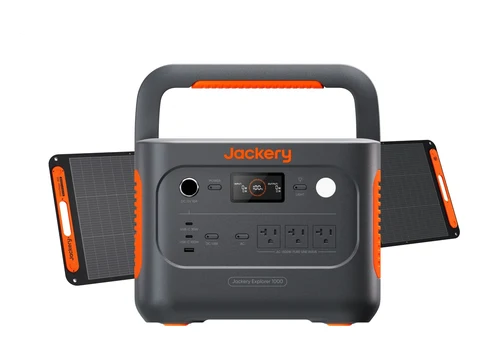
The only kit here with two 200W panels, paired with a 2,042 Wh station that Jackery says holds about 95% of its charge after a year in storage. Read more
Pros
- Two 200W panels included
- 2,200W output, 4,400W surge
- Holds its charge in storage
Cons
- About 39.5 lb
- Not expandable
- Check Amazon Price
The cheapest kit here, with a 3,600-watt surge and a 10 ms switchover so your router stays on when the power drops. Read more
Pros
- 3,600W surge, best of the 1 kWh kits
- 10 ms auto-switch
- 0-80% in 45 minutes
Cons
- 500W solar ceiling
- 5-year warranty needs app registration
- Check Amazon Price
About 1 kWh in a roughly 24-pound box with Jackery's well-regarded SolarSaga 200W panel. Read more
Pros
- Light enough to carry
- About 1-hour emergency charge
- Highly rated panel
Cons
- 1,500W output, the lowest here
- Not expandable
Prefer to watch?
5 Best Solar Backup Kits for a Power Outage (One Panel Isn't Enough) Watch on YouTube
A solar backup kit is a portable power station plus a solar panel that plugs straight into it. When the grid goes down, the station runs your fridge, lights and router, and the panel refills it during the day. No gas, no fumes, nothing to wire into your house.
The part most people get wrong is the panel. EcoFlow says its own 220W panel needs about 5.8 hours of full sun to fill a 1 kWh battery. In December, much of the country doesn’t get that many hours of strong sun, and a full-size fridge can use 1 to 2 kWh a day. So one panel slows the drain. It usually won’t keep up on its own.
How much kit do you need?
- Battery: 1 kWh runs an efficient full-size fridge for roughly half a day to a day. For multi-day outages, go for 2 kWh or plan to add panels.
- Surge: A fridge compressor pulls a short burst when it starts. Look for a surge rating of at least 2,000 to 3,000 watts.
- Solar input: The station’s maximum solar input sets how many panels you can add later. More input means a faster refill on short winter days.
- Your real loads: A plug-in watt meter (about $25) tells you exactly how much your fridge uses in a day. That one number tells you which size to buy.
For the fridge math, see which portable power station can run a refrigerator.
Side by side
| Kit | Battery | Output / surge | Panels included | Max solar input |
|---|---|---|---|---|
| EcoFlow DELTA 2 Max | 2,048 Wh (expandable) | 2,400W (X-Boost 3,400W) | 1 x 220W | 1,000W |
| Anker SOLIX C1000 Gen 2 | 1,024 Wh | 2,000W / 3,000W peak | 1 x 200W | 600W |
| Jackery SG 2000 v2 | 2,042 Wh | 2,200W / 4,400W | 2 x 200W | 400W* |
| EcoFlow DELTA 3 Classic | 1,024 Wh | 1,800W / 3,600W | 1 x 220W | 500W |
| Jackery SG 1000 v2 | About 1 kWh | 1,500W / 3,000W | 1 x 200W | 400W |
Specs are from the makers' own spec sheets, checked November 2026. *Jackery's page doesn't list the 2000 v2's solar input, so that figure is from retailer spec listings. Prices change often, so check the links for today's price.
1. EcoFlow DELTA 2 Max Solar Kit: Best overall
Good fit for: Homes that want a real multi-day plan, with room to grow.
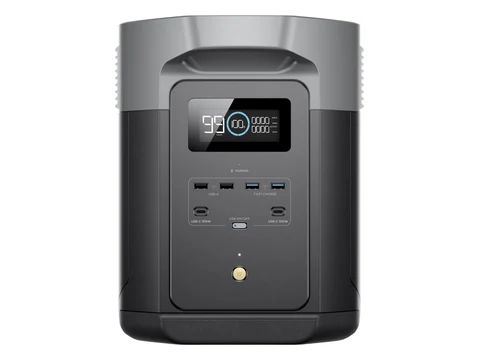
The station holds 2,048 Wh and puts out 2,400 watts, enough for a fridge plus a microwave or a sump pump. The bigger deal is the 1,000-watt solar input, the highest here, so you can add panels later and refill much faster on a short winter day. You can also add up to two extra batteries for about 6 kWh total. Outdoor Life named the DELTA 2 Max its best power station for home backup, and EcoFlow backs it with a 5-year warranty.
What bugs us: The kit still comes with just one 220W panel, which can’t fill 2 kWh on a winter day. Budget for a second or third panel if you’re counting on solar.
Skip it if: you need something light to carry room to room.
2. Anker SOLIX C1000 Gen 2 Solar Kit: Best for solar
Good fit for: People who want a 1 kWh kit that can take more solar than most.
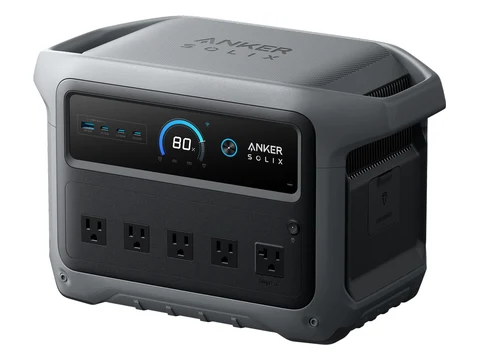
Anker rates it at 1,024 Wh and 2,000 watts with a 3,000-watt peak. It accepts up to 600 watts of solar, and from the wall Anker says it fully recharges in 49 minutes once you turn on its fast-charge mode in the app. It’s rated for 4,000 cycles to 80% and weighs about 25 pounds. Outdoor Life’s best overall solar generator was the first-generation C1000 with a 200W panel.
What bugs us: Anker says charging slows when it’s between 32°F and 68°F, so a cold garage isn’t the place to recharge it. And there’s no battery expansion on the Gen 2.
Skip it if: you want the biggest surge for the money. That’s the DELTA 3 Classic.
3. Jackery Solar Generator 2000 v2: Most solar in the box
Good fit for: Anyone who wants two days of fridge power and enough panel to refill it, without buying extras.
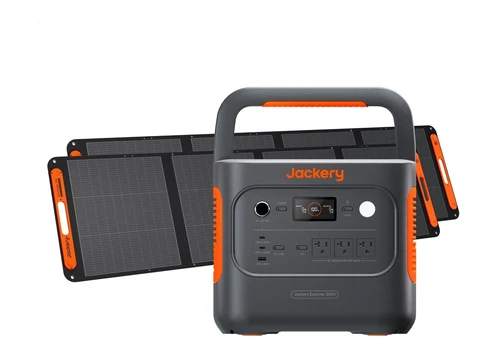
This is the only kit here that ships with two panels, a pair of SolarSaga 200W. That’s about twice the solar of any other kit on this list. The station holds 2,042 Wh and runs 2,200 watts with a 4,400-watt surge. Jackery says it still holds about 95% of its charge after a year in storage, which suits a box that waits in a closet for the next storm. Outdoor Life called the SolarSaga 200 the best panel it had tested.
What bugs us: It weighs about 39.5 pounds. And it’s in Jackery’s standard line, not the expandable one, so 2 kWh is what you get.
Skip it if: you may want more battery later. Get the DELTA 2 Max.
4. EcoFlow DELTA 3 Classic Solar Kit: Budget pick
Good fit for: Fridge, lights and Wi-Fi on the smallest budget.
It’s the cheapest kit here, yet its 3,600-watt surge is the highest of the 1 kWh kits, which is what a compressor needs at startup. It runs 1,800 watts, switches over in 10 milliseconds when the power drops, and EcoFlow says it charges from 0 to 80% in 45 minutes from the wall.
What bugs us: Solar input tops out at 500 watts, so there’s a ceiling on adding panels. There’s no battery expansion. And the full 5-year warranty only applies once you register it in the EcoFlow app. Out of the box it’s 3 years.
Skip it if: you plan to lean on solar for long outages.
5. Jackery Solar Generator 1000 v2: Easiest to use
Good fit for: First-time buyers who want simple and portable.
It’s about a kilowatt-hour of LiFePO4 battery in a box around 24 pounds, so it’s easy to carry from the garage to the kitchen. In emergency mode it charges from the wall in about an hour. The SolarSaga 200W panel in the kit is the one Outdoor Life rated so highly.
What bugs us: It’s rated for 1,500 watts, the lowest here. That’s fine for a fridge, lights and a router, but skip the microwave and space heater.
Skip it if: you need more power. The DELTA 3 Classic costs less and puts out more.
The extras worth buying
- A plug-in watt meter. About $25. Plug your fridge into it for a day and you’ll know exactly what size kit you need.
- A solar extension cable. Lets the station sit indoors while the panel sits in the sun.
- A 12-gauge outdoor extension cord. Thick enough to run the fridge from the station without overheating.
Where these picks come from
We looked at 13 kits, every maker’s spec sheet, Outdoor Life’s solar generator testing and more than 40 owner and reviewer videos, then narrowed it to five that ship as a station plus a matching panel. We haven’t tested these ourselves. Read more about how we pick products.
Short answers
Can a solar kit run my whole house? No. These kits run a few essentials through their own outlets. Whole-house backup needs a much bigger battery system or a generator with a transfer switch.
Can I run it indoors? Yes. Power stations make no fumes. Keep the panel outside and run its cable in. Never run a gas generator indoors.
How many panels do I need in winter? For a 1 kWh station, one panel slows the drain. For a fridge on solar alone through short days, plan on 400 watts of panel or more, and a station with enough solar input to take it.