How Many BTUs to Heat a Garage (by Size and Insulation)
A simple way to work out how much heat your garage needs: measure the space, pick your insulation level and how warm you want it, and do one multiplication. Includes a quick chart for 1-, 2- and 3-car garages and the watts-to-BTU conversion.

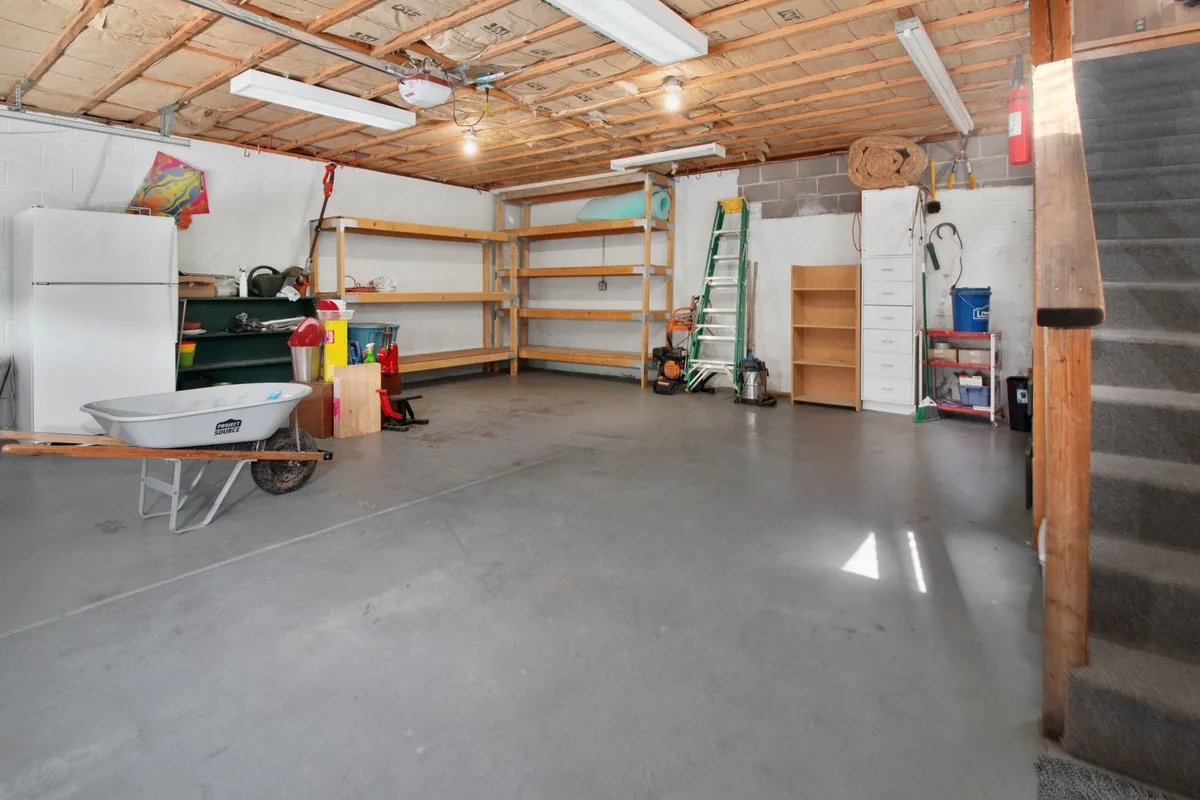
Ask how big a garage heater you need and you’ll hear everything from “a space heater is fine” to “get 60,000 BTUs.” Both can be right. The difference comes down to three things: how big the garage is, how well it holds heat, and how much warmer than outside you want it.
Here’s a simple way to put a number on it, the reasons behind that number, and a chart for common garage sizes.
The quick formula
BTUs per hour = cubic feet × temperature rise × insulation factor
- Cubic feet: length × width × ceiling height, in feet.
- Temperature rise: how warm you want the garage minus how cold it gets outside on a typical cold day where you live.
- Insulation factor: a number for how fast your garage leaks heat (chart below).
Step 1: Measure the space
Measure the inside length, width and ceiling height. A typical two-car garage at 24 by 24 feet with a 9-foot ceiling is 24 × 24 × 9 = 5,184 cubic feet.
If the garage is open to the rafters with no ceiling, measure to about halfway up the roof slope. Warm air will fill that space, and you have to heat it.
Step 2: Pick your temperature rise
Most people working in a garage are comfortable at 50 to 55°F with a jacket on. A finished garage used as a gym or hobby room might be 60 to 65°F.
For “outside,” use a normal cold day for your area, not the record low. If January days are usually around 20°F and you want 55°F, your rise is 35°F.
Step 3: Pick your insulation factor
| Your garage | Insulation factor |
|---|---|
| Well insulated: insulated walls and ceiling, insulated garage door, weatherstripping around the door | 0.04 |
| Partly insulated: insulated walls and ceiling, but a plain steel door and gaps around it | 0.07 |
| Uninsulated: bare studs or drywall with nothing behind it, open rafters or no ceiling insulation, plain door | 0.16 |
These are our rounded estimates for a typical attached or detached garage, worked out from standard heat-loss values for walls, ceilings, doors and air leaks. They're for sizing a heater, not for designing a permanent HVAC system.
Step 4: Multiply
For that 5,184-cubic-foot two-car garage with a 35°F rise:
- Well insulated: 5,184 × 35 × 0.04 = about 7,300 BTUs
- Partly insulated: 5,184 × 35 × 0.07 = about 12,700 BTUs
- Uninsulated: 5,184 × 35 × 0.16 = about 29,000 BTUs
Same garage, same weather, four times the heat. Insulation is by far the biggest factor.
Quick chart by garage size
If you don’t want to do the math, find your garage below. Use the 30°F column for milder winters or a “just take the edge off” goal, and the 50°F column for cold climates or a garage you want comfortably warm.
| Garage | Rise | Well insulated | Partly insulated | Uninsulated |
|---|---|---|---|---|
| 1-car (12 × 22 ft, 8 ft ceiling) | 30°F | 2,500 BTU | 4,400 BTU | 10,100 BTU |
| 50°F | 4,200 BTU | 7,400 BTU | 16,900 BTU | |
| 2-car (24 × 24 ft, 9 ft ceiling) | 30°F | 6,200 BTU | 10,900 BTU | 24,900 BTU |
| 50°F | 10,400 BTU | 18,100 BTU | 41,500 BTU | |
| 3-car (32 × 24 ft, 10 ft ceiling) | 30°F | 9,200 BTU | 16,100 BTU | 36,900 BTU |
| 50°F | 15,400 BTU | 26,900 BTU | 61,400 BTU |
BTUs per hour to hold the temperature once the garage is warm. Add about 25% if you want it to warm up quickly from cold.
Turning BTUs into watts
Electric heaters are sold by watts, not BTUs. The conversion is fixed: 1 watt = 3.41 BTUs per hour.
| Electric heater | Heat output | What it needs |
|---|---|---|
| 1,500 watts | about 5,100 BTU | A standard 120-volt outlet (largest plug-in size) |
| 4,000 watts | about 13,600 BTU | A 240-volt circuit |
| 5,000 watts | about 17,100 BTU | A 240-volt circuit |
| 7,500 watts | about 25,600 BTU | A 240-volt circuit |
| 10,000 watts | about 34,100 BTU | A 240-volt circuit, usually its own 50 to 60 amp breaker |
A few things jump out of that table:
- A 1,500-watt plug-in heater tops out around 5,100 BTUs. That’s enough for a well-insulated one-car garage, or to keep one corner of a bigger garage tolerable while you stand next to it. It won’t heat an uninsulated two-car garage on a cold day, no matter what the box says.
- Most insulated two-car garages land in 240-volt electric territory (4,000 to 7,500 watts), which means a dedicated circuit and usually an electrician.
- Uninsulated garages in cold climates need 25,000 BTUs and up, which is why so many people end up with propane or natural gas heaters out there.
Why insulation matters so much
Heat leaves a garage three ways: through the walls and ceiling, through the big garage door, and through air leaking in around that door and out through gaps.
- The ceiling loses the most in an uninsulated garage, because warm air rises straight to it. If there’s attic space above, adding batts or blown insulation up there is usually the cheapest big win.
- The garage door is a huge, thin panel of steel. A plain single-layer steel door holds almost no heat. An insulated door, or an insulation kit for your existing one, cuts that loss sharply.
- Air leaks around the door edges and bottom let cold air pour in constantly. New bottom and side weatherstripping costs little and is a one-afternoon job.
Before you buy a bigger heater, look at those three. Halving your heat loss means you can buy half the heater, and it’ll cost half as much to run.

Other things that change the number
- Attached vs. detached. An attached garage shares one or two walls with the warm house, so it loses less heat than the chart shows. A detached garage loses heat on every side.
- Ceiling height. A 12-foot ceiling for a car lift means a third more air to heat than a 9-foot one, and the warm air sits up high. A ceiling fan on low, blowing down, helps push it back to where you’re working.
- How you use it. If you’ll only be out there for an hour on Saturday, you need a faster warm-up, so size up 25% or so, or use a heater that warms you directly (radiant or infrared) instead of trying to heat all the air.
- Opening the door. Every time the big door goes up, most of the warm air leaves. If you’ll be opening it a lot, plan for longer warm-ups rather than a much bigger heater.
- Your climate. Use a realistic cold day, not the record low. Sizing for the coldest night of the decade means an oversized heater the rest of the winter.
Safety notes for any garage heater
- Fuel-burning heaters need fresh air. Propane and kerosene heaters that aren’t vented outside put combustion gases, including carbon monoxide, into the garage. Follow the heater’s ventilation rules exactly, and put a carbon monoxide alarm in the garage and outside the door to the house.
- Keep gasoline and solvents away. Gas cans, paint thinner and similar products give off vapors that can ignite from a heater’s flame or element. Store them away from any heater, and check the heater’s manual for clearance.
- Mount electric heaters per the manual and don’t run a 1,500-watt heater on an extension cord.
Quick answers
How many BTUs do I need for a 2-car garage? For a typical 24 × 24 foot two-car garage with a 9-foot ceiling, roughly 6,000 to 18,000 BTUs if it’s insulated and 25,000 to 40,000 BTUs if it isn’t, depending on how cold it gets and how warm you want it.
Will a 1,500-watt space heater heat a garage? Only a small, well-insulated one, or just the spot right in front of it. A 1,500-watt heater makes about 5,100 BTUs an hour, enough for a well-insulated one-car garage in mild cold.
How warm should I keep my garage in winter? Around 50 to 55°F is comfortable for working with a jacket on. If you just want to keep pipes, paint and batteries from freezing, 40 to 45°F is enough and much cheaper.
Is it better to oversize a garage heater? A little extra, about 25%, helps it warm up faster. Much more than that just means a bigger, more expensive heater that cycles on and off.
For more garage and home heating jobs, see how to change a furnace filter.
We may earn a commission if you buy through links on this page. It never changes what we recommend. As an Amazon Associate we earn from qualifying purchases. Learn more.