Top Pressure Canners (and Why Multicookers Don't Count)
Our picks for the best pressure canners from Presto and All American, the one electric canner worth knowing about, and why an Instant Pot isn't safe for canning low-acid foods.

We may earn a commission if you buy through links on this page. It never changes what we recommend. As an Amazon Associate we earn from qualifying purchases. Learn more.
Our top picks at a glance
1 Best overall
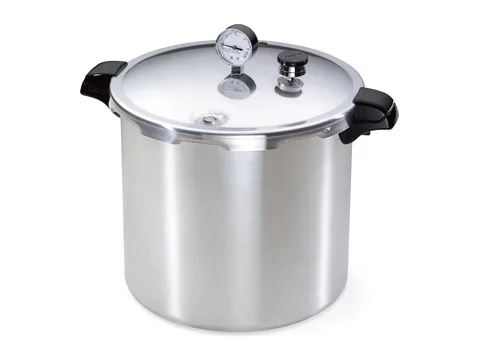
Presto 23-Quart Pressure Canner (01781)
The most popular home pressure canner, holding 7 quarts or 20 pints at an affordable price. Read more
Pros
- Affordable
- Holds 7 quarts or 20 pints
- Lighter to lift
Cons
- Dial gauge needs yearly testing
- Gasket needs replacing over time
2 Built to last generations
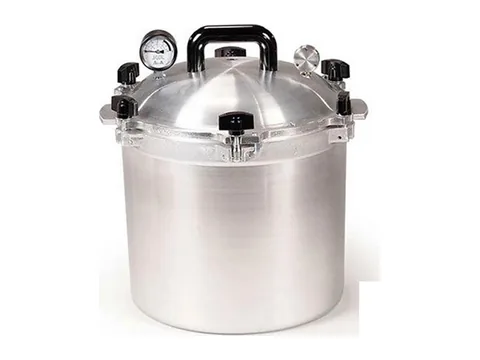
All American 921 Pressure Canner
A heavy, cast aluminum canner with a metal-to-metal seal, so there's no gasket to replace. Read more
Pros
- No gasket
- Weighted gauge regulates pressure
- Extremely durable
Cons
- Expensive
- Heavy
3 Best electric
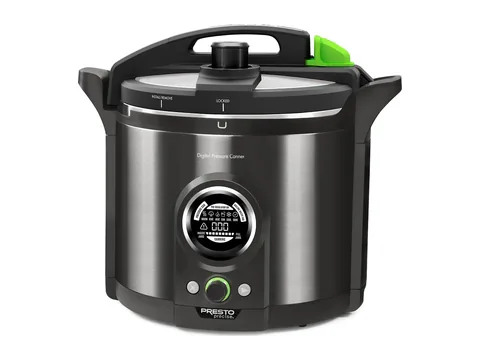
Presto Precise Digital Pressure Canner
A 12-quart electric canner that Presto says meets USDA home canning guidelines, with automatic temperature control. Read more
Pros
- Automatic temperature control
- No altitude adjustments needed
- Also water bath cans
Cons
- Holds only 5 quarts
- Not covered by NCHFP's tested processes
If you want to can green beans, corn, meat, soups or anything else that’s low in acid, you need a pressure canner. A boiling water bath can’t get hot enough to kill the bacteria that cause botulism in low-acid foods. A pressure canner can.
A few things before you shop:
- A pressure canner isn’t the same as a pressure cooker. Pressure cookers and electric multicookers like the Instant Pot are not recommended for canning, even if their manuals include canning instructions. Here’s the full explanation.
- Follow tested recipes. Use processing times from the USDA or the National Center for Home Food Preservation (NCHFP), and adjust for your altitude.
- No canner is “USDA approved.” The USDA doesn’t certify canning equipment.
At a glance
| Canner | Type | Capacity (regular jars) | Seal | Pressure control |
|---|---|---|---|---|
| Presto 23-Quart | Stovetop | 7 quarts or 20 pints | Rubber gasket | Dial gauge (weighted gauge available) |
| All American 921 | Stovetop | 7 quarts or 19 pints | Metal-to-metal | Weighted gauge |
| Presto Precise Digital | Electric | 5 quarts or 8 pints | Locking lid | Temperature sensor |
Specs are from Presto and All American, along with Simply Canning's comparison. Prices vary by store and season: expect roughly $150 to $200 for the Presto stovetop and $350 to $550 for an All American.
1. Presto 23-Quart Pressure Canner: Best overall
Who it’s for: Most home canners, especially beginners.
The Presto 23-quart is the canner you’ll see in most kitchens and canning classes. It holds 7 quart jars or 20 pint jars, it’s relatively light, and it costs a fraction of an All American. It comes with a dial gauge, and Presto sells an optional three-piece weighted regulator if you prefer a weighted gauge.
What bugs us: Dial gauges must be tested for accuracy every year. Many county extension offices do this, sometimes free. The rubber gasket wears out and needs replacing every few years.
Skip it if: you want a canner with no parts to replace.
2. All American 921: Built to last generations
Who it’s for: Serious canners who want to buy once.
All American canners are made of heavy cast aluminum and use a metal-to-metal seal, with no rubber gasket to replace. The weighted gauge regulates pressure and doesn’t need yearly testing; the dial is just a reference. Owners often hand them down. The 921 holds 7 quarts or 19 pints.
What bugs us: It costs two to three times as much as the Presto and is heavier, especially when full. The metal seal needs a light coat of oil to open and close easily.
Skip it if: you’re not sure how much you’ll can. Start with the Presto.
3. Presto Precise Digital Pressure Canner: Best electric
Who it’s for: People who want hands-off temperature control and can in smaller batches.
This 12-quart electric canner uses a temperature sensor to hold the processing temperature automatically, and Presto says no adjustments are needed for altitude. It pressure cans up to 5 quarts or 8 pints, and it also water bath cans pints and half-pints. Presto calls it the first digital pressure canner that meets USDA home canning guidelines.
What bugs us: It holds fewer jars than stovetop canners. The NCHFP’s tested canning processes were developed for stovetop pressure canners, and the center doesn’t support canning in electric multicookers. Presto’s claim is its own, since the USDA doesn’t certify equipment. Read the manual carefully and follow its processes.
Skip it if: you put up big harvests. A stovetop canner holds more.
Our research
We compared canners using manufacturer specs, guidance from the National Center for Home Food Preservation, and Simply Canning’s comparison of Presto and All American. We focused on:
- Safety and tested processes
- Capacity, since NCHFP recommends canners that hold at least four quart jars
- Gauge type and upkeep
- Durability
- Price
We haven’t tested these ourselves. Read more about how we pick products.
What to look for in a pressure canner
Dial or weighted gauge?
A dial gauge shows the exact pressure but must be tested yearly. A weighted gauge rocks or jiggles to regulate pressure and doesn’t need testing, but you can only choose set pressures like 5, 10 or 15 psi.
Size
Bigger canners hold more jars but can be too tall to fit under a range hood and very heavy when full. A 16- to 23-quart canner suits most kitchens. Measure your stove clearance.
Your stove
Heavy canners can be hard on glass cooktops, and some makers advise against using them there. Check both the canner and stove manuals. Some Presto models are induction compatible.
Quick answers
Can I can in an Instant Pot? No, not for low-acid foods. Here’s why multicookers don’t count.
Can a pressure canner be used as a water bath canner? Often yes. Use it with the lid unlocked and the vent open, following the manual.
What else do I need? Jars, new lids, a jar lifter, a canning funnel and a tested recipe. For meat and freezer storage, see the best vacuum sealers.