How to Season a Carbon Steel Pan (and Keep It Slick)
A plain, step-by-step way to season a new carbon steel pan or wok on the stove or in the oven, plus what to do about rust, sticky spots and a patchy finish.

Seasoning is just a thin layer of oil baked onto the steel until it turns hard and dark. It keeps the pan from rusting and, layer by layer, makes it slick. A brand-new carbon steel pan won’t be nonstick on day one. That’s normal, and it gets better every time you cook in it.
This works the same way for skillets and woks.
What you need
- A neutral oil with a fairly high smoke point, like canola, vegetable, grapeseed or flaxseed. Lodge and de Buyer both recommend plain cooking oil.
- Paper towels or a lint-free cloth
- Hot water, dish soap and a scrub pad, for the first wash only
- Good ventilation. Seasoning smokes. Turn on the range hood and open a window.
Step 1: Strip the factory coating
Most carbon steel ships with something on it to stop rust in the box.
- Beeswax (de Buyer Mineral B): run the pan under very hot water and wipe the wax away, or warm the pan gently and wipe it out. de Buyer says a quick hot-water rinse is enough.
- Clear lacquer or oil (many woks, some skillets): scrub with hot soapy water. Some woks have a lacquer that needs to be burned off on high heat until the steel changes color. Follow the maker’s instructions here.
- Pre-seasoned (Lodge, BK, Made In): just rinse, dry, and you can skip to cooking. Extra seasoning rounds still help.
This is the only time you need dish soap on a pan you’re seasoning from scratch.
Step 2: Dry it on the burner
Towel it off, then set the pan over medium heat for a minute or two until every bit of moisture is gone. Carbon steel rusts fast if it stays wet.
Step 3: Wipe on a very thin layer of oil
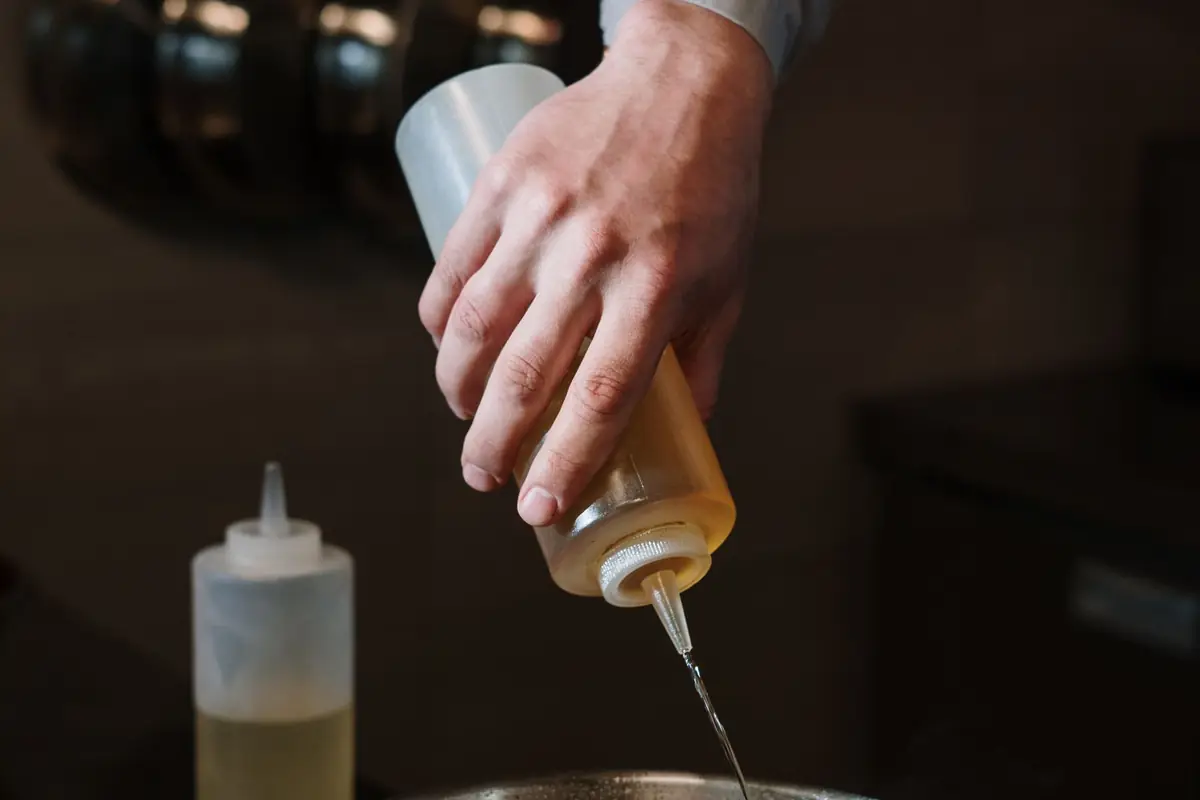
Add about half a teaspoon of oil and rub it over the whole cooking surface with a paper towel. Then take a clean paper towel and wipe it off as if you made a mistake. It should look almost dry. Too much oil is the most common problem: it turns sticky and blotchy instead of hard.
Step 4: Heat until it smokes and darkens
On the stove: heat over medium-high. The oil will smoke, then stop smoking. Tilt the pan so the sides get heat too. The steel will turn bronze, then brown, then darker. Let it cool a bit, wipe on another thin layer and repeat three or four times.
In the oven: this gives a more even coat, including the outside. Set the oven to around 450°F to 500°F, put the oiled pan in upside down, and bake for an hour. Turn the oven off and let it cool inside. Repeat two or three times. Check the handle first: some pans have handles that aren’t meant for high oven heat.
Patchy, uneven color is normal at this stage. It evens out with cooking.
Step 5: Cook fatty foods first
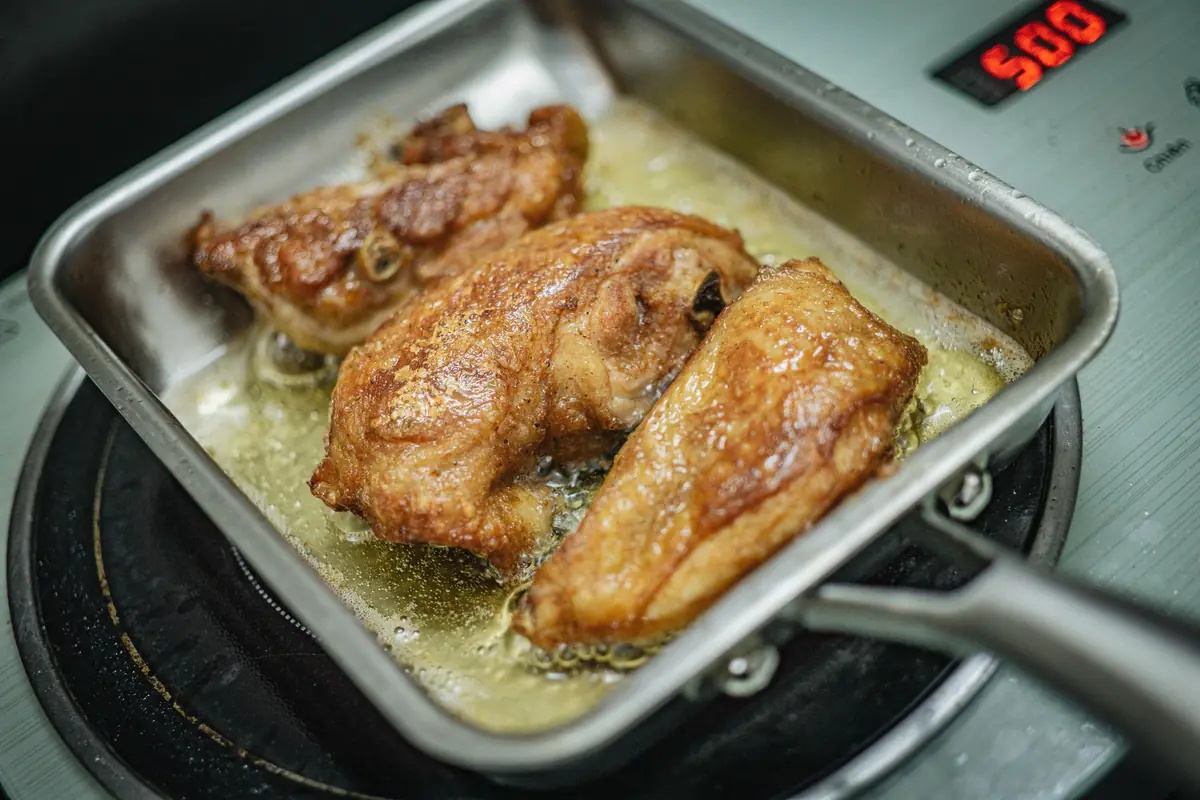
The fastest way to build seasoning is to use it. For the first few weeks, cook things with plenty of fat: bacon, shallow-fried potatoes, sautéed onions, burgers. Save eggs and delicate fish until the pan looks dark and feels slick.
Everyday care
- Rinse with hot water while the pan is still warm, and scrub with a brush or chain mail. A drop of mild soap now and then won’t hurt seasoning that’s well established.
- Dry it on the burner every time.
- Wipe on a whisper of oil while it’s warm.
- Don’t soak it or put it in the dishwasher.
- Go easy on acid. Long simmers of tomato sauce, wine or vinegar strip seasoning. A quick deglaze is fine.
Fixing common problems
Sticky or tacky surface: too much oil was left on. Put the pan on the burner or in a hot oven until it stops smoking and the tackiness bakes off.
Rust spots: scrub the rust off with steel wool or a scouring pad, rinse, dry on the burner, and season that area again. Rust on carbon steel is cosmetic if you catch it early.
Flaking black bits: usually built-up carbon from cooking, not seasoning failure. Scrub it out with coarse salt and a little oil, then re-oil.
Food still sticks: most often the pan wasn’t hot enough before the food went in. Preheat for a few minutes, add oil, and wait until it shimmers.
Still wondering?
How many coats do I need? Three or four thin coats on the stove, or two or three rounds in the oven, is a good start. Cooking does the rest.
Which oil is best? Any neutral oil works. Flaxseed gives a hard finish but can flake. Canola or vegetable oil is cheap and forgiving.
Why did my pan turn splotchy? Uneven color is normal and doesn’t affect cooking. It evens out as you use the pan.
Shopping for one? See our best carbon steel pans and best woks for electric stoves, or read carbon steel vs cast iron.