How to Sharpen Lawn Mower Blades (With and Without Removing Them)
A dull blade tears grass instead of cutting it. Here's how to safely remove, sharpen and balance a rotary mower blade with a file or grinder, plus a quick touch-up you can do without taking it off.

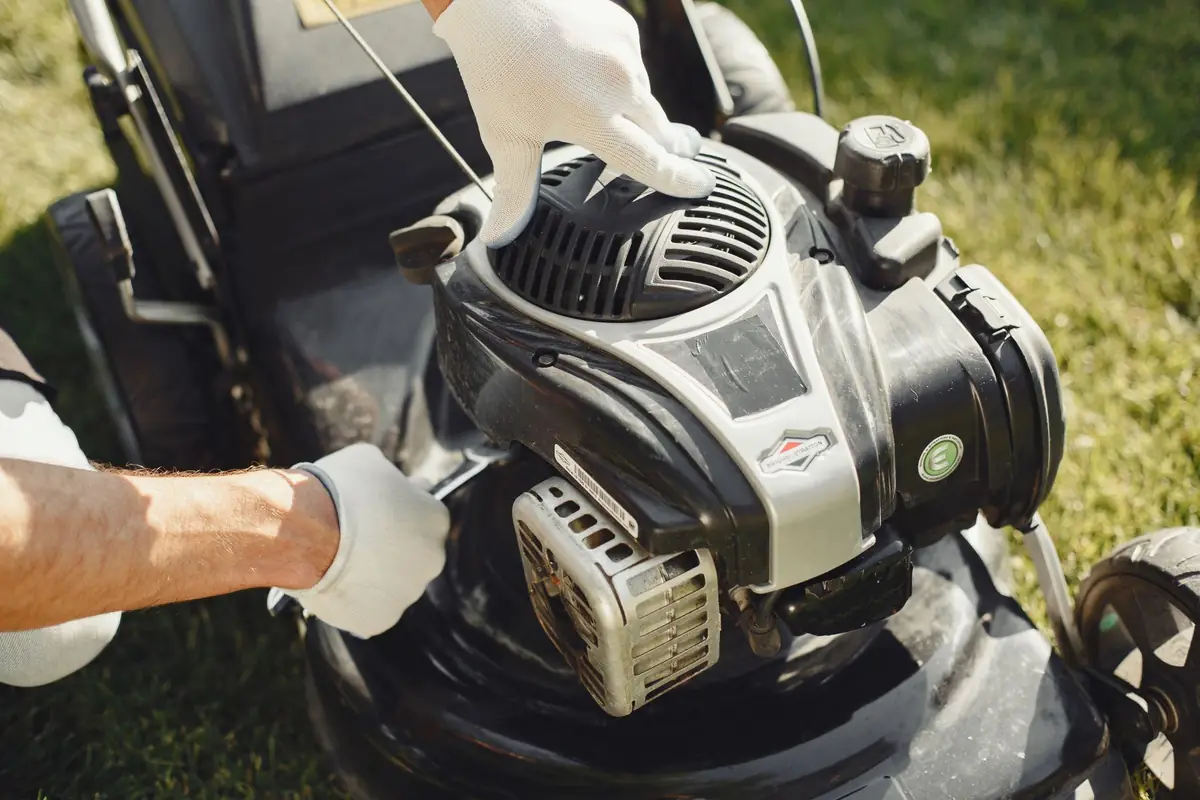
Look at your grass a day after mowing. If the tips are ragged, frayed or turning brown, your blade is dull. A sharp blade cuts cleanly, so grass heals faster, looks greener and is less prone to disease. It’s also easier on the mower.
Most homeowners should sharpen once or twice a mowing season, or after hitting rocks, roots or a lot of sandy soil.
Safety first

Disable the mower before you touch the blade.
- Gas mower: pull the wire off the spark plug.
- Battery mower: remove the battery.
- Corded mower: unplug it.
Wear heavy work gloves and safety glasses. Mower blades are sharp even when they’re “dull.”
What you need
- Work gloves and safety glasses
- A socket wrench that fits your blade bolt
- A block of wood to stop the blade from turning
- A metal file (a 10-inch mill bastard file works well), or a bench grinder or angle grinder
- A bench vise, if you have one
- A blade balancer, or a nail in the wall
- A marker or paint
Option 1: Remove and sharpen (best results)
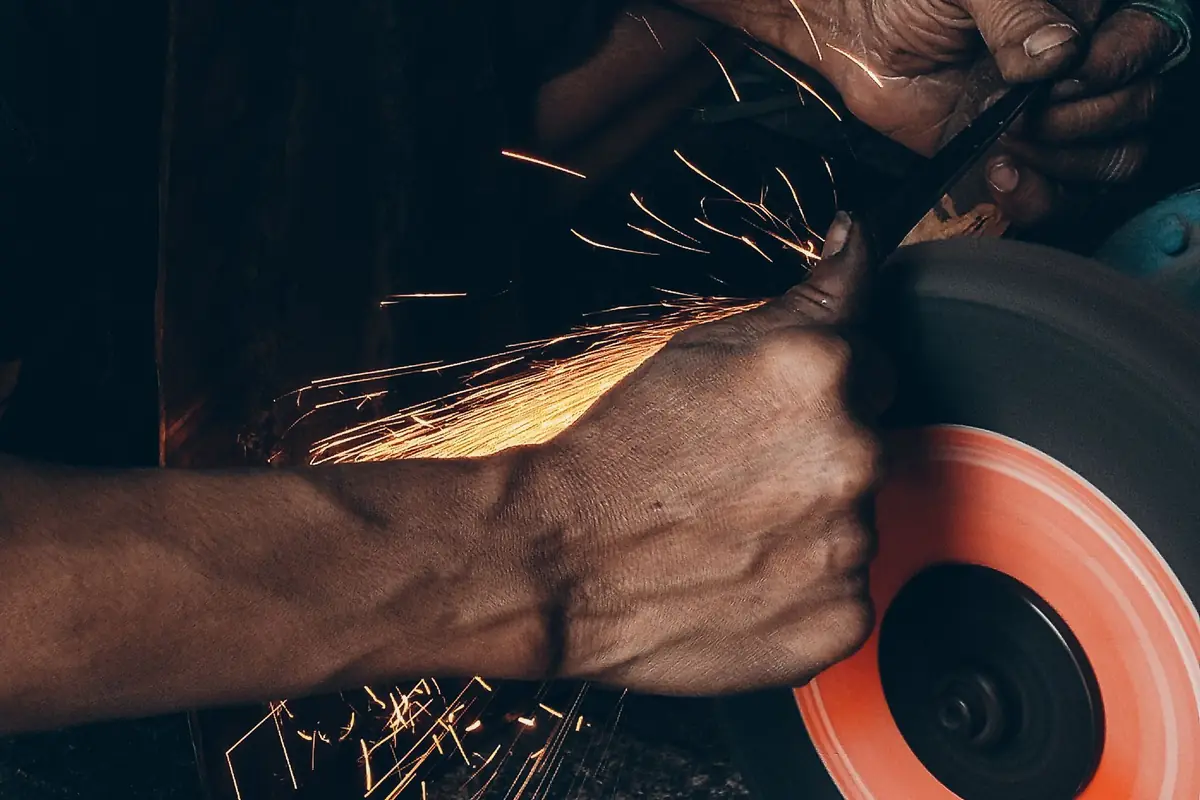
1. Tip the mower the right way
On a gas mower, tip it so the air filter and carburetor face up. Tipping it the other way can leak oil or gas into places it shouldn’t go. Check your manual; some say to drain the gas first. Riding mowers usually let you lift or remove the deck; follow your manual.
2. Mark the blade
Spray paint or mark the bottom of the blade before you remove it. Putting a blade back upside down is a common mistake, and an upside-down blade won’t cut.
3. Remove the blade
Wedge a block of wood between the blade and the deck so it can’t turn. Loosen the bolt with a socket wrench. Most turn counterclockwise, but check your manual.
4. Sharpen the cutting edges
Clamp the blade in a vise. Sharpen only the cutting edges, at each end, keeping the original angle, usually around 30 to 45 degrees.
- With a file: push the file across the edge in one direction, away from you, following the bevel. Twenty to fifty strokes per side is typical.
- With a grinder: use light passes and keep the blade moving. Dip it in water often. Overheating turns the steel blue and makes it soft.
You’re aiming for butter-knife sharp, not razor sharp. A too-thin edge chips quickly. Remove nicks, then stop. Take about the same amount off each end.
5. Balance the blade
This step matters. An unbalanced blade shakes the mower and wears out the bearings and crankshaft.
Hang the blade on a nail through its center hole, or set it on a cone balancer. If one side drops, file a little more metal off that side, on the back of the blade rather than the edge, until it hangs level.
6. Reinstall
Put the blade back with the marked side down, toward the grass. Wedge the block of wood back in and tighten the bolt to the torque in your manual. Reconnect the spark plug wire or battery.
Option 2: Touch up without removing the blade
If the blade is only a little dull, you can touch it up in place. It isn’t as thorough, and you can’t balance the blade this way, but it’s quicker.
- Disable the mower as above.
- Tip it with the air filter and carburetor up, or remove the battery and tip a battery mower on its side.
- Wedge the blade with a block of wood so it can’t move.
- File each cutting edge with a few strokes along the existing bevel, the same number on each side.
- Clean the deck while it’s tipped.
If you see deep nicks, bends or cracks, remove the blade and sharpen it properly, or replace it.
When to replace instead
- Bent blades. Never straighten and reuse a bent blade.
- Cracks.
- Worn-down edges or thin metal, especially the “sail,” the curved back edge.
- Big chunks missing.
Replacement blades are inexpensive. Match the part number or length and center hole size.
FAQ
How often should I sharpen mower blades? Once or twice a season for most yards, more if you hit rocks or mow sandy ground.
Can I sharpen a blade with a drill attachment? Yes, sharpening stones for drills work, but go slowly and keep the original angle.
Do reel mowers need sharpening? Yes, but differently. Many use a back-lapping kit. Bob Vila’s reel mower testers suggest sharpening after about 20 to 25 hours of use.
Mower still not cutting right? Check our lawn mower won’t start checklist, or see the best electric lawn mowers for small yards.