5 Best Power Stations for a CPAP (and the One I'd Actually Use)
The best portable power stations to keep a CPAP running through a power outage or a camping trip: a quiet Anker with a 10 ms switchover, a 6-pound DC station, EcoFlow, Jackery and Bluetti, plus how to work out how many nights you'll get.

Our top picks at a glance
- Check Amazon Price
A 1,024 Wh station with a sub-10 ms switchover that Anker says runs at 20 dB or less under 200 watts, which covers a CPAP. Read more
Pros
- Under 10 ms UPS switchover
- 0 to 20 dB below 200W (Anker)
- 1,024 Wh LiFePO4, 4,000 cycles
- 4.6 stars on 1,800+ ratings
Cons
- About 24.9 pounds
- Delivers less than the box number at low draw
- Check Amazon Price
A 288 Wh, roughly 6-pound DC station with a 12V car socket, for one night with the humidifier off. Read more
Pros
- About 6.2 pounds
- 12V car socket (120W)
- 140W USB-C ports
- Lowest price here
Cons
- No AC outlets (needs your CPAP's DC cord)
- About one night per charge
- Check Amazon Price
A 1,024 Wh LiFePO4 station with a sub-10 ms switchover that expands to 5 kWh with extra batteries. Read more
Pros
- Under 10 ms switchover
- Expands up to 5 kWh
- 4,000 cycles to 80%
- Sold by Amazon.com
Cons
- About 27.6 pounds
- Extra batteries cost extra
- Check Amazon Price
The proven one, with 3,700+ ratings, a 10 ms switchover and a 12V car port, at about 23.8 pounds. Read more
Pros
- About 23.8 pounds
- 10 ms UPS switchover
- 12V car port
- 4.7 stars on 3,700+ ratings
Cons
- 1,500W output is the lowest of the big stations
- Car charging cable may cost extra
- Check Amazon Price
The biggest battery here at 1,152 Wh, with a 1-hour wall recharge and a 5-year warranty. Read more
Pros
- 1,152 Wh LiFePO4
- About 1-hour wall recharge
- 5-year warranty
- Sold by Amazon.com
Cons
- 20 ms switchover is the slowest here
- Heaviest station on the list
Most people shopping for a power station for a CPAP look at the battery size first. The one I’d actually use isn’t the biggest one on this list. It switches over in under 10 milliseconds when the power cuts out, and it stays nearly silent at the low power a CPAP uses.
I haven’t used these five myself. Everything below comes from the makers’ spec sheets and the Amazon listings, and every pick was in stock on Amazon, sold by Amazon.com or the brand’s official store, when I checked. This isn’t medical advice: if you rely on your CPAP, ask your supplier about battery and DC power options for your exact machine.
Compare at a glance
| Power station | Battery | Switchover (UPS) | Weight | 12V car socket | Output |
|---|---|---|---|---|---|
| Anker SOLIX C1000 Gen 2 | 1,024 Wh | Under 10 ms | About 24.9 lb | See listing | 2,000W AC |
| Anker SOLIX C300 DC | 288 Wh | None listed | About 6.2 lb | Yes, 120W | DC and USB only |
| EcoFlow DELTA 3 | 1,024 Wh | Under 10 ms | About 27.6 lb | See listing | 1,800W AC |
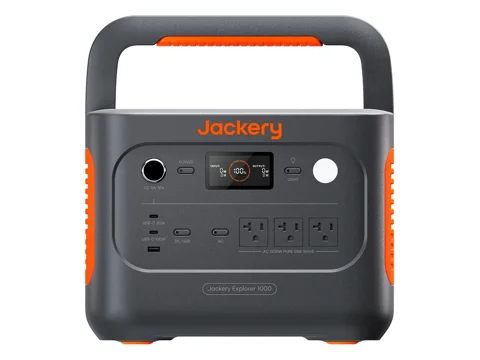
| Jackery Explorer 1000 v2 | About 1 kWh | 10 ms | About 23.8 lb | Yes | 1,500W AC |
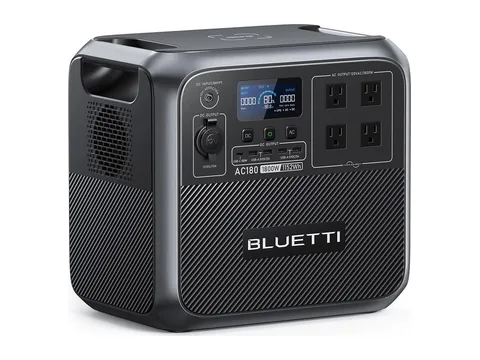
| BLUETTI AC180 | 1,152 Wh | 20 ms | Heaviest here | See listing | 1,800W AC |
Specs come from Anker, EcoFlow, Jackery and BLUETTI and the Amazon listings. Switchover is how fast the station takes over when it's plugged in as a backup and the wall power drops.
1. Anker SOLIX C1000 Gen 2
Who it’s for: Most people who want a CPAP to keep running through an outage without waking them up.
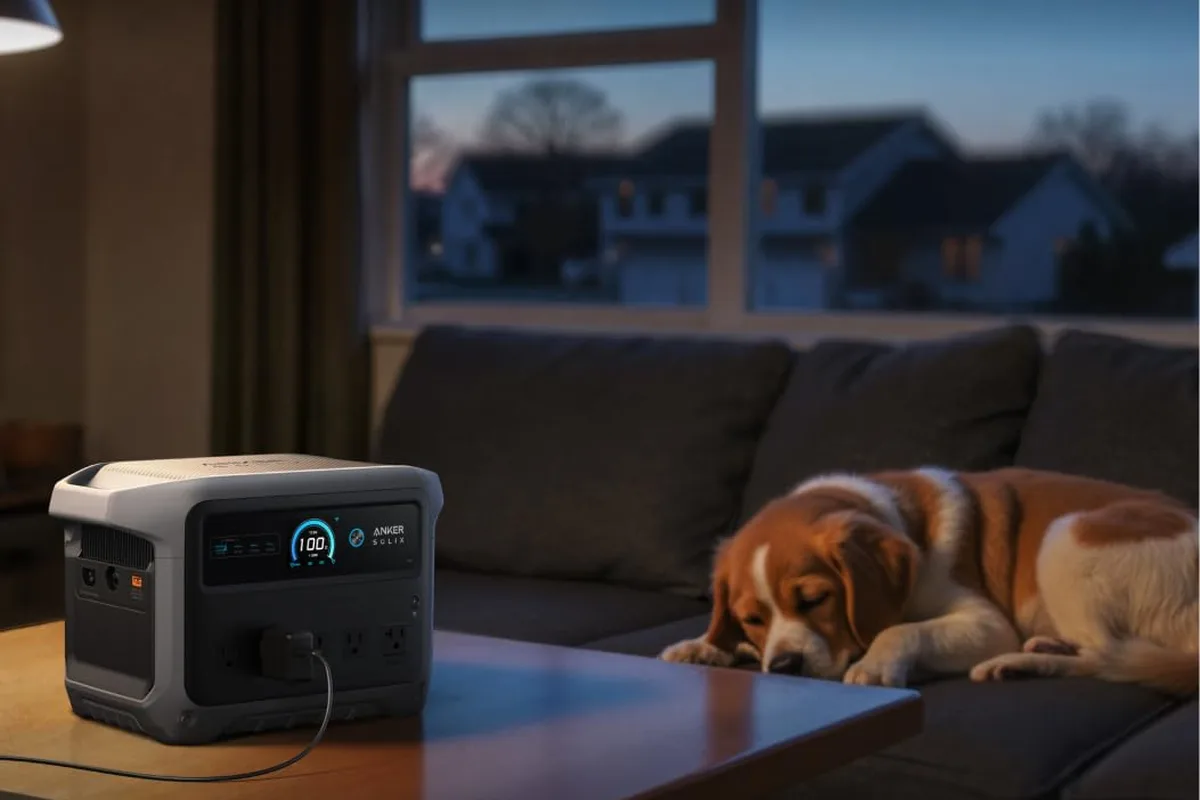
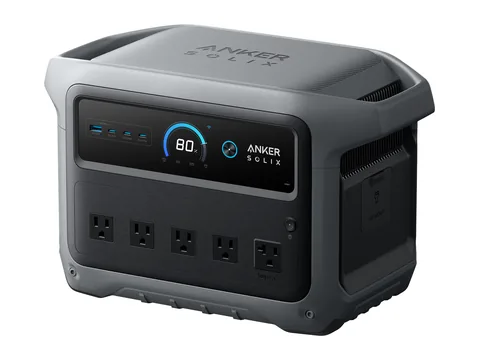
Anker’s listing calls out CPAP machines by name for its UPS mode: plug the station into the wall and your CPAP into the station, and if the power drops, it switches over in under 10 milliseconds. Anker also says it runs at 0 to 20 dB when it’s putting out less than 200 watts, and a CPAP is well under that. It has a 1,024 Wh LiFePO4 battery rated for 4,000 cycles, and it averages 4.6 stars on more than 1,800 Amazon ratings.
At about 24.9 pounds, it isn’t something you’ll carry around every night, and like every station here, it delivers less than its rated capacity at a draw this low.
Check Amazon Price: Anker SOLIX C1000 Gen 2
2. Anker SOLIX C300 DC
Who it’s for: Camping, travel and short outages, on a tight budget.
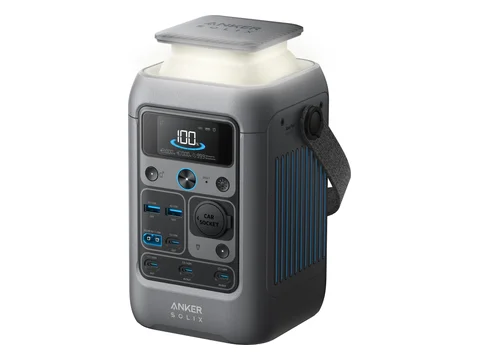
This is the lightest station here by far, at about 6.2 pounds. It holds 288 Wh and has a 12V car socket rated at 120W, plus fast USB-C ports. Running a CPAP from that car socket with your machine’s DC power cord skips the energy lost converting to AC, so the battery goes further. With the humidifier off, plan on roughly one night per charge.
There are no AC outlets at all, so you need your CPAP’s DC cord, which is usually sold separately.
Check Amazon Price: Anker SOLIX C300 DC
3. EcoFlow DELTA 3
Who it’s for: Anyone who wants to add more battery later for longer outages.
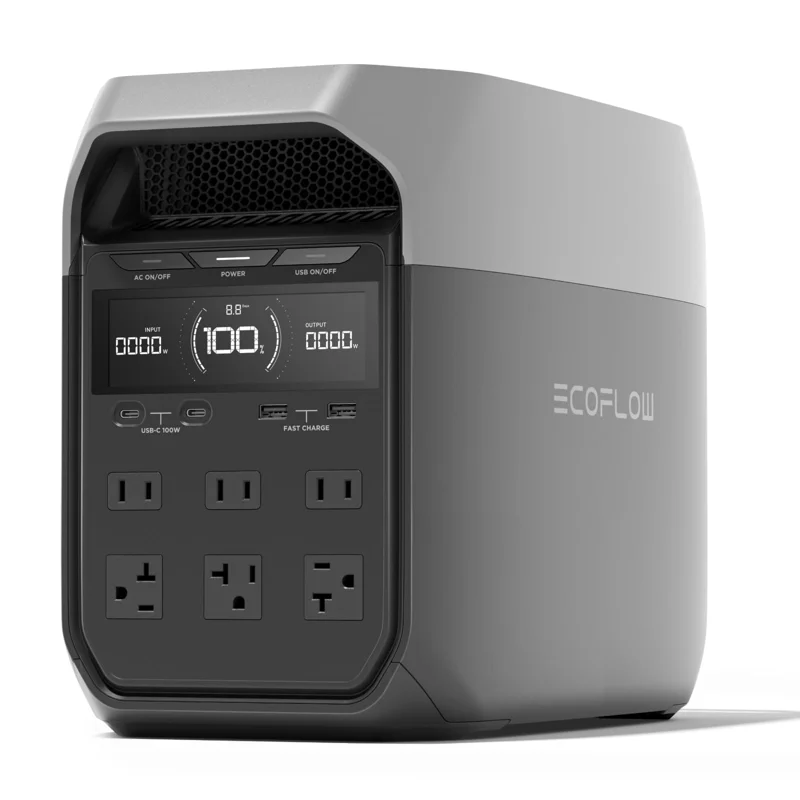
The DELTA 3 has a 1,024 Wh LiFePO4 battery that EcoFlow rates for 4,000 cycles to 80%, and you can expand it up to 5 kWh with EcoFlow’s extra batteries. Its switchover is under 10 milliseconds, and it charges from the wall or from solar panels.
It weighs about 27.6 pounds, the heaviest of the 1 kWh stations here, and the extra batteries add to the cost.
Check Amazon Price: EcoFlow DELTA 3
4. Jackery Explorer 1000 v2
Who it’s for: Anyone who wants a proven, easy station they can carry.
This is the proven pick, with a 4.7-star average on more than 3,700 Amazon ratings. Jackery lists it at about 23.8 pounds, the lightest 1 kWh station here. It has a 10 ms UPS switchover and a 12V car port, so you can run a CPAP on DC.
Its 1,500W AC output is the lowest of the big stations. That doesn’t matter for a CPAP, but it limits what else you can run at the same time.
Check Amazon Price: Jackery Explorer 1000 v2
5. BLUETTI AC180
Who it’s for: Anyone who wants the most battery for the money.
The AC180 has the biggest battery here, 1,152 Wh of LiFePO4, and BLUETTI says it recharges from the wall in about an hour. It works as a backup for your essentials, and BLUETTI covers it for 5 years.
Its 20 ms switchover is the slowest here, and it’s the heaviest station on the list.
Check Amazon Price: BLUETTI AC180
How many nights will you get?
- Measure your CPAP. Most CPAP machines draw somewhere around 30 to 60 watts, and the heated humidifier and heated tube use most of that. Plug yours into a plug-in watt meter for a night to find your real number.
- Expect less than the box number. At a low draw through the AC outlets, a station delivers well under its rating. In Outdoor Life’s long low-power test, stations delivered roughly half to two-thirds of their rated capacity.
- Do the math. A 1 kWh station that delivers about 600 Wh runs a 40-watt CPAP for about 15 hours, or roughly two nights.
- Stretch it. Turning off the humidifier and running the CPAP on 12V DC with your machine’s DC cord both make the battery last longer.
Want something bigger for the whole house? See our best power stations for whole-home backup, our power stations for a refrigerator and our solar panels for power stations.
We may earn a commission if you buy through links on this page. It never changes what we recommend. As an Amazon Associate we earn from qualifying purchases. Learn more.