5 Best Portable Solar Panels for Power Stations (and the One I'd Actually Use)
The best portable solar panels for charging a power station in an outage or at camp: a 400W Renogy blanket that weighs about 16 pounds, a bifacial Anker, a 4.5-pound Jackery and more, plus how to match a panel to your station.

Our top picks at a glance
- Check Amazon Price
A 400-watt, 16-fold solar blanket that weighs about 16 pounds and packs down to about 16 inches square. Read more
Pros
- 400 watts for about 16 pounds
- Folds to about 16.5 x 15.8 x 4.1 inches
- 25% efficient N-type cells
- Lowest cost per watt here
Cons
- MC4 output only (adapter sold separately)
- 2-year warranty
- Check Amazon Price
The proven one, with nearly 1,000 ratings, 200 watts, four kickstands and USB ports to charge a phone straight from the panel. Read more
Pros
- Nearly 1
- 000 owner ratings
- USB-C PD 45W plus two USB-A ports
- Four kickstands
- Magnetic closure
Cons
- 200 watts is slow for a big station
- 2-year warranty
- Check Amazon Price
A 400-watt bifacial panel that also catches light reflected onto its back, with a 5-year warranty and cables in the box. Read more
Pros
- Dual-sided panel
- 5-year warranty
- IP68 water and dust rating
- Includes MC4 and XT-60i cables
Cons
- Newer listing with few ratings
- Costs more than the Renogy 400W
- Check Amazon Price
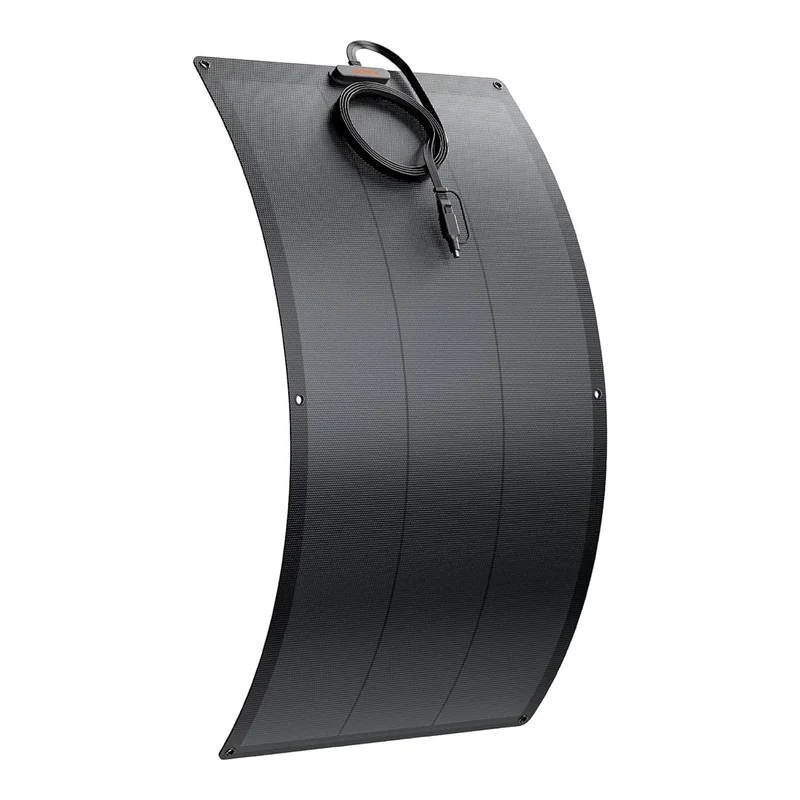
A thin, all-black 100-watt panel that weighs about 4.5 pounds and bends to fit a curved roof. Read more
Pros
- About 4.5 pounds
- Bends to fit curved surfaces
- IP68
- Rated for -40°F to 185°F
Cons
- Only 100 watts
- Highest cost per watt here
- Check Amazon Price
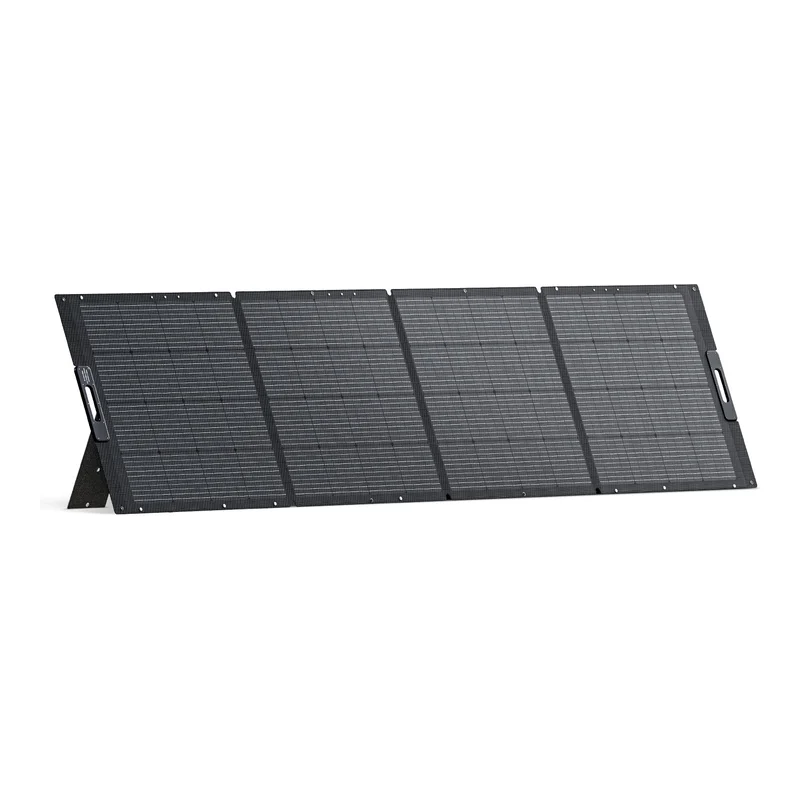
A 350-watt folding panel with an ETFE coating, built to pair with Bluetti stations and most others with MC4 input. Read more
Pros
- 350 watts
- ETFE coating
- IP67
- MC4 works with most stations
Cons
- About 30.6 pounds
- Costs the most per watt of the big panels
Prefer to watch?
The Solar Panel I'd Actually Use With My Power Station (Top 5) Watch on YouTube
If I were buying one solar panel for a power station today, it wouldn’t be the heaviest one. A 400-watt panel used to mean a 30-pound slab. The one I’d actually use packs 400 watts into a folding blanket that weighs about 16 pounds, and it costs less per watt than anything else on this list.
I haven’t set these five up myself. Everything below comes from the makers’ spec sheets and the Amazon listings, and every pick was in stock on Amazon when I checked.
Compare at a glance
| Solar panel | Rated watts | Weight | Cell efficiency | Output | Warranty |
|---|---|---|---|---|---|
| Renogy 400W | 400W | About 16.1 lb | 25% | MC4 | 2 years |
| Renogy 200W | 200W | About 13.9 lb | 25% | MC4, USB-C, USB-A | 2 years |
| Anker SOLIX PS400 | 400W, dual-sided | About 21.9 lb with stand | 25%+ | MC4, XT-60i cable included | 5 years |
| Jackery SolarSaga 100W Light | 100W | About 4.5 lb | 25% | 3 m cable | See listing |
| BLUETTI PV350 | 350W | About 30.6 lb | 23.4% | MC4 | See listing |
Specs come from Renogy, Anker, Jackery and BLUETTI and the Amazon listings. Rated watts are lab numbers; a panel usually makes less in real sun.
1. Renogy 400W Portable Solar Panel
Who it’s for: Most people charging a mid-size or large power station, for an outage at home or a trip.
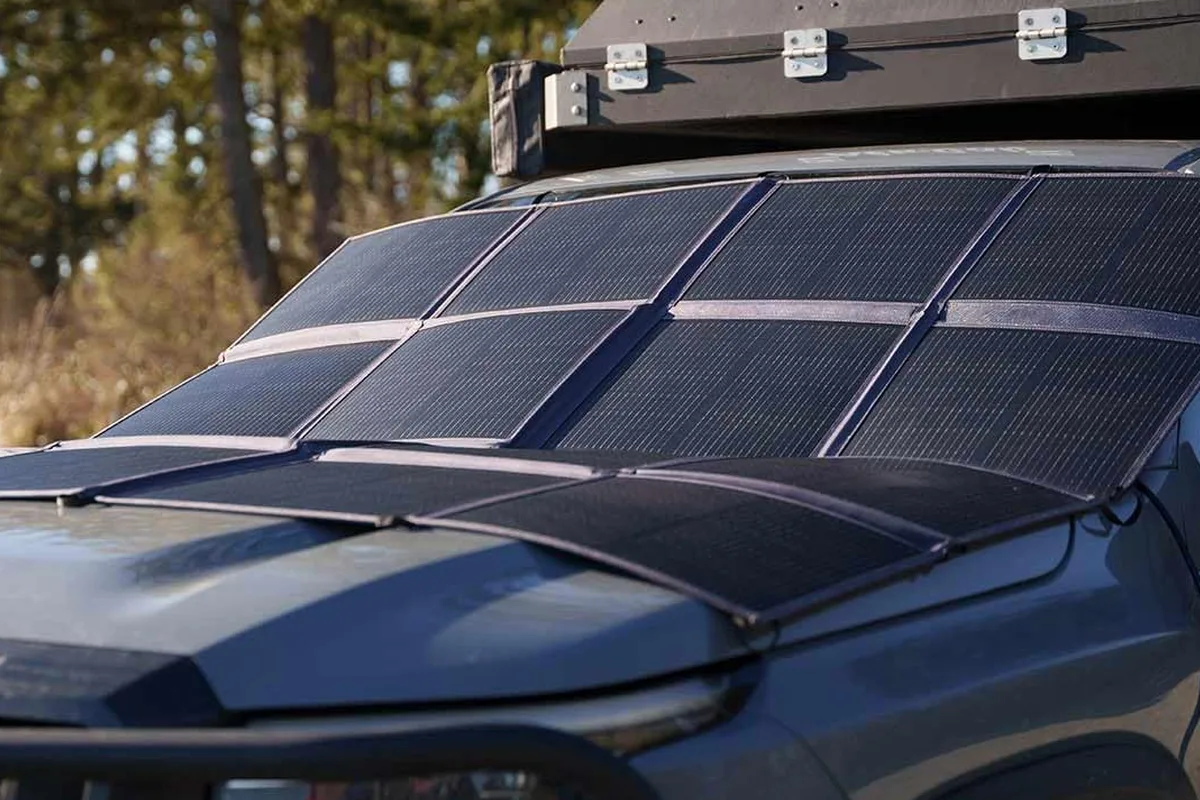
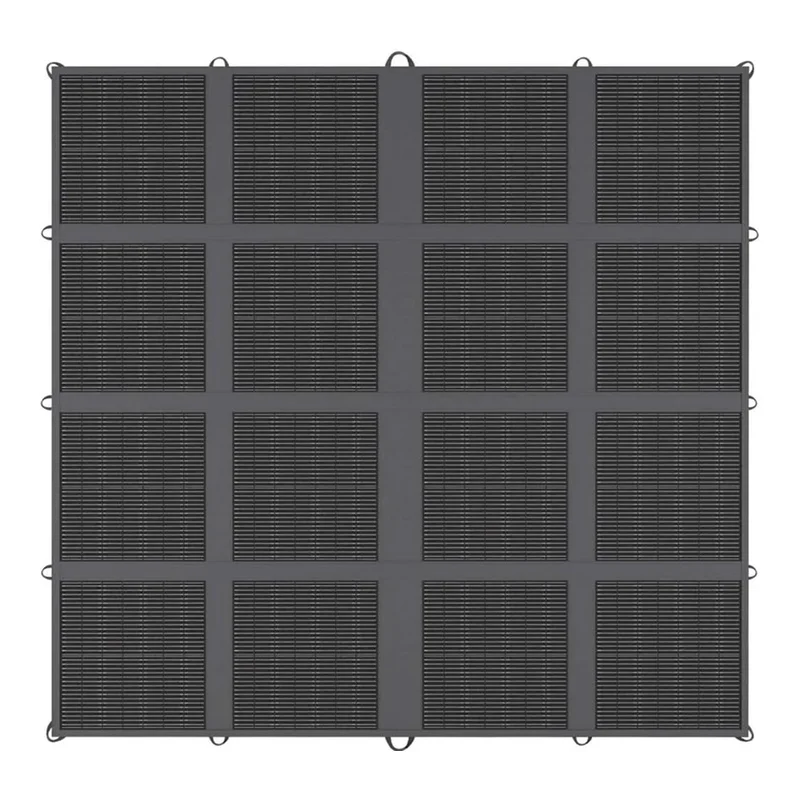
This is a 16-fold solar blanket, not a hard folding panel. Renogy lists it at 16.09 pounds, and it folds down to about 16.5 by 15.8 by 4.1 inches, small enough for a closet shelf or the back seat. It uses 25% efficient N-type cells, it’s UL 61730 tested, and you can lay it on the ground, drape it over a windshield or hang it between two posts. Renogy says it works with stations like the Jackery Explorer 1000 v2, EcoFlow DELTA 3 and Anker SOLIX C1000 Gen 2.
The panel has MC4 connectors only, so you may need an adapter for your station, and Renogy sells its 4-in-1 adapter separately. The warranty is 2 years.
Check Amazon Price: Renogy 400W
2. Renogy 200W Portable Solar Panel
Who it’s for: Smaller stations and tighter budgets.
This is the proven pick, with a 4.5-star average on nearly 1,000 Amazon ratings. It’s a 200-watt folding panel with the same 25% N-type cells as the 400W blanket, four kickstands and a magnetic closure. It also has a USB-C port (45W PD) and two USB-A ports, so you can charge a phone or laptop right off the panel. It weighs about 13.9 pounds and folds to about 23.7 by 23 inches.
200 watts is a slow way to fill a big station, so pick the 400W if you have a 2,000Wh-class unit. The warranty is 2 years.
Check Amazon Price: Renogy 200W
3. Anker SOLIX PS400
Who it’s for: Anyone who wants the longest warranty and doesn’t mind paying for it.
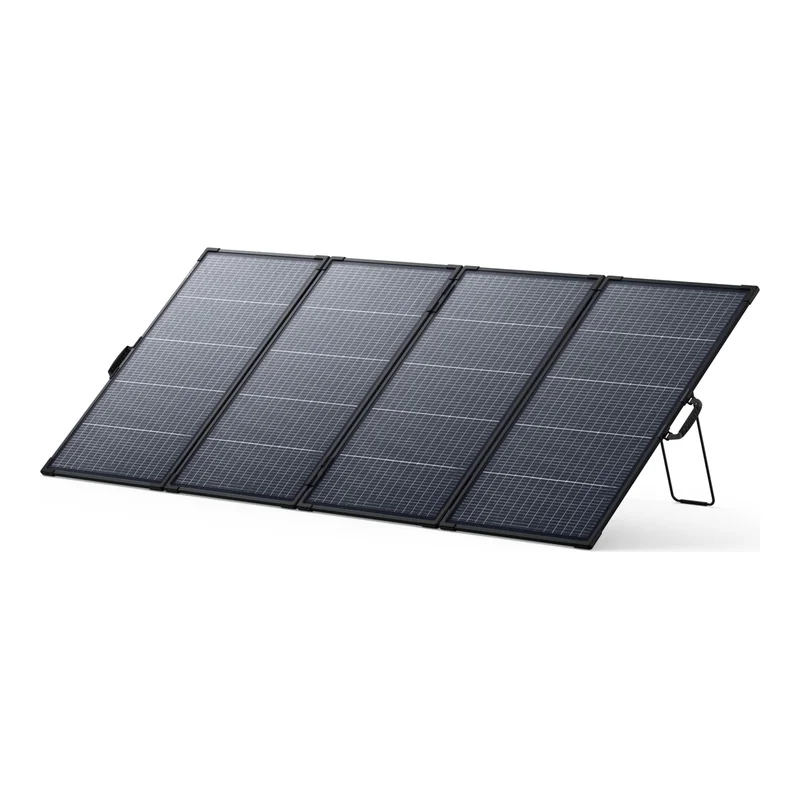
The PS400 is a bifacial panel: it collects light on the back as well as the front. Anker says that adds up to 10% more power over bright ground like snow, sand or concrete. It has 25%+ efficient N-type cells, an IP68 water and dust rating, and a 5-year warranty, the longest here. It weighs 21.9 pounds with its stand, and the box includes two 8.2-foot cables plus an XT-60i cable for Anker’s stations.
It’s a newer listing with only a handful of ratings so far, and it costs more than the Renogy 400W for the same rated watts.
Check Amazon Price: Anker SOLIX PS400
4. Jackery SolarSaga 100W Light
Who it’s for: Small stations, backpacks, and roofs where a stiff panel won’t fit.
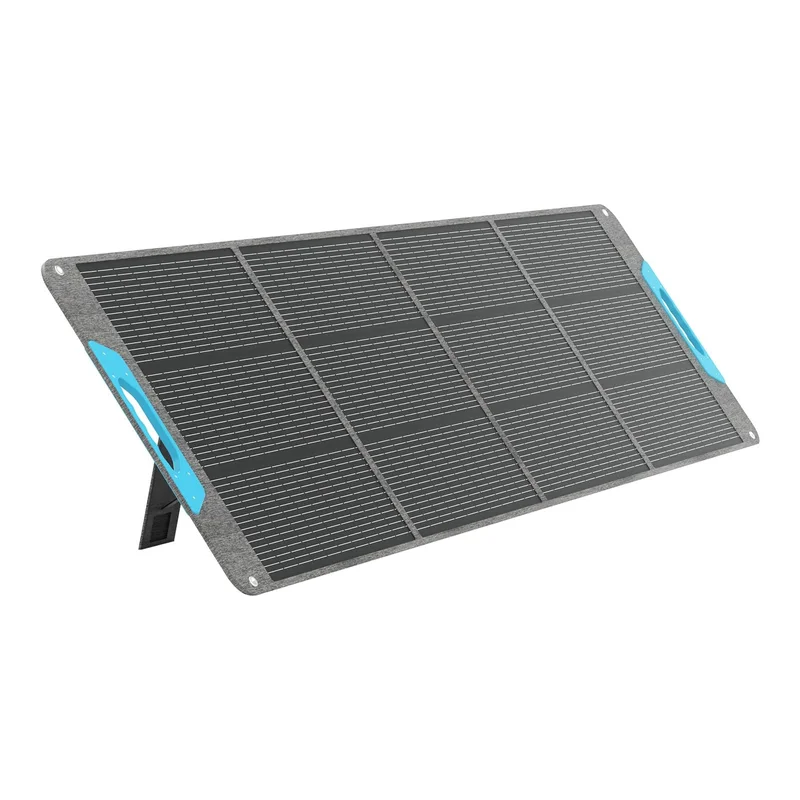
At about 4.5 pounds, this is the lightest panel on the list by far. It’s thin and all black, uses 25% efficient IBC cells, and bends to fit curved surfaces like a car or van roof. It’s IP68 rated, Jackery says it works from -40°F to 185°F, and it comes with a 3-meter cable.
It’s only 100 watts, so it suits a small station or topping off a bigger one, and it costs the most per watt here.
Check Amazon Price: Jackery SolarSaga 100W Light
5. BLUETTI PV350
Who it’s for: BLUETTI owners who want one big panel.
The PV350 is a 350-watt folding panel with 23.4% efficient monocrystalline cells and an ETFE coating that stands up to scratches and splashes. It’s IP67 rated and uses MC4 connectors, so it works with most power stations, and BLUETTI lists it for its AC70, AC180, AC240 and Elite 200 V2 among others.
At 30.6 pounds it’s the heaviest panel here by a lot, and it costs the most per watt of the big panels.
Check Amazon Price: BLUETTI PV350
How to match a panel to your power station
- Check the input limits. Every station lists a solar input range in volts and a maximum in watts. The panel’s open-circuit voltage (Voc) has to fit inside that range. The Renogy 400W is 39.2V and the Renogy 200W is 21.6V, which most stations accept.
- Check the plug. Most panels end in MC4 connectors. Many stations take XT60 or an Anderson plug instead, so you may need an adapter cable.
- Expect less than the rating. Sun angle, heat, clouds and shade all cut output. Aim the panel straight at the sun and move it a few times a day.
- Size it to the station. A 100W panel takes a full sunny day to put a few hundred watt-hours into a station. For a 1,000Wh to 2,000Wh station, 400 watts or more makes a real difference.
Need the station itself? See our best power stations for whole-home backup and best power stations for a refrigerator. If you’d rather buy a station and panels together, our solar backup kit picks cover that, and here’s how we turned an EcoFlow DELTA 3 into a home solar backup.
We may earn a commission if you buy through links on this page. It never changes what we recommend. As an Amazon Associate we earn from qualifying purchases. Learn more.