Best Range Hoods for Gas Stoves
Our picks for a range hood over a gas stove from Hauslane, Cosmo and FOTILE: a 30-inch chimney all-rounder, a budget wall-mount, a slant-front hood for high-heat cooking, a slim under-cabinet model and a 36-inch hood for extra coverage. Plus how to size CFM for gas burners.

We may earn a commission if you buy through links on this page. It never changes what we recommend. As an Amazon Associate we earn from qualifying purchases. Learn more.
Our top picks at a glance
- Check Amazon Price
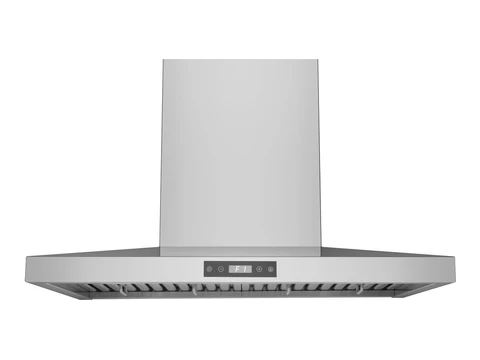
A 30-inch chimney hood rated at 500 CFM in Hauslane's lab, with stainless baffle filters and a 6-inch round duct. Read more
Pros
- 500 CFM lab airflow
- Dishwasher-safe baffle filters with full-size handles
- Lifetime motor warranty
Cons
- Top venting only
- Only three speeds
- Check Amazon Price
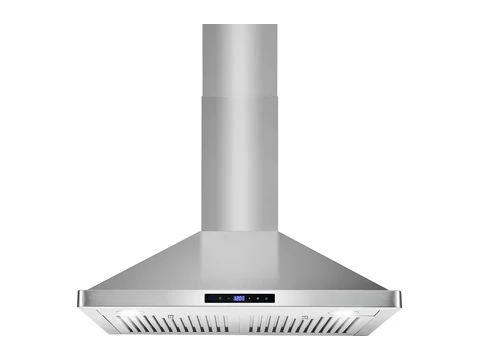
An inexpensive 380 CFM chimney hood with touch controls and a backdraft damper in the box. Read more
Pros
- Low price for a ducted chimney hood
- Backdraft damper included
- Dishwasher-safe stainless filters
Cons
- 380 CFM is light for big gas burners
- Ships with flexible duct you should swap for rigid
- Check Amazon Price
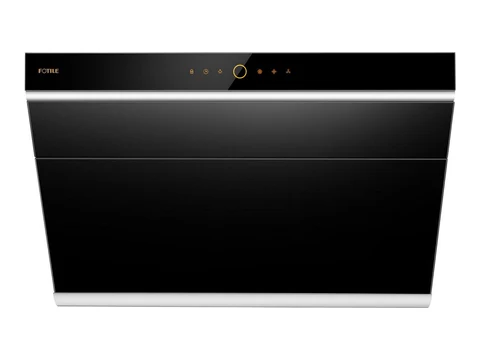
A slant-front hood with two DC motors, up to 600 HVI-rated CFM and a capture shield that opens over the burners. Read more
Pros
- 600 CFM HVI rating on high
- Quiet 1.2 sones on low
- Mounts under a cabinet or on a wall
Cons
- Expensive
- Needs make-up air in many areas at full power
- Check Amazon Price
A slim under-cabinet hood rated up to 600 CFM (HVI) that can be capped under 400 CFM where make-up air rules apply. Read more
Pros
- Up to 600 HVI CFM vented up
- Can be limited to under 400 CFM
- Only about 7 inches tall
Cons
- Uses a 7-inch round duct
- Premium price
- Check Amazon Price
The 36-inch version of Cosmo's chimney hood, for a 36-inch range or for extra overhang beyond a 30-inch one. Read more
Pros
- 36 inches wide
- Backdraft damper and 6-inch round outlet
- Dishwasher-safe stainless filters
Cons
- Still 380 CFM
- Needs 36 inches of wall between cabinets
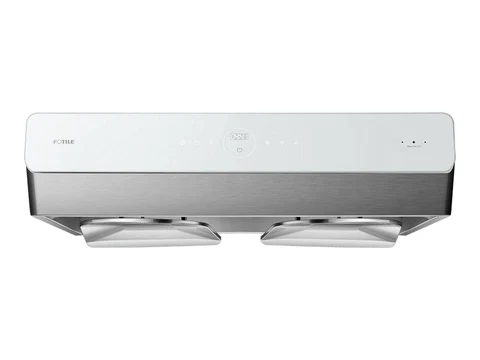
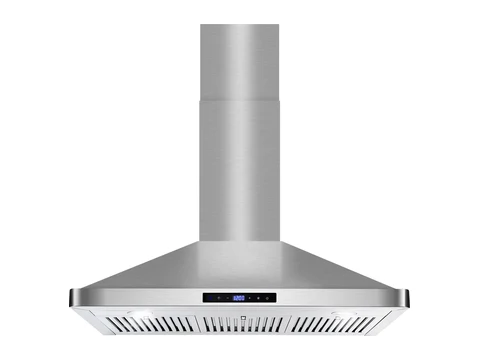
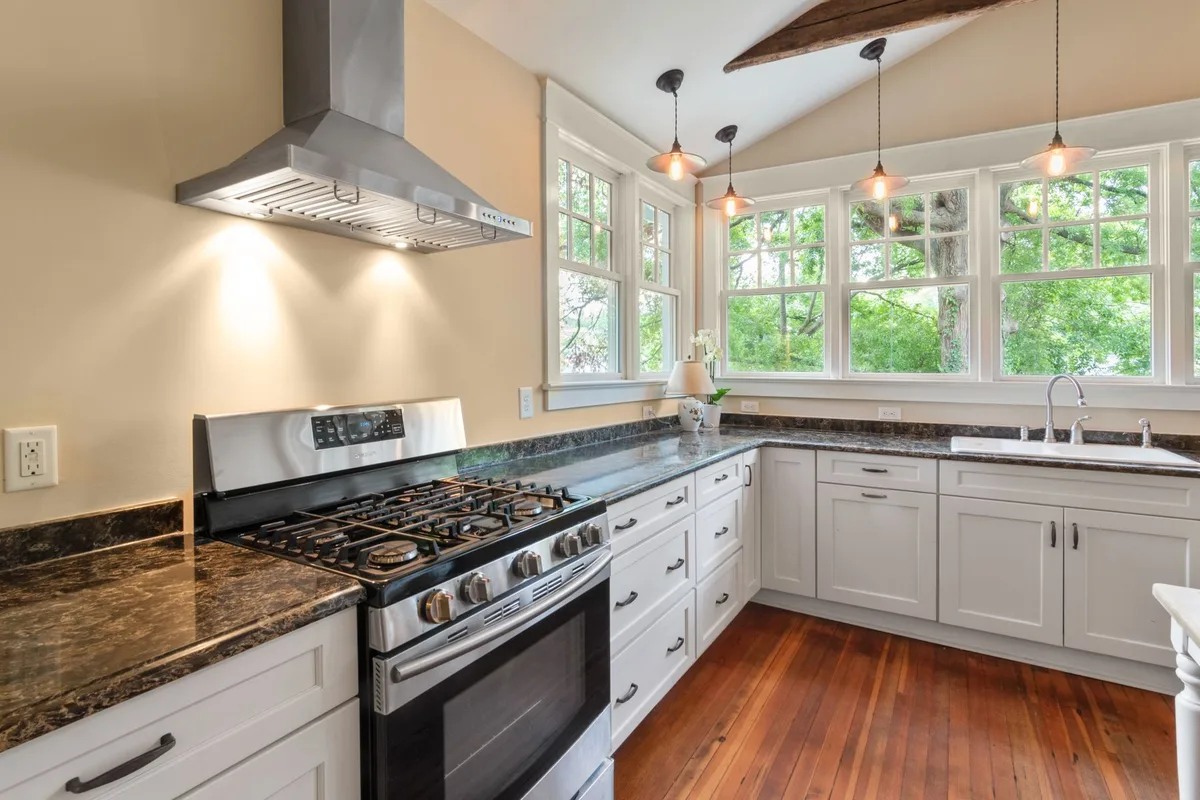
A gas stove puts more into your kitchen air than an electric one. Burning gas gives off heat, moisture, carbon monoxide and nitrogen dioxide along with the smoke and grease from the food. That’s why a hood over a gas range should vent outside. A recirculating (ductless) hood traps some grease and odor, but it blows the rest back into the room.
Two numbers decide most of this. CFM: Broan-NuTone’s rule is at least 100 CFM for every 10,000 BTU of total burner output, so a typical 50,000 BTU four-burner range wants about 500 CFM. Width: the hood should be at least as wide as the cooktop, and 3 inches wider catches more. Our range hood CFM guide walks through the math and the 400 CFM make-up air rule.
At a glance
| Hood | Style | Max CFM | Duct | Speeds | Width |
|---|---|---|---|---|---|
| Hauslane WM-540 | Wall chimney | 500 (lab) | 6” round, top | 3 | 30” |
| Cosmo COS-63175S | Wall chimney | 380 | 6” round, top | 3 | 30” |
| FOTILE JQG7505 | Slant front, wall or under cabinet | 600 (HVI) | Top | 4 | 30” |
| FOTILE Pixie Air UQG3002 | Under cabinet | 600 (HVI, vertical) | 7” round top, or 3¼” x 10” rear | 4 | 30” |
| Cosmo COS-63190S | Wall chimney | 380 | 6” round, top | 3 | 36” |
Specs come from Hauslane's product page, Cosmo's product pages and FOTILE's spec sheets. HVI ratings are the independent Home Ventilating Institute numbers; Hauslane lists a lab figure instead. FOTILE and Hauslane also advertise higher "equivalent CFM" numbers (1000 and 860), which aren't comparable to HVI ratings, so we left them out.
1. Hauslane WM-540 30-Inch Wall-Mount Range Hood: Best overall
Good fit for: A standard 30-inch gas range with a wall behind it and a 6-inch duct, or room to add one.
The WM-540 is a plain, well-made chimney hood at a fair price. Hauslane rates it at 500 CFM in its lab, which lines up with the 100-per-10,000-BTU rule for most four-burner gas ranges. It connects to a 6-inch round duct out the top, the size many existing hood ducts already are, and it comes with the chimney covers, mounting brackets, a grease tray and the round exhaust adapter.
The filters are stainless baffles with big handles, so they’re easy to pull out and run through the dishwasher. Baffle filters are a good match for gas cooking because they hold up to heat and grease better than the mesh filters on cheaper hoods. Hauslane lists noise at 2.0 sones on low and 7.0 on high, has a delay auto shut-off, and backs the motor with a lifetime warranty on top of two years for the rest.
What bugs us: It only vents out the top, so it won’t work if your duct goes straight out the back wall. Three speeds is fewer than some hoods offer. Like nearly every hood, it’s loud on high.
Skip it if: you have a pro-style range with 70,000 BTU or more. You’ll want more airflow and probably a 36-inch hood.
2. Cosmo COS-63175S 30-Inch Wall-Mount Range Hood: Best value
Good fit for: Replacing an old hood over a standard gas range without spending much.
Cosmo’s COS-63175S is one of the least expensive ways to get a ducted stainless chimney hood. It moves 380 CFM, which is enough for a modest gas range or for everyday cooking on two or three burners at a time. You get three speeds on a soft-touch panel, LED lights and stainless filters that go in the dishwasher. The body is 20-gauge 430 stainless steel.
A backdraft damper comes in the box. That’s a small flap that keeps cold air and bugs from coming back down the duct when the fan is off, and some cheap hoods make you buy it separately. The hood works ducted out of the box and can be converted to recirculating with Cosmo’s carbon filter kit (CFK1-TM), sold separately.
What bugs us: 380 CFM is on the low side for a gas range with a power burner. Cosmo includes flexible ducting for the install, but its own quiet rating (as low as 45 dB on low) assumes rigid duct, which also flows better. Buy rigid duct for the run. Cosmo doesn’t publish an HVI sone rating.
Skip it if: you sear, stir-fry or run every burner at once. Spend more on the Hauslane or one of the FOTILE hoods.
3. FOTILE JQG7505 30-Inch Slant Vent Range Hood: Best for high-heat cooking
Good fit for: Cooks who wok-fry, sear or grill indoors and want smoke pulled away fast.
The JQG7505 looks different from a canopy hood. Its face is angled glass, and the intake sits low and close to the cooktop. When you turn it on, a capture shield opens to 90 degrees over the burners. FOTILE says it covers about 6 square feet of cooking area, or five to six burners. Two DC motors drive four speeds, and the HVI ratings run from 230 CFM on low to 600 CFM on high.
It’s quiet on low, at 1.2 sones, and still 7.2 sones on high. You can turn it on with a wave of your hand, and a stir-fry mode jumps straight to full power. It hangs under a cabinet or on a wall (wall mounting needs FOTILE’s decorative cover, sold separately). FOTILE covers parts for five years, labor for two and the motors for life.
What bugs us: It costs several times more than the Cosmo. At 600 CFM, it’s over the 400 CFM line where many building codes require make-up air, so check with your local building department before you plan the install. The slanted front also sticks out about 18 inches, so tall cooks may want to try the height first.
Skip it if: you mostly simmer and boil. The extra capture is wasted on gentle cooking.
4. FOTILE Pixie Air UQG3002 30-Inch Under-Cabinet Range Hood: Best under-cabinet
Good fit for: Kitchens with cabinets over the range where a chimney hood won’t fit.
The Pixie Air is only about 7 inches tall, but it’s one of the stronger under-cabinet hoods you can buy. Vented straight up, its four speeds are HVI-rated at 240, 370, 470 and 600 CFM. Two capture shields under the hood pull smoke in from the front of the cooktop, and they double as the grease cups, so you lift them out and put them in the dishwasher.
What makes it a smart gas pick is FOTILE’s CFM adjustment feature. You can set the hood to stay under 400 HVI CFM, which can keep you below the make-up air threshold where your code uses it. It also has a sensor that turns the fan on when it detects certain cooking fumes, a delay shut-off and motion control.
What bugs us: It uses a 7-inch round duct going up, or a 3¼ x 10-inch rectangular duct out the back. If your existing duct is 6-inch round, you’ll need a transition or new ductwork. It’s priced like a premium hood. On high, it’s rated 6.0 sones vented up and 8.0 vented out the back.
Skip it if: you have open wall above the range. A chimney hood like the Hauslane costs less and is easier to service.
5. Cosmo COS-63190S 36-Inch Wall-Mount Range Hood: Best for wider coverage
Good fit for: A 36-inch gas range, or a 30-inch range where you want extra overhang to catch more smoke.
This is the 36-inch version of the Cosmo chimney hood. Going 6 inches wider than the cooktop puts more hood over the front burners, where a lot of smoke escapes, and that can matter as much as raw CFM. Specs match the 30-inch model: 380 CFM, three speeds, soft-touch controls, LED lights, a 6-inch round outlet and a backdraft damper. It runs on a standard 120-volt plug.
What bugs us: At 380 CFM, it’s underpowered for most 36-inch gas ranges, which often have 60,000 BTU or more. On those, treat it as a budget option and plan to cook with the fan on high. You also need 36 inches of open wall between the cabinets.
Skip it if: you have a 36-inch pro-style range and cook hard. Look for a 36-inch hood with 600 CFM or more and plan for make-up air.
How we picked
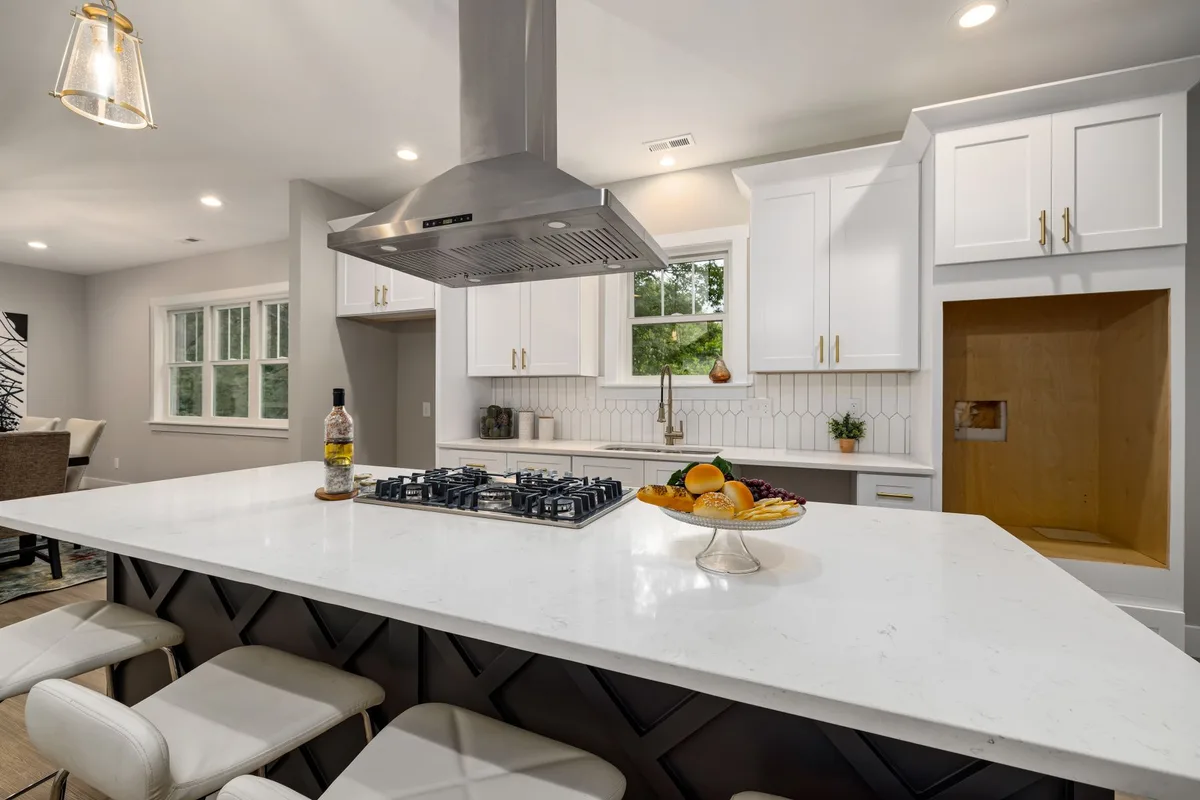
We looked at ducted hoods sold on Amazon that suit a home gas range, then checked airflow, duct size, noise and what’s in the box against each maker’s product pages and spec sheets. We left out recirculating-only hoods, since a gas stove’s fumes need to go outside. We looked for:
- Real airflow: HVI or lab CFM, not “equivalent” marketing numbers
- Capture: width, depth and how close the intake sits to the burners
- Duct fit: whether the hood matches common 6-inch round ducts
- Filters: stainless baffles or dishwasher-safe capture shields
- Make-up air: whether the hood can stay under 400 CFM if your code needs it
We haven’t tested these hoods ourselves. Read more about how we pick products.
Why gas stoves need a vented hood
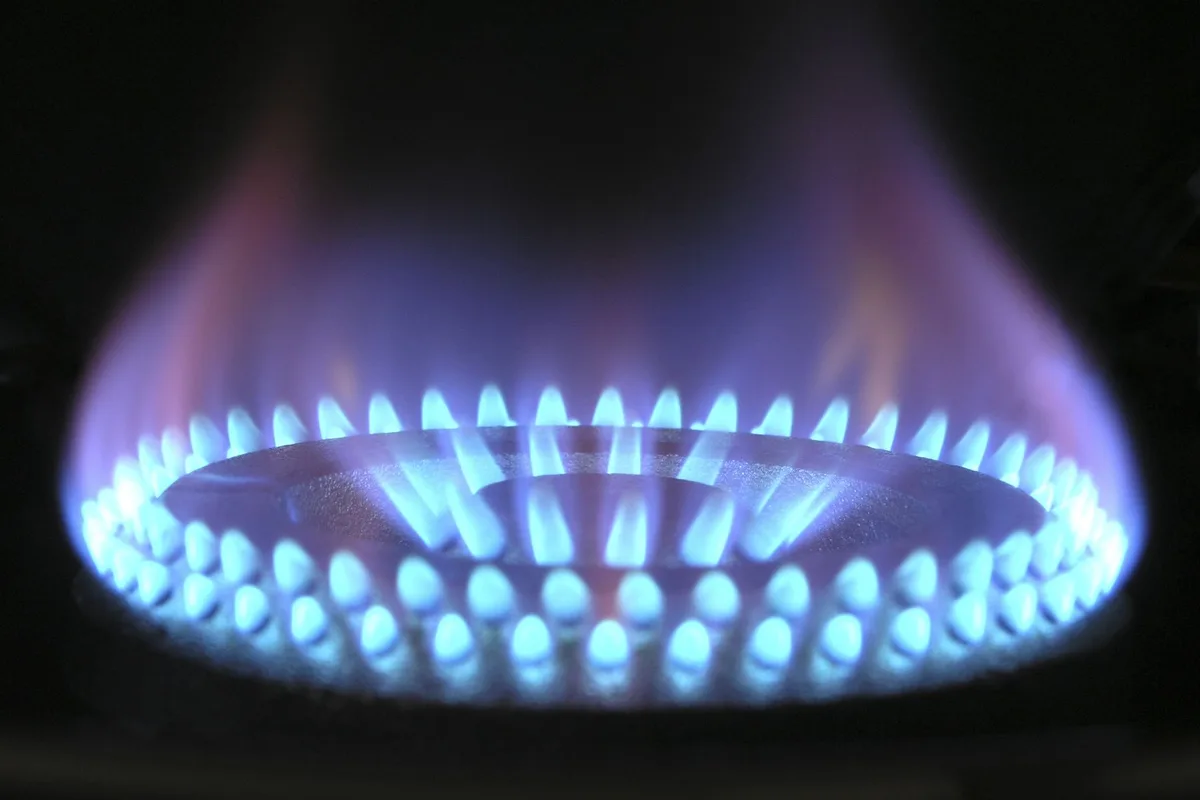
The EPA lists gas stoves as a source of nitrogen dioxide and carbon monoxide indoors, and recommends an exhaust fan vented outdoors while you cook. A few habits make any hood work better:
- Turn it on before you light the burner, and leave it running for 10 to 15 minutes after you’re done.
- Cook on the back burners when you can. Hoods catch more from the back than the front.
- Use the right height. Most makers call for the bottom of the hood about 30 inches above a gas cooktop, but follow your hood’s and range’s manuals.
- Keep the duct short and smooth. Every elbow and extra foot of duct cuts real airflow.
What to know before you buy
- Add up your BTUs. Find the total burner output in your range manual and divide by 100 for a starting CFM.
- Check the 400 CFM line. The International Residential Code requires make-up air for kitchen exhaust over 400 CFM. Many areas adopt it, some change it. Ask your building department before you buy a bigger hood.
- Match the duct. A replacement hood should use the same duct size and exit (top or back) as your old one, or you’ll need new ductwork.
- Go wider if you can. A hood 3 inches wider than the cooktop, or a 36-inch hood over a 30-inch range, catches more smoke.
- Look at sones. Noise is rated in sones, and lower is quieter. Almost every hood is loud on high, so compare the low and medium settings you’ll use most.
If cabinets over your range limit your choices, our 30-inch under-cabinet range hood picks cover more models, including convertible and ductless ones.
Still wondering?
Can I use a ductless range hood with a gas stove? You can, but it’s a compromise. A recirculating hood catches some grease and odor, but it doesn’t remove carbon monoxide, nitrogen dioxide, heat or moisture. If there’s any way to duct the hood outside, do it.
Is an over-the-range microwave enough for a gas stove? Usually not. Most over-the-range microwaves move far less air than a dedicated hood, and their shallow intake doesn’t catch much from the front burners.
What size range hood do I need for a 30-inch gas range? At least 30 inches wide, and 36 inches if you have the wall space. For CFM, divide your range’s total BTU by 100.
Do I need a professional to install a range hood? Swapping a hood onto an existing duct and outlet is a common DIY job for two people. Cutting a new duct through a wall or roof, adding a circuit or adding make-up air is a job for a pro.