Whole House Water Filters for City and Well Water: Top Picks for 2026
City water and well water need different whole house filters. Our picks for the best whole house filters for each, what they remove, how fast they flow and what upkeep really costs.

We may earn a commission if you buy through links on this page. It never changes what we recommend. As an Amazon Associate we earn from qualifying purchases. Learn more.

Our top picks at a glance
1 Best for city water
SpringWell CF
From about $1,015
A large carbon tank that targets chlorine and taste for the whole house, with media lasting up to 10 years. Read more
Pros
- 1 million gallon capacity
- Strong flow
- About $40 a year upkeep
Cons
- Sediment filter needs regular changes
- Some install parts not included
2 Best cartridge system
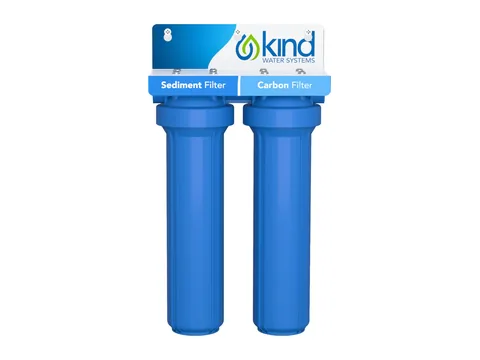
Kind E-1000
From about $775
A compact cartridge system for city water that's easier to install than a tank. Read more
Pros
- Compact
- High 15 GPM flow
- Easy install
Cons
- Cartridges cost $120 to $300 a year
- No published filter test results
3 Best for well water
SpringWell WS
From about $2,200
Air injection and automatic backwash remove iron, sulfur smell and manganese without chemicals. Read more
Pros
- Chemical-free iron and sulfur removal
- Automatic backwash
- Fast 12 to 20 GPM flow
Cons
- High upfront cost
- Plastic fittings included
4 Best sediment filter
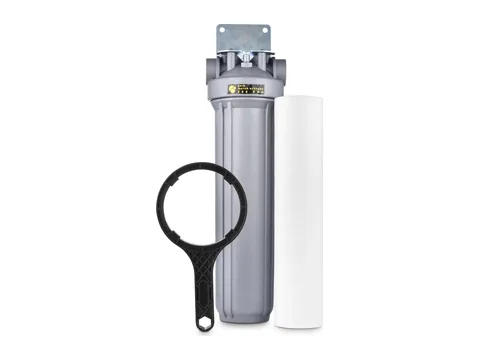
RKIN CBS 5 Micron
About $580
A single high-flow cartridge that keeps sand and grit out of your plumbing and appliances. Read more
Pros
- Simple single cartridge
- 20 GPM flow
- About $50 a year
Cons
- Fine 5-micron filter can clog with heavy sediment
- Only removes sediment
A whole house water filter, sometimes called a point-of-entry system, treats water where it enters your home, so every tap, shower and appliance gets filtered water. The right one depends almost entirely on where your water comes from.
- City water is already treated. The main complaints are chlorine taste and smell, plus sediment from old pipes. Carbon filters handle this well.
- Well water isn’t treated. Common problems are sediment, iron, manganese and sulfur smell, and hardness. Carbon alone usually isn’t enough.
Test your water first. It’s the only way to know what to filter. Well owners can start with how to test well water at home.
Compare at a glance
| Filter | Best for | Type | Flow | Yearly upkeep | Approx. price |
|---|---|---|---|---|---|
| SpringWell CF | City water | Carbon tank | 9 to 20 GPM | About $40 | From $1,015 |
| Kind E-1000 | City water | Cartridges | 15 GPM | $120 to $300 | From $775 |
| SpringWell WS | Well water | Air injection iron filter | 12 to 20 GPM | Under $150 | From $2,200 |
| RKIN CBS 5 Micron | Sediment (any) | Single cartridge | 20 GPM | About $50 | $580 |
Specs, upkeep estimates and test notes are from Water Filter Guru's reviews and manufacturer listings. Prices are starting prices in October 2026.
1. SpringWell CF: Best for city water
Who it’s for: City water households that want better-tasting, chlorine-free water at every tap.
This tank-based system uses catalytic carbon and KDF media behind a sediment filter. Water Filter Guru tested it in a home with lab results and named it the best whole house filter for municipal water. It’s rated for about a million gallons, the media can last up to 10 years, and yearly upkeep is roughly $40 for sediment filters. It comes with a lifetime warranty and a 6-month money-back guarantee.
What bugs us: The sediment filter needs changing every 6 to 9 months, and some installation parts aren’t included. Testing didn’t cover chloramine or PFAS, so if those are your concern, check the specs or ask the maker.
Skip it if: you’re on a well. It isn’t built for iron or sulfur.
2. Kind E-1000: Best cartridge system
Who it’s for: City water homes with limited space or that want a simpler install.
Instead of a large tank, the Kind system uses a washable sediment pre-filter and a catalytic carbon block in compact housings. It flows at a strong 15 GPM, and Water Filter Guru found it easy to install.
What bugs us: Cartridges need replacing about once a year or every 80,000 gallons, which adds up to $120 to $300 a year, more than tank systems. There are no published filter test results online.
Skip it if: you want the lowest running costs. A tank system is cheaper over time.
3. SpringWell WS: Best for well water
Who it’s for: Wells with iron staining, rotten-egg smell or manganese.
This system uses air injection to oxidize iron, sulfur and manganese so a greensand bed can trap them, then cleans itself with an automatic backwash. It doesn’t need chemicals, flows at 12 to 20 GPM, and Water Filter Guru tested it with third-party lab data. Media lasts about 10 years.
What bugs us: It’s expensive, the included fittings are plastic, and you’ll need to source some of your own. It isn’t a softener, so hard water needs a separate system; see the best water softeners for well water.
Skip it if: your well test shows no iron, sulfur or manganese.
4. RKIN CBS 5 Micron: Best sediment filter
Who it’s for: Any home with sandy or gritty water, and as a pre-filter for other systems.
A sediment filter is the cheapest, simplest whole house upgrade, and it protects faucets, appliances and other filters from grit. This one uses a single cartridge, flows at 20 GPM and costs about $50 a year to maintain.
What bugs us: A fine 5-micron filter can clog quickly if your well carries a lot of large sediment; a coarser pre-filter ahead of it can help. It doesn’t remove chemicals, iron or hardness.
Skip it if: sediment isn’t your problem.
Our research
We compared whole house systems from Water Filter Guru’s reviews, several of which include in-home installs and lab test results, along with manufacturer specs. We focused on:
- Matching the filter to the water source
- Flow rate, so showers and appliances don’t lose pressure
- Capacity and yearly upkeep
- Install effort and warranty
We haven’t tested these ourselves. Read more about how we pick products.
What to look for in a whole house filter
Flow rate
Look for at least 10 to 15 GPM for a typical home, more for large households with several bathrooms. Too little flow means weak showers.
Tank vs cartridges
Tank systems cost more upfront but last years and are cheap to maintain. Cartridge systems are smaller and cheaper to buy but cost more each year.
What it actually removes
Whole house carbon filters mainly reduce chlorine, taste and odor. For drinking water, many people pair a whole house filter with an under-sink reverse osmosis system.
Installation
Whole house systems are installed on the main water line, usually after the pressure tank on a well. Many homeowners DIY them, but it’s a plumbing job; hire a plumber if you’re not comfortable cutting into the main line.
Questions people ask
Do I need a whole house filter if I’m on city water? Not necessarily. City water is treated to be safe to drink. A whole house filter mainly improves taste, smell and protects appliances.
Will a whole house filter soften water? No. Softening needs a separate softener. Here’s reverse osmosis vs a water softener for how the systems differ.
How often do whole house filters need changing? Sediment cartridges every few months to a year; carbon tanks every 5 to 10 years, depending on the system and your water.