Chest Freezer vs Upright Freezer: Which Is Better?
Chest freezers hold more, cost less and use less energy. Upright freezers are easier to organize and often frost-free. Here's how to choose for your home.

The short version: a chest freezer gives you more space for the money, runs more efficiently and keeps food frozen longer when the power goes out. An upright freezer is easier to organize and reach into, takes up less floor space, and is usually frost-free.
If you buy in bulk and don’t mind digging, go chest. If you’ll open it every day and want to see everything at a glance, go upright.
At a glance
| Chest freezer | Upright freezer | |
|---|---|---|
| Price for the space | Lower | Higher |
| Usable space | More; fits large, odd-shaped items | Less; shelves and door bins take room |
| Energy use | Usually lower | Usually higher, especially frost-free |
| Power outage | Stays cold longer | Warms faster |
| Organization | Baskets; things get buried | Shelves and bins; easy to see |
| Floor space | Large footprint | Small footprint, but tall |
| Defrosting | Almost always manual | Often frost-free |
| Easy to reach | Requires bending | Eye-level access |
Why choose a chest freezer

- More space per dollar. A chest freezer costs less than an upright of the same capacity.
- Lower energy use. Cold air sinks, so when you open the lid, most of it stays inside. Chest freezers also don’t run a defrost heater.
- Better in a power outage. With good insulation and a lid on top, a full chest freezer stays frozen longer.
- Big items fit. Turkeys, large roasts, bulk packs and odd shapes fit easily.
The downsides: Food gets buried at the bottom, so you’ll need a system with baskets and labels. You have to bend down into it. Nearly all chest freezers need manual defrosting once or twice a year. They take up a lot of floor space.
Why choose an upright freezer
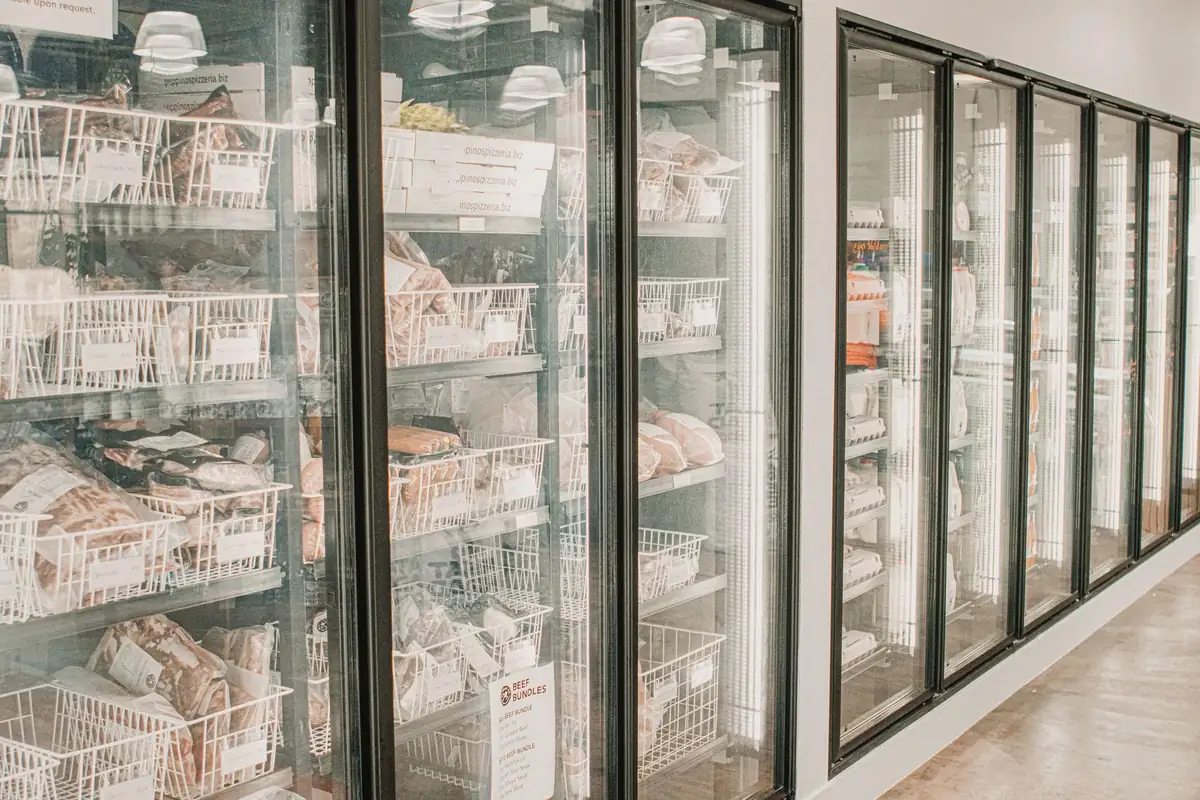
- Easy to organize. Shelves and door bins let you see everything, and nothing gets lost at the bottom.
- Less floor space. An upright fits in a fridge-sized footprint.
- Frost-free options. Many uprights defrost themselves, so you never have to empty them to chip out ice.
- Easier on your back. No bending into a deep chest.
The downsides: They cost more for the same space. Cold air spills out each time you open the door, so they use more energy. Frost-free models can have slightly more temperature swings, which can cause freezer burn over time. Shelves limit what fits.
Which is better for a garage?
Both can work if they’re garage ready, rated to run in a cold or hot garage. Many garage-ready models of both types are rated from 0°F to 110°F. Here’s what “garage ready” means.
Which size do you need?
A common rule of thumb is about 1.5 cubic feet of freezer space per person, plus more if you buy meat in bulk, hunt, garden or cook ahead.
| Household | Suggested size |
|---|---|
| 1 to 2 people | 5 to 7 cu. ft. |
| 3 to 4 people | 7 to 15 cu. ft. |
| 5 or more, or bulk buyers | 15 to 20+ cu. ft. |
Our recommendation
- Choose a chest freezer if you buy in bulk, want the lowest cost and energy use, or live where power outages are common.
- Choose an upright freezer if you’ll use it daily, want easy organization, have limited floor space or want frost-free.
Quick answers
Which uses less electricity? A chest freezer, in most cases. Manual-defrost uprights come closer than frost-free ones.
Which keeps food better long term? A chest freezer usually holds a steadier temperature, which helps limit freezer burn.
How long will food stay frozen in a power outage? The USDA says a full freezer holds its temperature for about 48 hours, and a half-full one for about 24 hours, if you keep the door closed.