DJI Power Auro 2000 Elite Review: A 2 kWh Station in a 1 kWh Body (and the US Catch)
What DJI's new Power Auro 2000 Elite actually offers, from its 2,016 Wh battery and 2,000W output to car and solar charging, what independent testing found, and why you can't buy it in the US.

We may earn a commission if you buy through links on this page. It never changes what we recommend. As an Amazon Associate we earn from qualifying purchases. Learn more.
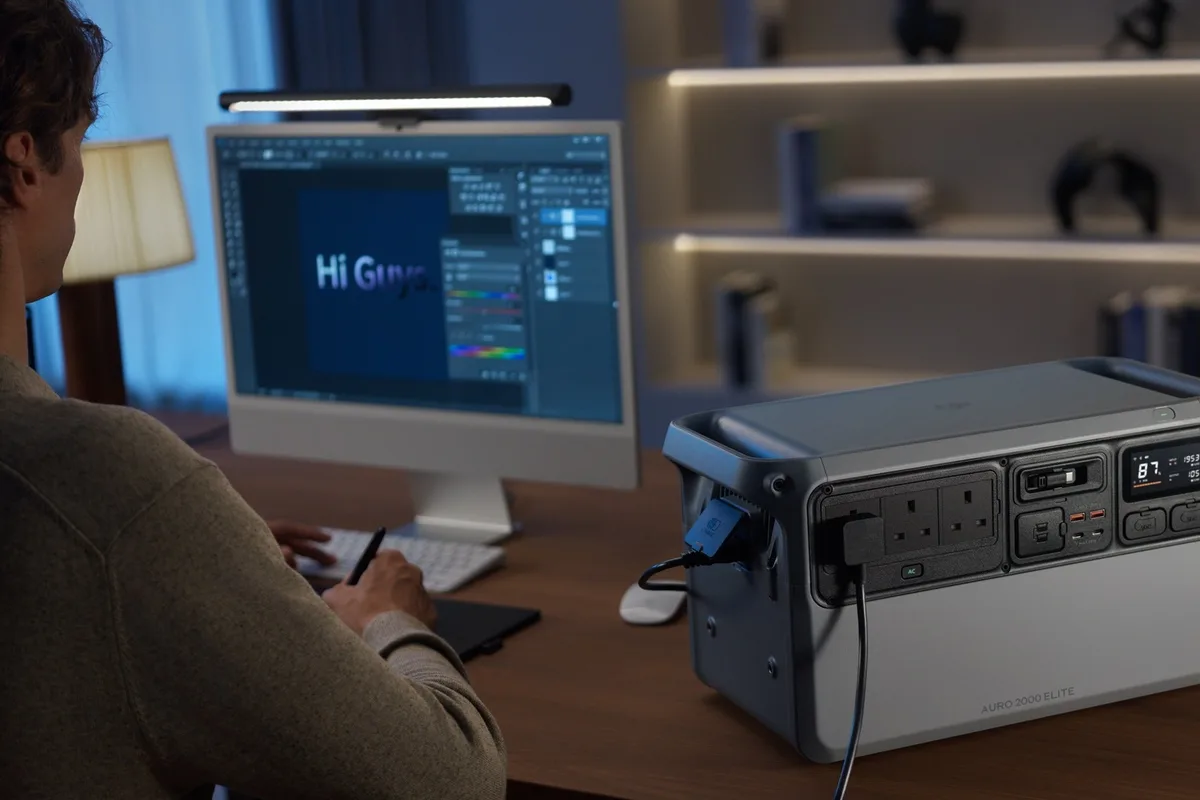
DJI launched the Power Auro 2000 Elite on October 28, 2026, and the headline is size. It packs about 2 kWh of battery into a box DJI says is 24% smaller and 14% lighter than its own Power 2000. That’s the kind of capacity most brands still put in a 50-pound unit.
I haven’t had one in front of me. This review pulls together DJI’s official specs, the launch coverage, and the most detailed independent test I could find, so you know what’s real, what’s marketing, and where the catches are.
The short version: on paper it’s one of the most compact 2 kWh stations you can buy, with built-in car charging that most rivals make you pay extra for. But it isn’t sold in the United States, its 2,000W inverter is modest for its class, and solar charging needs DJI’s own adapters.
Key specs
| Spec | DJI Power Auro 2000 Elite |
|---|---|
| Battery | 2,016 Wh, LFP (lithium iron phosphate) |
| Continuous output | 2,000W pure sine wave (some appliances rated around 2,200W) |
| AC outlets | 3 |
| USB | Built-in retractable 140W USB-C cable, 2 USB-C (65W each), 2 USB-A (12W each) |
| Wall charging | Up to 2,000W, 0 to 80% in about 60 minutes |
| Solar input | Up to 1,200W across two SDC ports (600W each, 9 to 60V), full in about 2.7 hours |
| Car charging | Built-in car charger, full in as little as 4 hours |
| UPS switchover | 10 ms (0.01 seconds) |
| Battery life | Over 70% capacity after 6,000 cycles |
| Weight | About 19 kg (about 42 lb) |
| Expansion | Up to 12 kWh with an expansion battery DJI says is coming later |
| Warranty | Up to 5 years when bought from DJI’s store |
| Price | €1,099 in Europe. Not sold in the US. |
Sources: DJI’s launch press release and pv magazine’s launch report. The USB port breakdown and per-port solar limits come from The Technology Man’s review.
What’s genuinely good about it
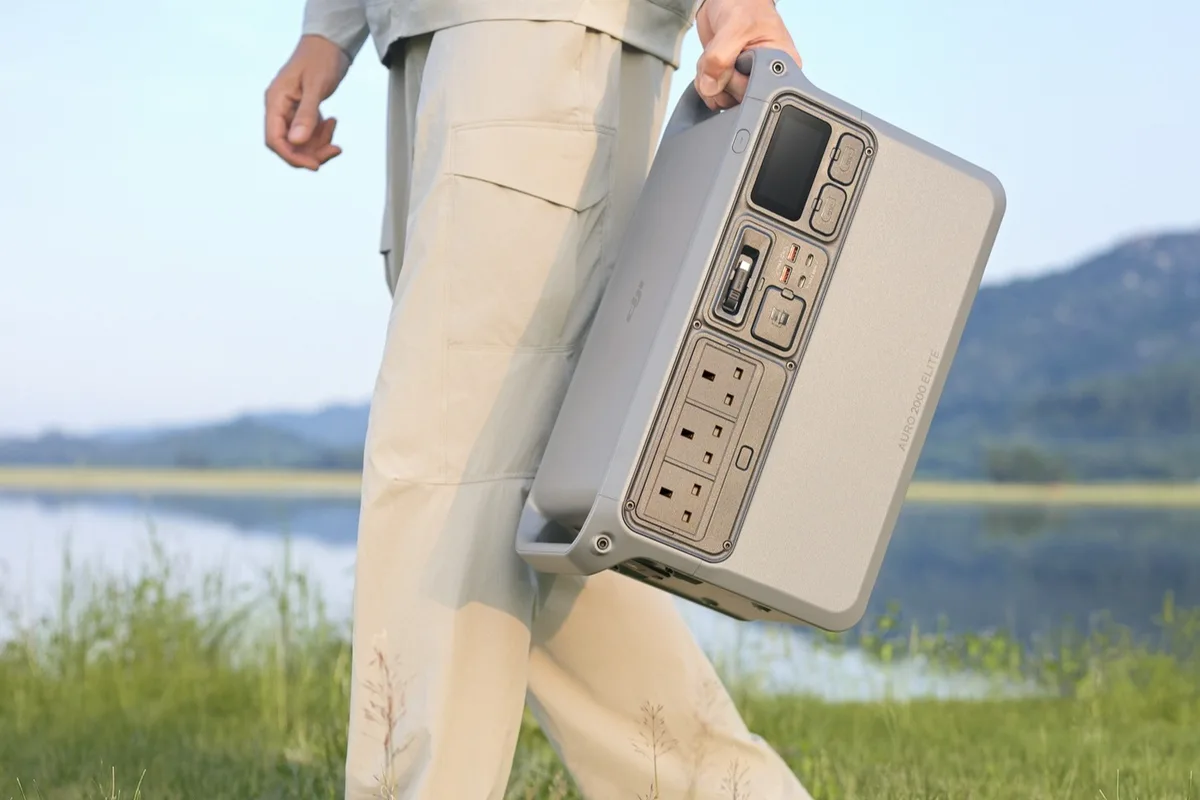
It’s small for 2 kWh. About 19 kg and 25 liters is light for this capacity. DJI’s own Power 2000 weighs about 2.5 kg more. If you’ve ever hauled a big power station out of a closet during an outage, a few kilograms matters.
Car charging is built in. Most power stations charge from a car’s 12V socket at around 100W, which takes all day. DJI puts a proper car charger inside that connects to the car battery, and claims a full charge in as little as 4 hours. The Technology Man measured up to about 400W from a 12V system this way, and noted it can also top up the car’s battery when it drops low. A cigarette-lighter adapter is also available, but it’s capped at 120W.
It charges fast from the wall. DJI claims 0 to 80% in 60 minutes. In independent testing it hit 80% in 56 minutes and 100% in 67 minutes.
The battery should last. LFP chemistry rated for over 70% capacity after 6,000 cycles is in line with the best stations out there. DJI frames that as roughly 10 years of daily use.
Usable capacity is solid. On a constant 1,000W AC load, The Technology Man got 1,722 Wh out of it, about 85% of the rated capacity. That’s a normal, healthy figure for a station this size.
The catches
You can’t buy it in the US. pv magazine reports DJI can’t offer the unit in the United States. DJI was added to the FCC’s Covered List in December 2025, which blocks new equipment authorizations, and that’s the likely reason. There’s no US price, no US DJI store listing, and no Amazon.com listing. If you’re in the US, this is a “nice to know about” product, not one you can order.
2,000W is modest for 2 kWh. The Technology Man points out it’s a little less than most 2 kWh units they’ve tested. 2,000W runs a fridge, a microwave or a space heater, but not much at the same time. In testing, startup surges reached about 4,600W, enough for a small bandsaw but not a table saw.
It lowers voltage instead of shutting off when overloaded. Push past the limit and it reduces output voltage rather than tripping. That keeps simple loads like heaters running, but you can’t turn the behavior off in the app, which isn’t ideal for sensitive electronics.
Solar and car charging use DJI’s own SDC ports. To plug in standard MC4 solar panels you need DJI’s SDC-to-MC4 adapters, and you need two of them to reach the full 1,200W. They aren’t included.
Standby drain is real with the AC on. The reviewer measured about 20W of idle draw with AC enabled and timeouts off, dropping the battery from 100% to 76% in 24 hours. That’s common for inverters, but worth knowing if you plan to leave it on as a standby backup. DC output showed no noticeable drain.
No weather rating and a less complete app. There’s no formal water resistance rating, and the DJI Home app is described as polished but lighter on features than some rivals.
Who it’s for
If you live where it’s sold, it makes the most sense for people who want serious capacity in a car: camping, vans, drone and photo work. The built-in car charger and small footprint are the selling points. DJI also sells a separate solar and microinverter kit for grid-tied use in some regions.
For home backup in the US, it’s off the table for now.
What to buy instead in the US
If you want something like this today, look at a 2 kWh-class station from a brand that sells in the US, like EcoFlow, Jackery, Anker or Bluetti. Our picks for running a refrigerator are in the best portable power stations for a fridge, and if you want to pair a station with a panel, see our solar backup kit picks, which include 2 kWh options from Jackery and EcoFlow.
The bottom line
The Power Auro 2000 Elite looks like a smart, well-built 2 kWh station, and independent testing backs up DJI’s charging and capacity claims. Its strengths are size and car charging. Its weaknesses are a so-so 2,000W inverter, proprietary charging ports and, for US buyers, the fact that you simply can’t get it. If DJI ever brings it to the US, we’ll update this page.