How to Clean a Pellet Stove: Daily, Weekly and End-of-Season Steps
A plain guide to cleaning a pellet stove: the 2-minute burn pot scrape, the weekly ash and glass clean, the deeper clean every ton or so of pellets, and how to handle the ash safely.

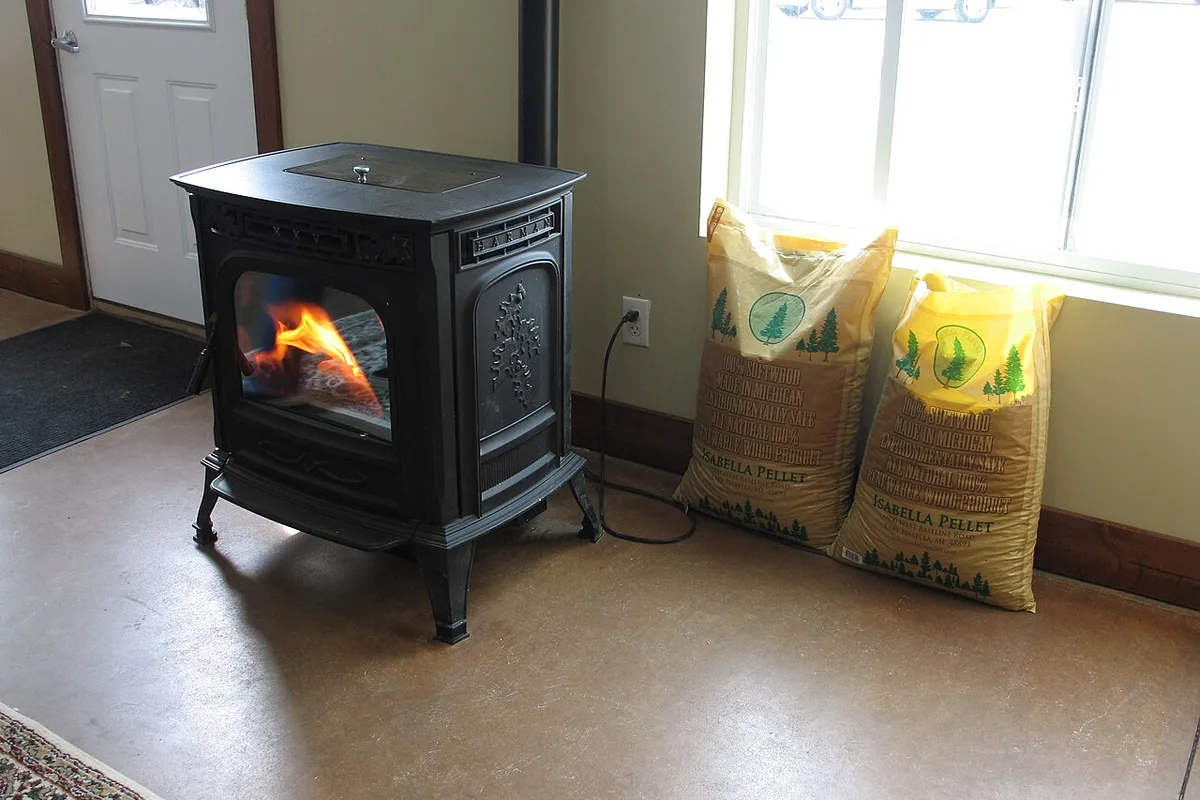
A pellet stove burns cleaner than a wood stove, but it isn’t maintenance free. Pellets leave fine ash, and some leave hard lumps called clinkers. When that ash builds up in the wrong places, the stove burns badly, the glass goes black, the heat drops, and eventually the stove shuts itself off. Almost every “my pellet stove won’t stay lit” problem starts with a stove that needs cleaning.
The good news is that most of the work is small and quick. Here’s what to do and how often, broken into daily, weekly and deep-clean jobs.
Your stove’s manual comes first. Every brand puts its clean-out panels, scraper rods and ash traps in slightly different places. Use this as the overview, and check your manual for where things are on your model.
Signs your pellet stove needs cleaning
- The flame is tall, lazy and dark orange instead of short and bright. That usually means the burn pot holes are clogged and the fire isn’t getting enough air.
- The glass turns black or brown in a day or two.
- The room isn’t as warm at the same setting.
- Unburned pellets pile up in the burn pot, or the stove goes out on its own.
- You smell smoke or see smoke or ash puffing out around the door.
If you’re seeing several of these, don’t wait for the weekly clean.
Before you start: let it cool and unplug it
Turn the stove off and let it go completely cold. Ash can hold live embers for hours after the flame is out, and the firebox and glass stay hot long after the fans stop. Then unplug the stove. The auger, igniter and blowers can start up if it gets a call for heat while your hand is in there.
Have these ready:
- A small metal scraper or putty knife (many stoves come with one)
- A metal ash bucket with a tight lid
- An ash vacuum with a fine filter, not a regular shop vac
- Paper towels, a damp cloth and stove glass cleaner
- Gloves and a dust mask
Why not a shop vac? Pellet ash is very fine. It goes straight through a regular shop vac filter and blows back into the room, and if there’s a hidden ember in the ash, it can start a fire in the vacuum. Ash vacuums have a metal canister and a fine filter made for this.
Daily or every few bags: scrape the burn pot
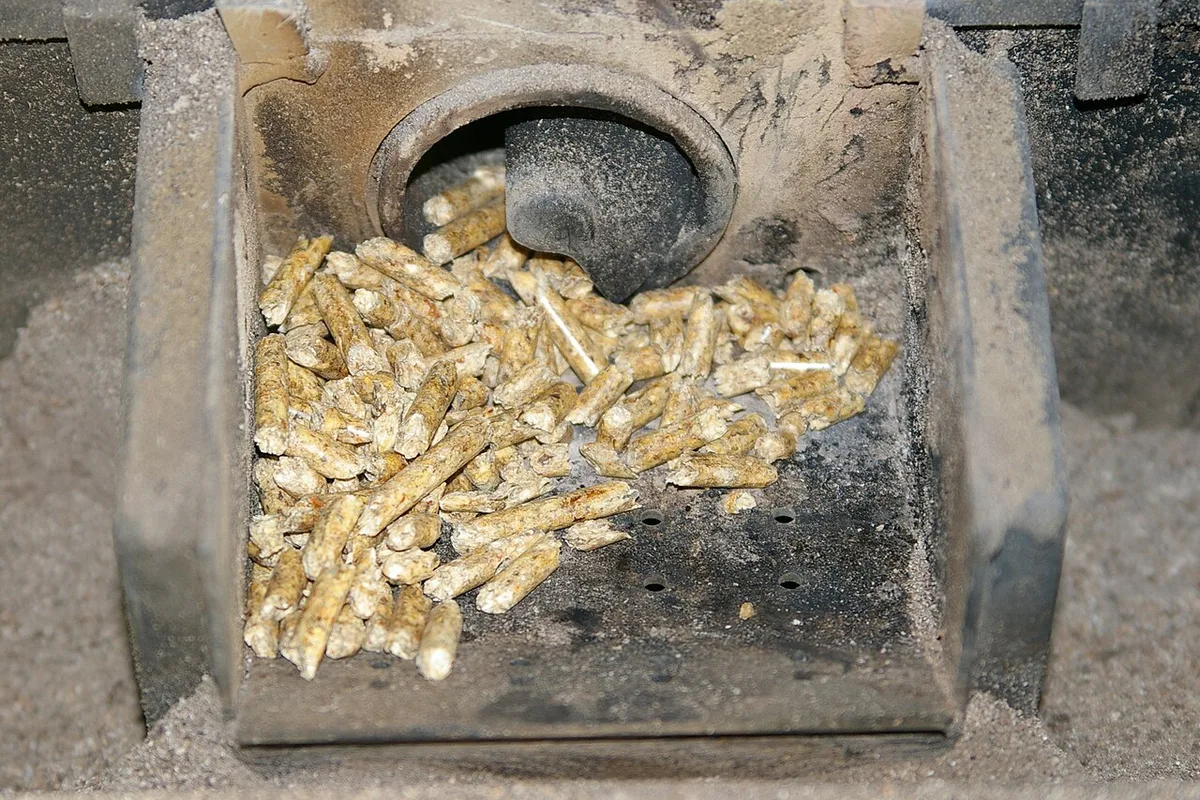
The burn pot (also called the fire pot or burn grate) is the small metal box where the pellets actually burn. Air comes up through rows of small holes in its bottom and sides. If those holes clog with ash and clinkers, the fire smothers.
- With the stove cold and unplugged, open the door.
- Scrape the bottom and sides of the burn pot with your scraper, pushing the ash and any hard clinkers down into the ash pan below (or lift the pot out, if yours comes out, and dump it in the ash bucket).
- Look at the air holes. Poke any that are still blocked with the tip of the scraper or a nail.
- Set the burn pot back so it sits flat and fully seated. A burn pot that’s crooked lets air leak around it instead of through it, and the stove won’t light properly.
How often depends on your pellets. With good, low-ash pellets, every two or three days may be plenty. With cheaper pellets that leave a lot of clinkers, scrape it daily. If you’re scraping out hard, glassy lumps every day, try a different brand of pellets. That’s often the real fix.
Some stoves have a lever or “clean-out” rod that dumps the burn pot without opening the door. Use it as often as the manual says, but still give the pot a real scrape once a week.
Weekly: ash pan, heat exchanger and glass
Empty the ash pan
Pull the ash pan (usually under the burn pot, behind a lower door) and dump it into your metal ash bucket. Vacuum the ash that spilled around the pan’s opening. Most stoves need this every week or two in steady use. Don’t let it overflow, because ash that piles up to the burn pot blocks the air.
Clean the heat exchanger tubes
Hot exhaust passes through metal tubes on its way out, heating the room air that blows across them. Ash coats those tubes and cuts the heat output. Many stoves have a scraper handle, sometimes called a riddler or rake, sticking out on the top or side of the stove. Pull it in and out several times to knock the ash off the tubes. Some manuals say to do this daily. It takes 10 seconds, so there’s no reason not to.
Clean the glass
Wait until the glass is cool. Wipe it with a damp paper towel, or dip the damp towel in a little of the gray ash from the stove. The fine ash works as a gentle polish and takes off the brown haze. For heavier film, use a cleaner made for stove glass. Don’t spray glass cleaner on hot glass, and don’t use anything abrasive enough to scratch it.
If the glass goes dark again within a day, the stove isn’t getting enough air. Check the burn pot holes first.
Every ton of pellets or so: the deeper clean
A ton of pellets is about 50 forty-pound bags. Many manufacturers suggest a deeper clean around every ton, and at minimum at the end of every heating season. Exact steps vary by model, so follow the manual for where the panels are.
- Open the ash traps and clean-out panels. Most stoves have one or two small covers inside the firebox or at the back, held by a couple of screws or wing nuts. Fly ash collects behind them. Vacuum it out, check the gasket, and put the covers back tightly.
- Brush the heat exchanger tubes if your stove has removable baffles that let you reach them.
- Clean the exhaust (combustion) blower. Ash builds up on the fan blades and in the housing, which unbalances the fan and makes it noisy. Your manual will show how to reach it. Vacuum or brush the blades gently.
- Vacuum the room-air blower and its intake. Dust and pet hair here cut airflow and make the stove run hotter.
- Check the door gasket. Close the door on a dollar bill and pull. If it slides out easily, the gasket isn’t sealing, and the stove will pull in extra air and burn poorly. Gasket rope is inexpensive and easy to replace with high-temperature gasket cement.
Once a year: the vent pipe
The vent pipe carries exhaust outside. Fly ash builds up in it, especially in horizontal runs and tees. A partly blocked vent means poor burning, and in the worst case, exhaust and carbon monoxide leaking into the house.
At the end of every season (or more often if you burn a lot), clean the vent with a pellet vent brush, starting at the cleanout tee. If you aren’t comfortable taking the pipe apart, or the vent runs up through a chimney, a chimney sweep who works on pellet stoves will do it and inspect the joints while they’re there.
And make sure there’s a working carbon monoxide alarm in the room with the stove and outside every sleeping area. Pellet stoves are sealed and vented, but a leaky or blocked vent can still put CO into the room.
End of season: empty the hopper
When the heating season ends:
- Burn or empty the hopper. Pellets left in the hopper and auger all summer soak up moisture, swell and can jam the auger or rust the hopper. Vacuum out the dust at the bottom.
- Do the full deep clean above, while the stove is cold and you’re not in a hurry.
- Leave the stove clean over summer. Ash plus humid summer air is corrosive, and it eats into the firebox and burn pot.
What to do with the ash
Ash from a pellet stove can stay hot enough to start a fire for days. The National Fire Protection Association says to put ashes in a metal container with a tight lid and keep it outside, at least 10 feet from the house and anything that can burn. Never put ash in a paper bag, a cardboard box or a plastic bin, and never set the ash bucket on a wood deck or in the garage.
Once it’s completely cold (give it several days), wood pellet ash can go in the trash, or a little can go in the compost or garden in moderation.
A simple cleaning schedule
| How often | Job |
|---|---|
| Daily, or every few bags | Scrape the burn pot; pull the heat exchanger scraper |
| Weekly | Empty the ash pan; vacuum the firebox; clean the glass |
| About every ton of pellets | Open the ash traps; clean the exhaust and room blowers; check the door gasket |
| Every season | Clean and inspect the vent pipe; test CO alarms |
| End of season | Empty the hopper; full deep clean |
Your manual's schedule wins if it's different. Low-ash pellets stretch these out; cheap, high-ash pellets shorten them.
Quick answers
How often should you clean a pellet stove? Scrape the burn pot every day or every few days, empty the ash pan and clean the glass weekly, and do a deeper clean about every ton of pellets and at the end of each season.
Can I use a regular shop vac to clean a pellet stove? No. Fine pellet ash passes through a regular shop vac filter, and a hidden ember can start a fire inside it. Use an ash vacuum with a metal canister and a fine filter, and only on a cold stove.
Why does my pellet stove glass get black so fast? Usually the fire is short on air. Clean the burn pot holes, empty the ash pan, check the door gasket and clean the vent. Wet or low-quality pellets cause it too.
Should I clean the stove while it’s hot? No. Let it cool completely and unplug it first. Ash and the firebox stay hot well after the flame is gone, and the stove’s motors can start up on their own while it’s plugged in.
For the rest of the house’s heating chores, see how to change a furnace filter and how to replace a smoke detector.
We may earn a commission if you buy through links on this page. It never changes what we recommend. As an Amazon Associate we earn from qualifying purchases. Learn more.