How to Drill Into Brick or Concrete (Without Wrecking Your Bit)
Step-by-step instructions for drilling into brick, block or concrete: the right drill and bit, how to drill cleanly, and which anchors to use.

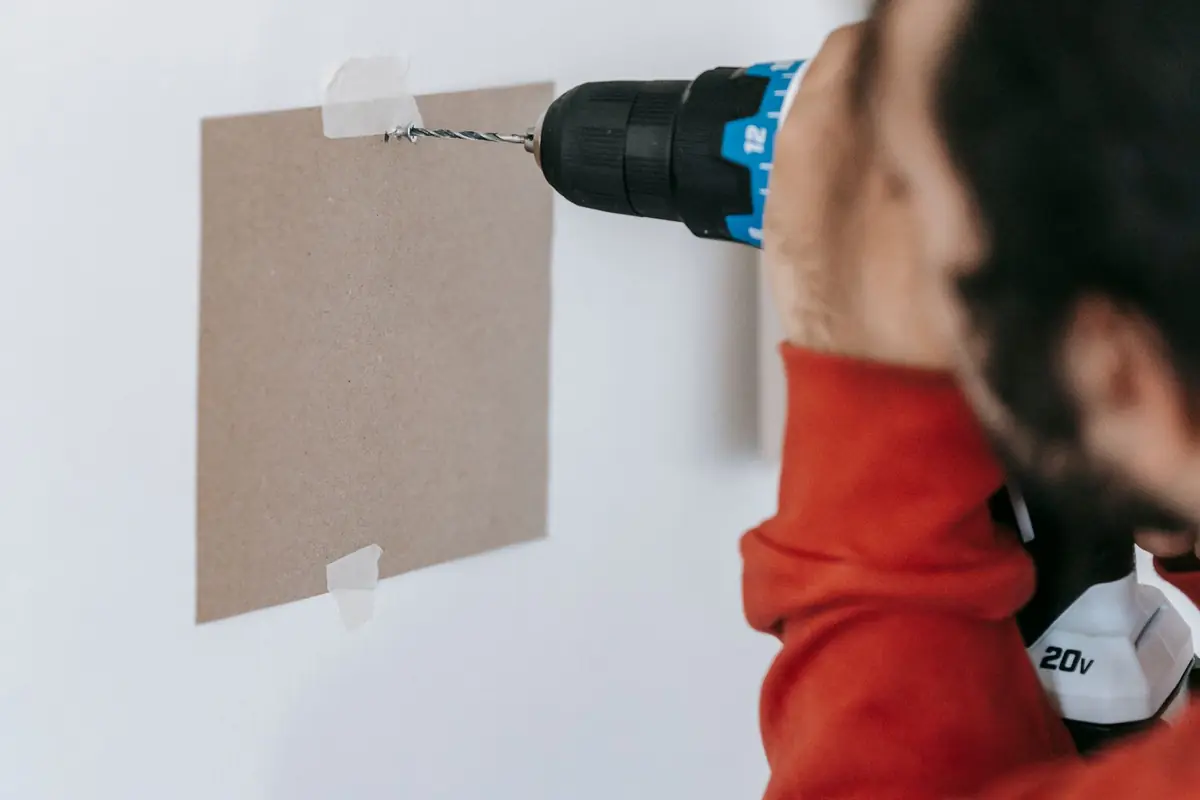
Drilling into brick or concrete is easy once you have the right drill and the right bit. Try it with a regular drill and wood bit, and you’ll get smoke, a dull bit and a shallow scratch.
Here’s what you need, how to do it, and how to anchor whatever you’re hanging.
What you’ll need
- A hammer drill, or a drill with a hammer mode. For lots of large holes in concrete, a rotary hammer (SDS drill) is faster.
- Carbide-tipped masonry bits in the size your anchor calls for
- Safety glasses and a dust mask. Masonry dust contains silica, which you don’t want to breathe.
- Painter’s tape and a pencil
- A tape measure and level
- Anchors or masonry screws for your project
- A vacuum or a bulb blower to clear dust
Brick, mortar or concrete?

- Brick is fairly easy to drill but can crack if you drill too close to the edge.
- Mortar joints (the lines between bricks) are softer and easier to drill, and easier to patch if you change your mind later. They aren’t as strong for heavy loads, though.
- Concrete and block are harder and take longer. Hollow concrete block needs anchors designed for hollow material.
For light to medium items, drilling into mortar is usually fine and kinder to the wall. For heavy loads, drill into the brick itself or solid concrete.
Step by step
1. Check for hidden hazards
Make sure there are no electrical cables, gas lines or water pipes behind the spot. A detector helps on interior walls, and avoid drilling directly above or below outlets and switches.
2. Mark the spot
Measure and mark the hole with a pencil. Put a piece of painter’s tape over the mark; it helps stop the bit from wandering and reduces chipping on the surface.
3. Set the depth
Your hole should be a little deeper than the anchor or screw, about 1/4 to 1/2 inch extra, so dust has somewhere to go. Use the drill’s depth rod, or wrap tape around the bit as a depth flag.
4. Start slowly without hammer mode
Put on your glasses and mask. With hammer mode off, start drilling at a slow speed to make a small dimple. This keeps the bit from skating across the surface.
5. Switch to hammer mode and drill
Turn on hammer mode and increase to full speed. Keep the drill straight and level, and use steady, firm pressure. Let the drill do the work; leaning hard on it can overheat the bit.
6. Clear the dust as you go
Every 10 to 15 seconds, pull the bit partway out while it’s still spinning to clear dust from the hole. On deep holes, stop occasionally to let the bit cool.
7. Clean out the hole
Once you’ve reached your depth, vacuum or blow out the dust. Anchors grip much better in a clean hole.
8. Install your anchor
Follow the anchor maker’s instructions for hole size and depth.
Choosing the right anchor
- Plastic wall plugs: light items like small shelves, mirrors and signs.
- Masonry screws (like Tapcon-style screws): medium loads, quick to install, no separate anchor. They need a specific bit size, which is printed on the package.
- Sleeve anchors: heavier loads in brick and concrete, like railings and heavy brackets.
- Wedge anchors: heavy loads in solid concrete only.
Always check the weight rating and the recommended bit size on the package, and use the bit size it calls for. A hole that’s even slightly too big won’t hold.
Common mistakes
- Using a wood bit or a regular drill without hammer mode on concrete
- Drilling too close to the edge of a brick, which can crack it
- Skipping the dust mask
- Not clearing dust, which makes anchors spin or pull out
- Overheating the bit by pushing too hard
Need a drill that can do this? Here’s what voltage drill you need, and why a drill beats an impact driver for masonry.
Common questions
Can I drill into brick without a hammer drill? For a few small holes in soft brick or mortar, a regular drill with a masonry bit can work, slowly. For concrete, you really need a hammer drill.
Is it better to drill into brick or mortar? Mortar is easier and simpler to repair. Brick holds more weight. For heavy items, use brick.
What size masonry bit do I need? Match it to your anchor or masonry screw; the package lists the exact size.
Shopping for a drill? See the best cordless drills for homeowners.