Honing vs Sharpening: What's the Difference and When to Do Each
Honing straightens your knife's edge; sharpening grinds a new one. Here's how to tell which your knife needs, and how to hone properly in under a minute.

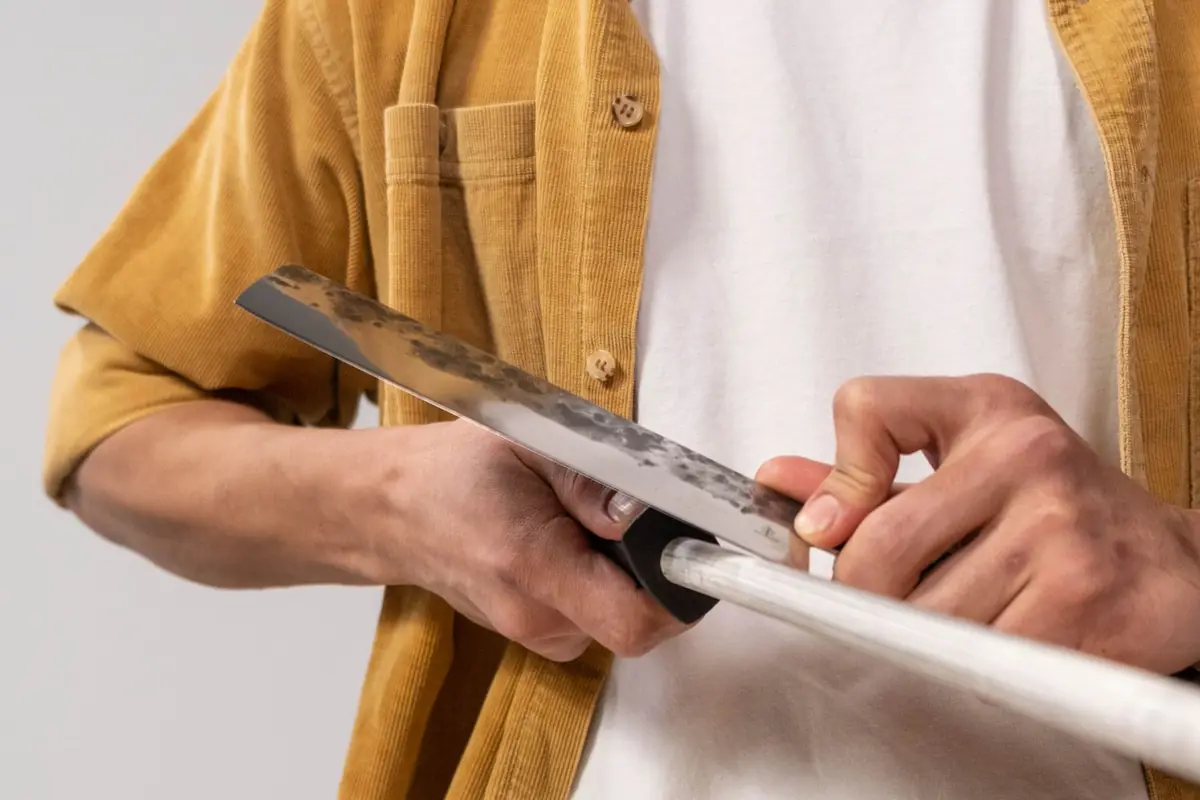
That steel rod that came with your knife block isn’t a sharpener. It’s a honing rod, and it does a different, equally useful job.
In short: honing straightens an edge that has bent out of line. Sharpening grinds away metal to create a brand-new edge. You hone often and sharpen occasionally.
The difference at a glance
| Honing | Sharpening | |
|---|---|---|
| What it does | Pushes a bent edge back into line | Grinds away metal to form a new edge |
| Removes metal? | Little to none | Yes |
| Tool | Honing steel or ceramic rod | Whetstone, pull-through or electric sharpener |
| How often | Every few uses, or before each big cooking session | Every 2 to 4 months for most home cooks |
| Time | About 30 seconds | 5 to 20 minutes |
Why knives feel dull
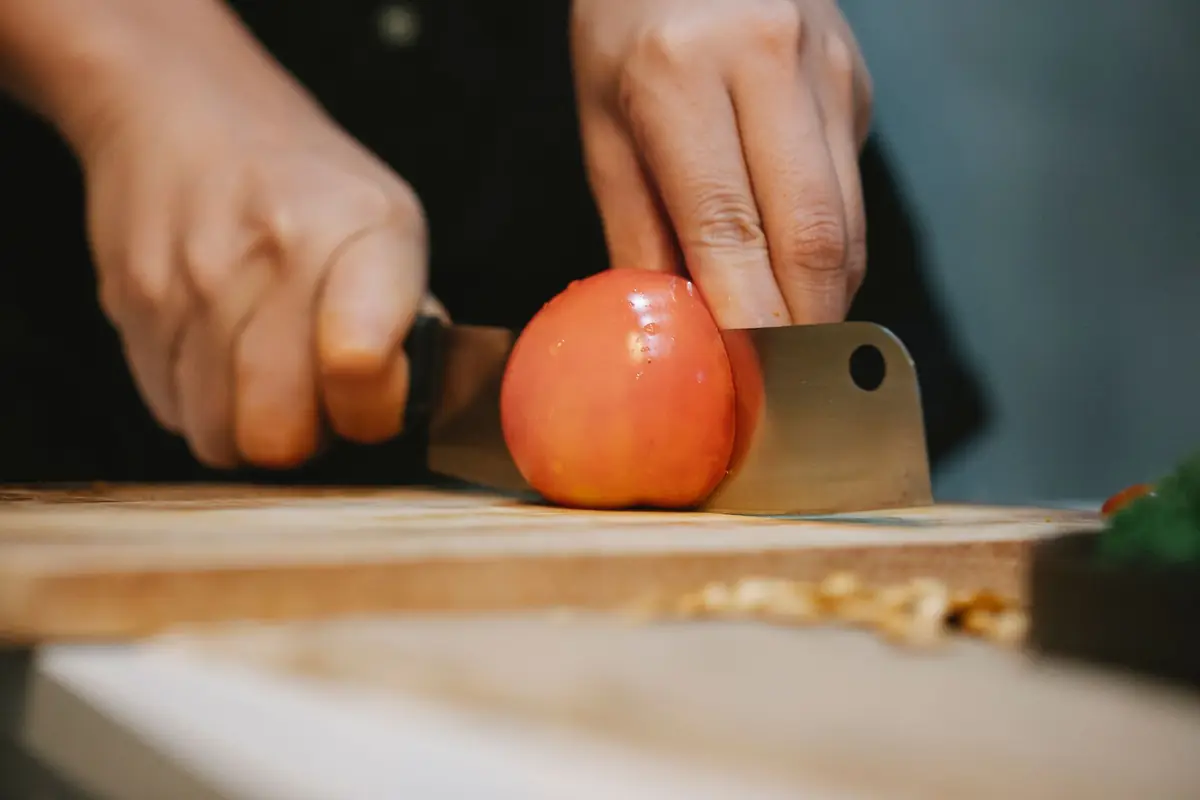
A knife edge is incredibly thin. Every time it hits a cutting board, the very edge bends a tiny bit to one side. After a few days of cooking, it’s folded over in microscopic waves. The knife isn’t really dull; its edge is just pointing the wrong way.
Honing pushes that edge back to center. That’s why a few strokes on a rod can make a knife feel sharp again right away.
Over time, though, the edge actually wears down and rounds off. No amount of honing brings that back. That’s when you need to sharpen.
How to tell which your knife needs
Try this: hone the knife, then slice a sheet of paper or a ripe tomato.
- If it cuts cleanly now, the edge was just bent. You’re set.
- If it still tears or skids, the edge is worn. Time to sharpen it, or pick up one of the best knife sharpeners if you’d rather not use a stone.
How to hone a knife
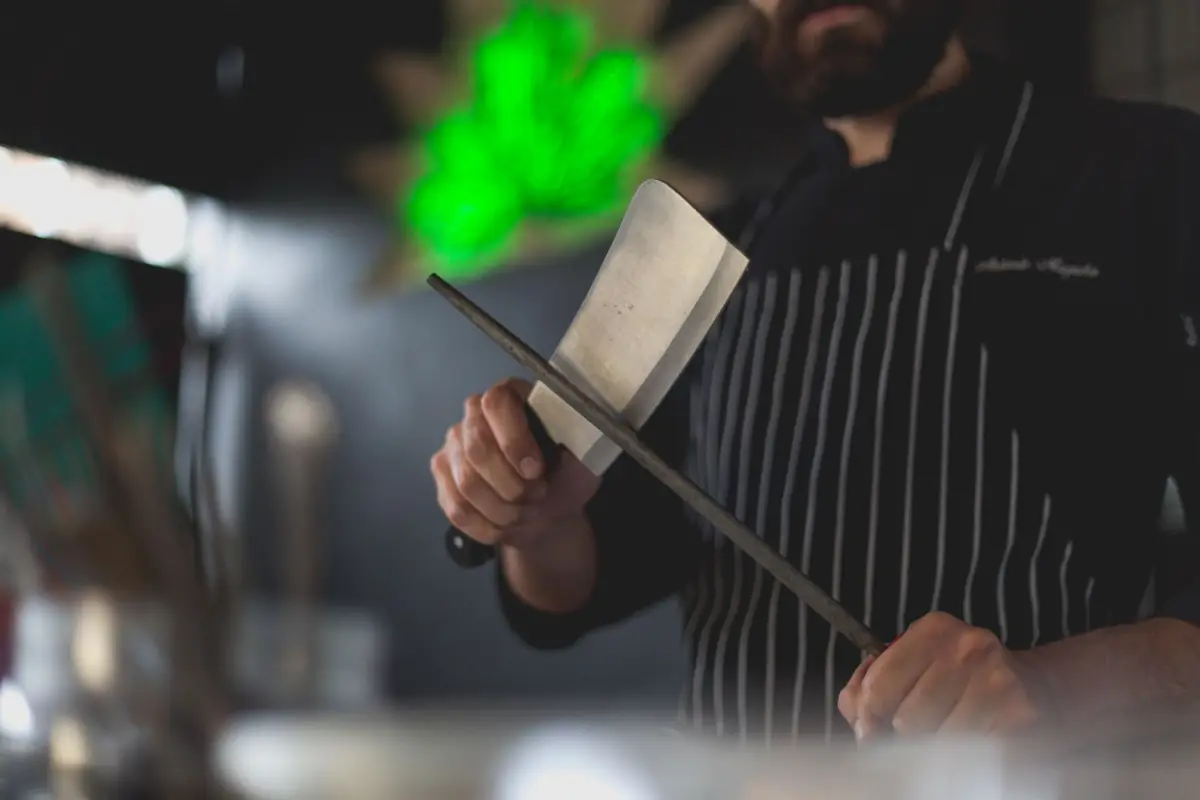
The safest method for beginners is the vertical one:
- Stand the rod straight up, tip down on a folded towel or cutting board, holding the handle firmly.
- Place the heel of the knife against the top of the rod at about a 15 to 20 degree angle (Japanese knives closer to 15, German-style closer to 20).
- Draw the knife down and toward you, sweeping from heel to tip, using light pressure. Think of it as slicing a thin layer off the rod.
- Switch sides and repeat at the same angle.
- Do 5 to 8 strokes per side, alternating. That’s it.
Light pressure is the key. Honing is about straightening, not grinding, and pushing hard can do more harm than good.
Steel vs ceramic honing rods
- Steel rods are the classic choice. Smooth steel only straightens the edge. Ridged steel straightens with a little more bite.
- Ceramic rods are harder and lightly abrasive, so they straighten and remove a tiny amount of metal. They’re a good choice for harder Japanese knives, but they can break if dropped.
Neither replaces sharpening, but either one will stretch the time between sharpenings considerably.
A simple routine
- Hone before you do a big batch of chopping, or every few times you cook.
- Sharpen when honing stops bringing the edge back, typically a few times a year.
- Use a wood or plastic cutting board. Glass, granite and ceramic boards dull edges very quickly.
- Hand wash and dry your knives. Dishwashers knock edges against other items.
If you’re still building your set, see which kitchen knives you actually need.
Still wondering?
Can honing damage a knife? Only with too much pressure or a badly wrong angle. Gentle strokes at a consistent angle are safe.
Do Japanese knives need honing? Yes, though a ceramic rod and a lower angle are better suited to their harder, thinner edges.
Is a honing rod the same as a sharpening steel? Yes. “Sharpening steel” is a common name for a honing rod, which adds to the confusion. Most steels hone rather than sharpen.