Which Kitchen Knives Do You Actually Need? (Hint: Just 3)
You don't need a 15-piece block set. Here are the three kitchen knives that handle almost everything, the optional extras, and what to look for when you buy.

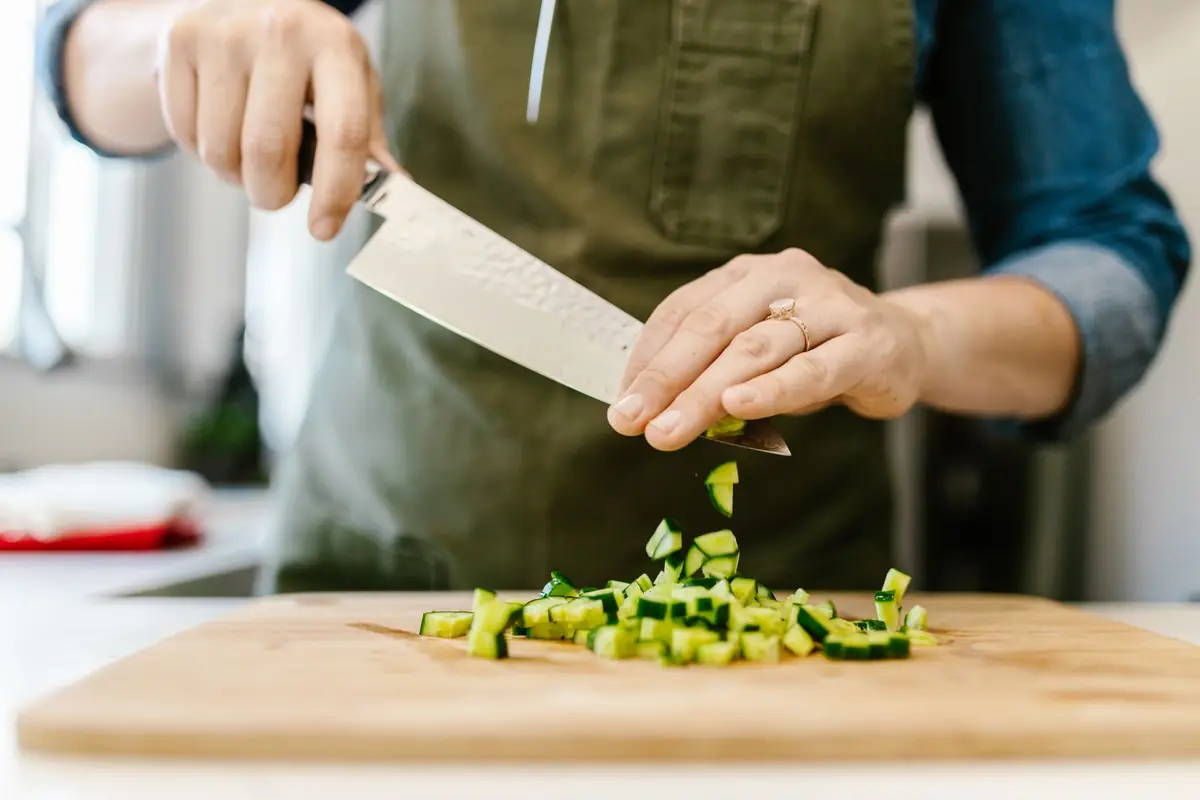
Big knife block sets look great in the store, but most of those knives end up sitting untouched. Nearly everything a home cook does can be handled with three knives: a chef’s knife, a paring knife and a serrated bread knife.
Buy those three well and you’ll get more use out of them than a whole block of average ones.
The three essentials
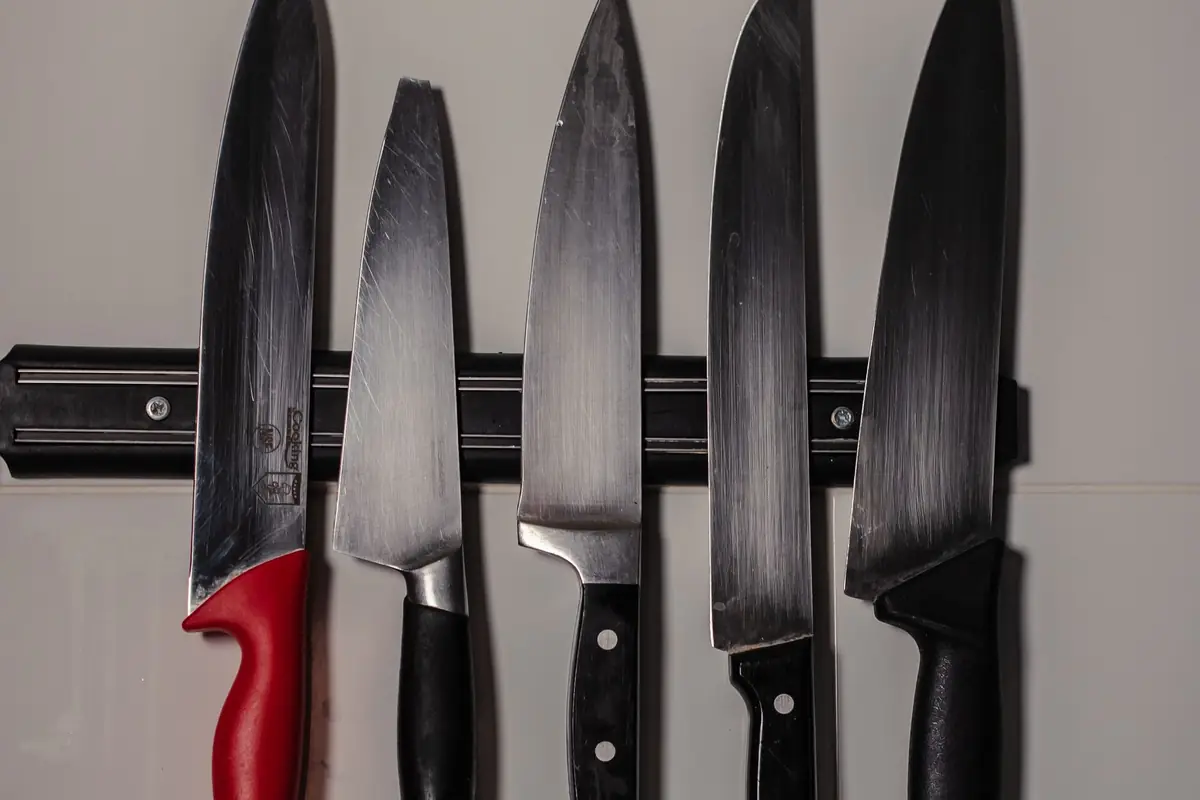
1. Chef’s knife (8 inches)
This is the knife you’ll use for 80 to 90 percent of your cooking: chopping onions, dicing vegetables, slicing meat, mincing herbs and smashing garlic. An 8-inch blade suits most people. If you have smaller hands or a small kitchen, a 6- or 7-inch version or a santoku works well too.
If you only buy one good knife, make it this one.
2. Paring knife (3 to 4 inches)
For small jobs where a big blade is clumsy: peeling apples, hulling strawberries, trimming fat, deveining shrimp, scoring bread. Paring knives are cheap, so it’s fine to keep one or two around.
3. Serrated bread knife (8 to 10 inches)
The teeth grip and saw through crusty bread without crushing the soft inside. It’s also the best tool for ripe tomatoes, cakes and sandwiches. Look for a blade at least 8 inches long so it can cross a full loaf.
Nice to have
- Santoku: a Japanese-style alternative to the chef’s knife with a flatter edge. Great for thin slicing and chopping vegetables.
- Utility knife (5 to 6 inches): somewhere between a paring knife and a chef’s knife. Handy for sandwiches and small produce.
- Boning knife: worth it if you break down whole chickens or trim a lot of meat.
- Kitchen shears: strictly speaking not a knife, but you’ll use them constantly for herbs, packaging and spatchcocking poultry.
- Honing rod: keeps your edges straight between sharpenings. Here’s how honing differs from sharpening.
Should you buy a set?
A small three- or four-piece set can be good value if it includes a chef’s knife you genuinely like. Large sets usually pad out the count with steak knives, extra utility knives and a pair of shears, and you pay for knives you won’t use.
Buying individually lets you pick the best chef’s knife you can afford and spend less on the paring and bread knives, which don’t need to be fancy.
What to look for
Western vs Japanese style
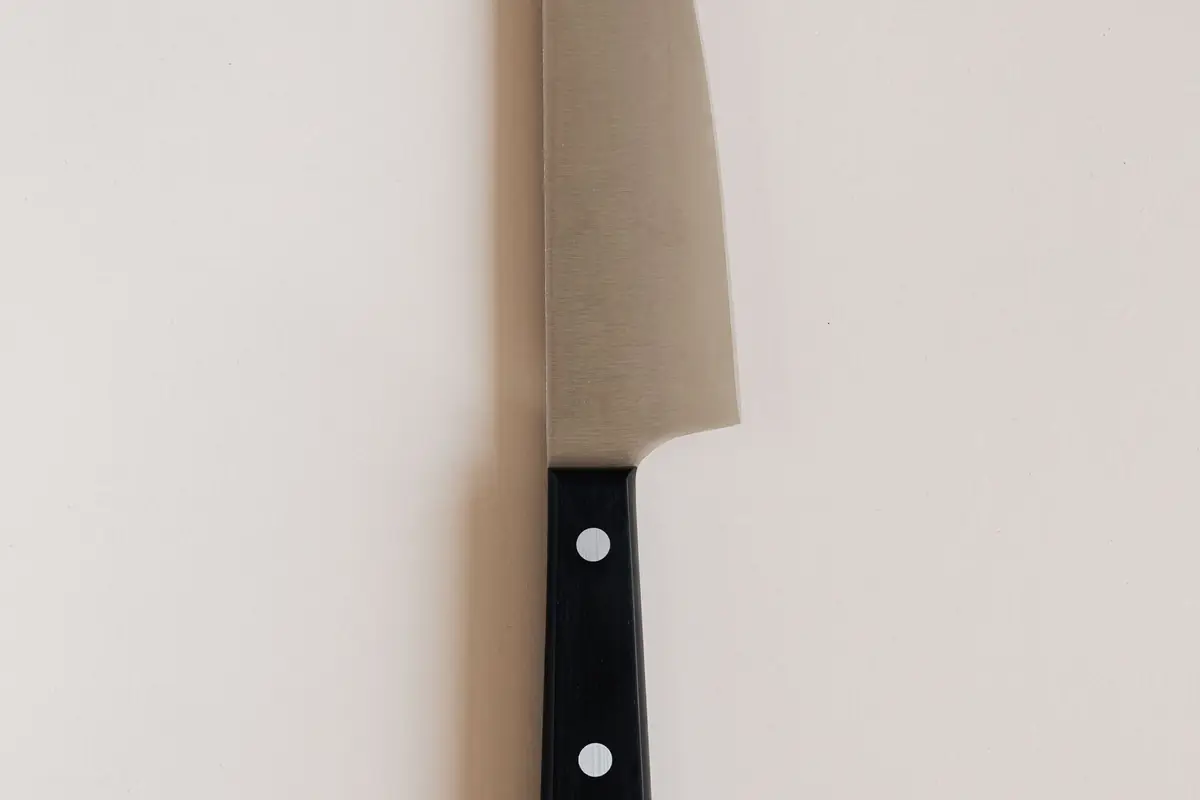
- Western (German-style) knives are heavier, with softer, tougher steel. They’re forgiving, resist chipping, and are easy to sharpen. Typical edge angle: about 20 degrees.
- Japanese-style knives are lighter and thinner, with harder steel that takes a sharper edge. They’re more precise but more prone to chipping, especially on bones or frozen food. Typical edge angle: about 15 degrees.
Neither is better overall. If you’re rough on knives or new to cooking, a Western-style chef’s knife is the safer bet.
Forged vs stamped
Forged blades are shaped from a single heated bar of steel and are usually heavier, with a bolster where the blade meets the handle. Stamped blades are cut from a sheet of steel and are lighter and cheaper. Plenty of excellent, well-loved budget knives are stamped, so don’t rule them out.
Handle and balance
The best test is how it feels in your hand. It shouldn’t slip when wet, and it shouldn’t feel heavy at the tip or the handle after a few minutes of chopping. If you can, hold a knife before buying.
Full tang
A full-tang knife has metal running all the way through the handle. It generally means better balance and durability, though it’s not essential for a paring or bread knife.
Taking care of them
- Hand wash and dry right away; the dishwasher is hard on edges and handles.
- Store them in a block, on a magnetic strip or in blade guards, not loose in a drawer.
- Use wood or plastic cutting boards.
- Hone regularly and sharpen a few times a year. Here are the best knife sharpeners if you need one.
Still wondering?
How much should I spend on a chef’s knife? A very good chef’s knife can be had for around $40 to $60. Above roughly $150, you’re mostly paying for steel, craftsmanship and looks rather than big gains in everyday cutting.
Chef’s knife or santoku? Try both if you can. Chef’s knives rock better for mincing; santokus are great for straight up-and-down chopping and thin slicing.
Do I need steak knives? Only if you eat steak often. A sharp serrated or straight-edged table knife does the job for most people.