German vs Japanese Kitchen Knives: What's the Difference?
German knives are heavier, softer and tougher. Japanese knives are thinner, harder and sharper. Here's how they compare on steel, edge angle, care and price.

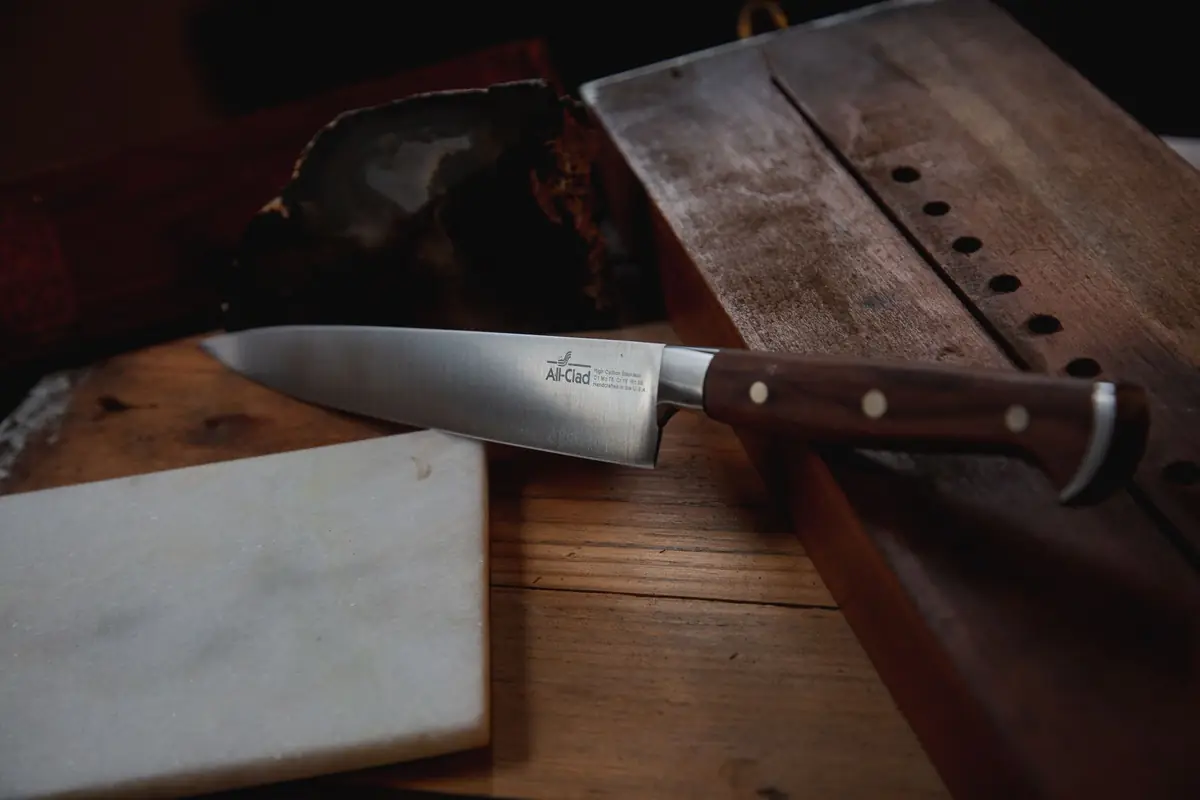
The short version: German-style knives are heavier and tougher, with a curved blade made for rocking. Japanese-style knives are thinner, lighter and harder, with a sharper edge made for precise slicing. Neither is better. They suit different cooks.
At a glance
| German-style | Japanese-style | |
|---|---|---|
| Weight | Heavier | Lighter |
| Steel hardness | Softer, about 56 to 58 HRC | Harder, about 58 to 62 HRC or more |
| Edge angle | Wider, about 15 to 20° per side | Narrower, often 10 to 15° per side |
| Sharpness | Sharp | Very sharp |
| Edge retention | Needs honing more often | Holds an edge longer |
| Toughness | Forgiving; resists chips | Thin edges can chip |
| Blade shape | Curved belly for rocking | Flatter profile for push-cutting |
| Bolster | Often a thick bolster | Often none or a small one |
| Best for | Heavy chopping, squash, bone-in chicken | Thin slicing, herbs, fish, precise prep |
These are general patterns. Plenty of knives blur the lines, like Japanese-made knives with Western handles, or German brands with thinner, harder lines.
German knives: tough and forgiving
German knives, from makers like Wüsthof and Zwilling, are typically forged from somewhat softer stainless steel. That makes them tough: they flex rather than chip, and they’re easy to keep sharp with a honing steel. The weight helps them power through squash, melons and chicken joints. The curved blade is great for the rocking motion many home cooks use.
Trade-offs: They’re heavier, which some people find tiring, and the wider edge isn’t as sharp as a Japanese blade. Thick bolsters can make sharpening the heel harder.
Japanese knives: thin and precise
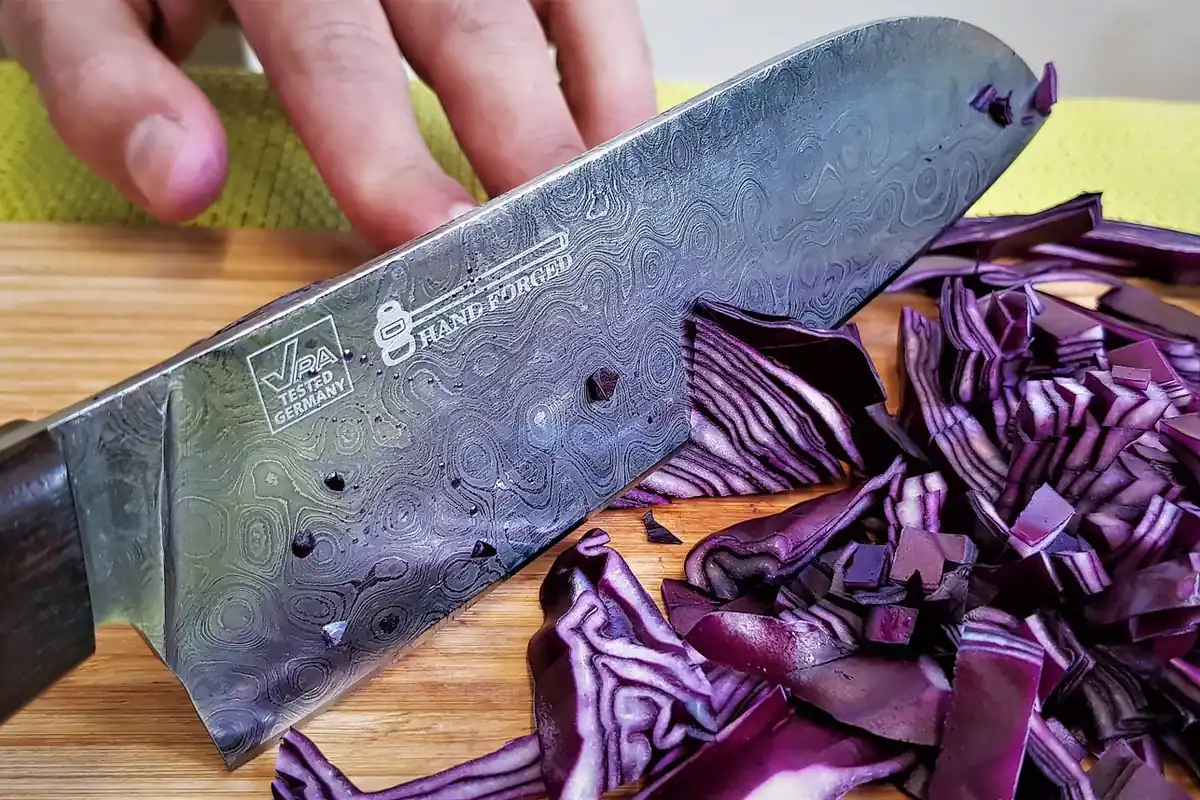
Japanese knives use harder steel ground to a thinner edge, so they’re very sharp and hold that sharpness longer. They’re light and nimble, great for paper-thin slices, fine herbs and fish.
Trade-offs: Hard, thin edges can chip if you twist the blade, cut bones or hit a hard board. They’re best sharpened on a whetstone, and carbon steel versions rust if left wet.
Which should you choose?
Choose German if you:
- Like a heavy knife that feels solid
- Rock the knife to chop
- Cut a lot of hard vegetables or bone-in meat
- Want a knife that’s hard to damage
Choose Japanese if you:
- Like a light, nimble knife
- Slice more than you chop
- Want the sharpest edge and will take care of it
- Are willing to learn to use a whetstone
Not sure? A Western-style knife with a medium-weight blade, like the Victorinox Fibrox Pro, sits between the two and suits most people.
Our picks
- The best chef’s knives for home cooks, German, Japanese and in-between
- The best Japanese knives for beginners
- The best knife sharpeners
Short answers
Can I sharpen Japanese knives with a pull-through sharpener? Some sharpeners have a Japanese-angle slot, but a whetstone is best. Here’s how to sharpen with a whetstone.
Do Japanese knives need a honing steel? Hard Japanese blades can chip on a ridged steel. A ceramic rod or a strop is gentler. Here’s honing vs sharpening.
Are Japanese knives worth the money? If you value sharpness and precision and will care for them, yes. If you want a low-maintenance workhorse, a German or Western knife may suit you better.